
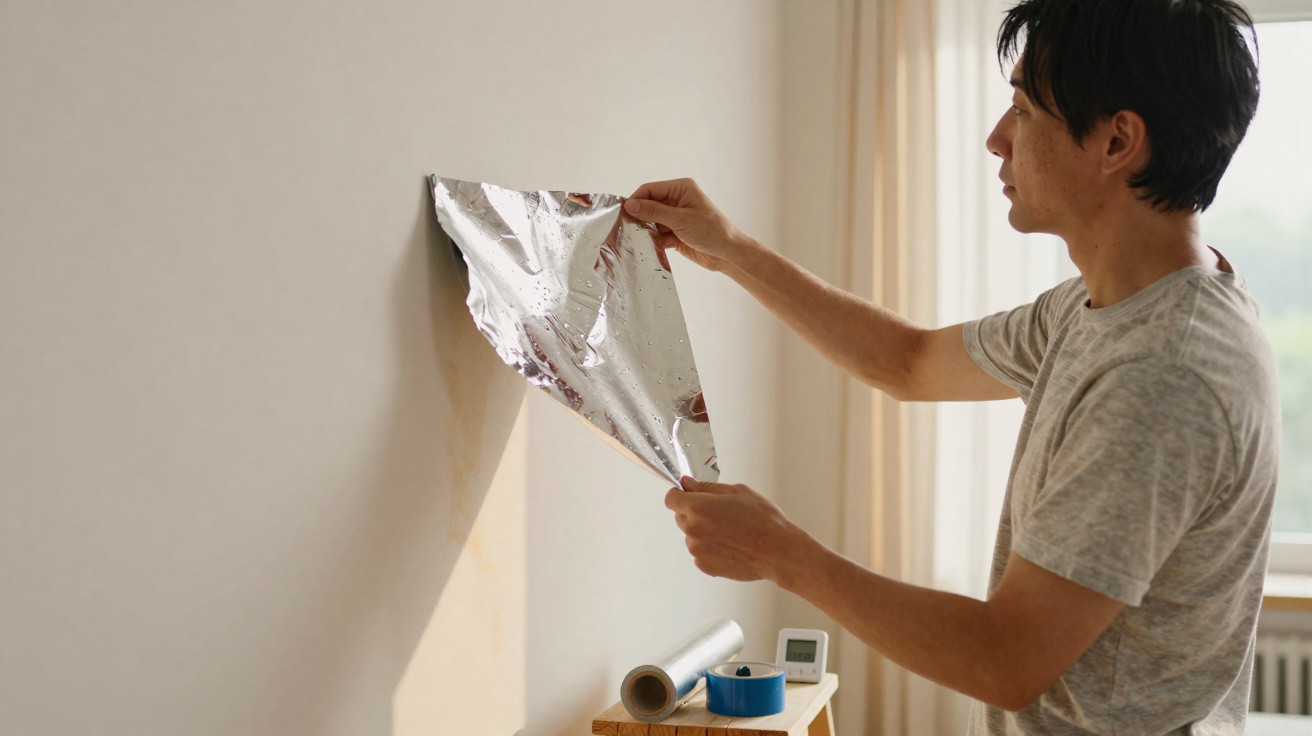
Damp walls are frustrating, smell unpleasant and can ruin wallpaper, furniture and, in the worst cases, even the fabric of the building. Before calling in tradespeople or hiring drying equipment, it is worth trying a surprisingly simple aluminium foil test. It can indicate whether the moisture is coming from outside or from within the home itself.
Why aluminium foil on a wall can be useful
At some point, many homes develop brown marks, black spots or blistering paint on their walls. In most cases, one of two issues is responsible:
- Moisture is entering the wall from outside or through pipework.
- The air inside the home is too humid, causing water to condense on cold surfaces.
The difficulty is that these two situations can look very similar. Starting repairs without knowing the cause can lead to costly mistakes. This is where aluminium foil is useful: it is not a repair method, but a quick diagnostic aid.
Aluminium foil cannot replace a professional inspection, but it can help narrow down the cause of damp and potentially save both time and money.
The principle is simple: the foil isolates a small part of the wall from the room air. This makes it possible to see whether moisture is emerging from the wall or merely forming from humid indoor air.
Step by step: how the aluminium foil test works
You need only two items for this test: a piece of aluminium foil and adhesive tape.
1. Choose a suspicious area
Select a section where typical signs of damp are already visible, such as:
- dark or yellowish marks
- peeling or rippled paint
- a musty smell that becomes particularly noticeable after moving furniture away from the wall
- a cold wall surface that feels slightly clammy
Ideally, use an area that is not immediately beside a radiator or window, as these could distort the result.
2. Apply the aluminium foil carefully
The method is straightforward, but it needs to be done properly:
- Cut a piece of aluminium foil slightly larger than the suspected damp patch.
- It does not matter whether the matt or shiny side faces the wall; the important thing is that the foil lies flat.
- Press the foil directly against the wall.
- Seal every edge fully with adhesive tape, leaving no gaps.
The foil should be fitted as tightly as possible, with no creases or tears. Any opening could allow air to pass through and make the test less reliable.
3. Wait for 24 to 48 hours
This test requires patience. Specialists recommend leaving the foil in place for at least 24 hours, preferably up to 48 hours. During this period, leave it alone: do not peel it back or inspect it.
Depending on the cause, moisture may collect during this time. That moisture will then provide an indication of where the issue originates.
Reading the aluminium foil test: where is the moisture coming from?
After one or two days, carefully remove the foil from the wall and inspect it closely.
Case 1: water on the wall-facing side of the foil
If moisture is present on the side of the foil that faced the wall, the cause is very likely to be within or behind the wall.
Moisture on the wall-facing side of the foil is a strong sign that water is entering from outside or through pipework.
Possible causes include:
- a leaking external wall or façade
- hairline cracks in the masonry
- damaged or poorly sealed water pipes
- faulty waterproofing in the bathroom or around balconies
- rising damp at ground-floor level or in basement areas
In this situation, simply airing the room will not solve the problem. A specialist will usually be needed to open up the wall, inspect the pipework or renew the external waterproofing.
Case 2: condensation on the room-facing side of the foil
If droplets or a thin film of moisture appear on the side of the foil facing into the room, moisture is not being forced out of the wall. Instead, the problem is the indoor air.
This can point to:
- excessively high humidity in the home
- airing rooms too rarely or incorrectly
- drying laundry in enclosed rooms
- a kitchen or bathroom without adequate ventilation
- numerous plants or aquariums in small rooms
In this case, the aluminium foil acts like a cold surface. Warm, humid room air condenses on it, much as it does on a steamed-up window.
What to do when indoor air is too humid
When the test suggests an indoor humidity issue, relatively simple steps can often improve the situation.
Air and heat rooms more effectively
- Air rooms fully several times a day rather than leaving windows permanently tilted open.
- Ventilate immediately after cooking or showering, while keeping internal doors shut.
- Do not allow rooms to become too cold, especially in winter.
- Do not turn heating off completely; keep rooms moderately heated instead.
In well-insulated homes without automatic ventilation, humidity can rise quickly. Regular full ventilation is not optional in these properties; it is essential.
Reduce sources of moisture
Drying laundry in the living room, keeping several houseplants in the bedroom and barely ventilating will create the problem in the first place.
Useful measures include:
- Hang laundry outdoors where possible, or use a well-ventilated drying room.
- If that is not possible, open a window in the drying room and keep the door closed.
- Reduce the number of plants in rooms that are particularly vulnerable to damp.
- Consider a portable dehumidifier where humidity is very high.
How to remove marks and mould from a wall quickly
Once the cause has been identified, the visual problem remains: unattractive marks, often accompanied by traces of mould and an unpleasant smell. A basic household mixture may offer short-term help, particularly for minor surface damage.
The classic solution: a vinegar and bicarbonate of soda mixture
One tried-and-tested recipe combines white vinegar with bicarbonate of soda.
- Mix vinegar with a small amount of bicarbonate of soda until combined thoroughly.
- Apply the mixture to the affected area using a spray bottle or sponge.
- Leave it to work for 30 to 60 minutes.
- Then rub the area gently with a cloth or soft sponge.
The mixture helps lift discolouration and absorb odours. Vinegar works against many fungi and bacteria, while bicarbonate of soda acts as a mild cleaner and neutralises smells.
The vinegar and bicarbonate of soda mixture is mainly suitable for minor, surface-level marks, not extensive or deeply embedded mould.
If there are widespread black deposits or heavily affected bedroom corners, professional help should be sought for health reasons.
Where the aluminium foil trick has its limits
Although the test is useful, it is no substitute for a building surveyor or damp specialist. Keep the following points in mind:
- In very old or poorly insulated buildings, several causes may be present at once.
- A single test in one location provides only a snapshot, not a complete diagnosis.
- Do not spend too long experimenting if walls are severely crumbling, the entire room smells of mould or anyone is experiencing health symptoms.
If you rent your home, it is best to document the marks and test results with photographs and notify the landlord early. The longer moisture remains in the wall, the greater the risk of expensive remedial work.
Practical tips for preventing damp in the long term
Alongside diagnosis and immediate action, it is worth considering the everyday habits that can cause damp issues in the first place.
- Avoid placing furniture directly against cold external walls; leave a gap of a few centimetres.
- Heat bedrooms moderately rather than allowing them to become completely cold.
- During winter, air rooms briefly but thoroughly instead of leaving windows tilted open all day.
- Use an extractor fan in the bathroom and kitchen whenever possible.
Anyone who is unsure can buy a basic hygrometer to measure room humidity. In living spaces, readings between 40 and 60 per cent are generally considered a good range. If the figure is significantly higher, condensation may form, followed by another mark on the wall.
Ultimately, a piece of aluminium foil costs only a few pence, yet it can help you decide whether the issue can be dealt with yourself or whether it is better to call a professional. For many households, it is a remarkably effective first step against damp walls.



Comments
No comments yet. Be the first to comment!
Leave a Comment