
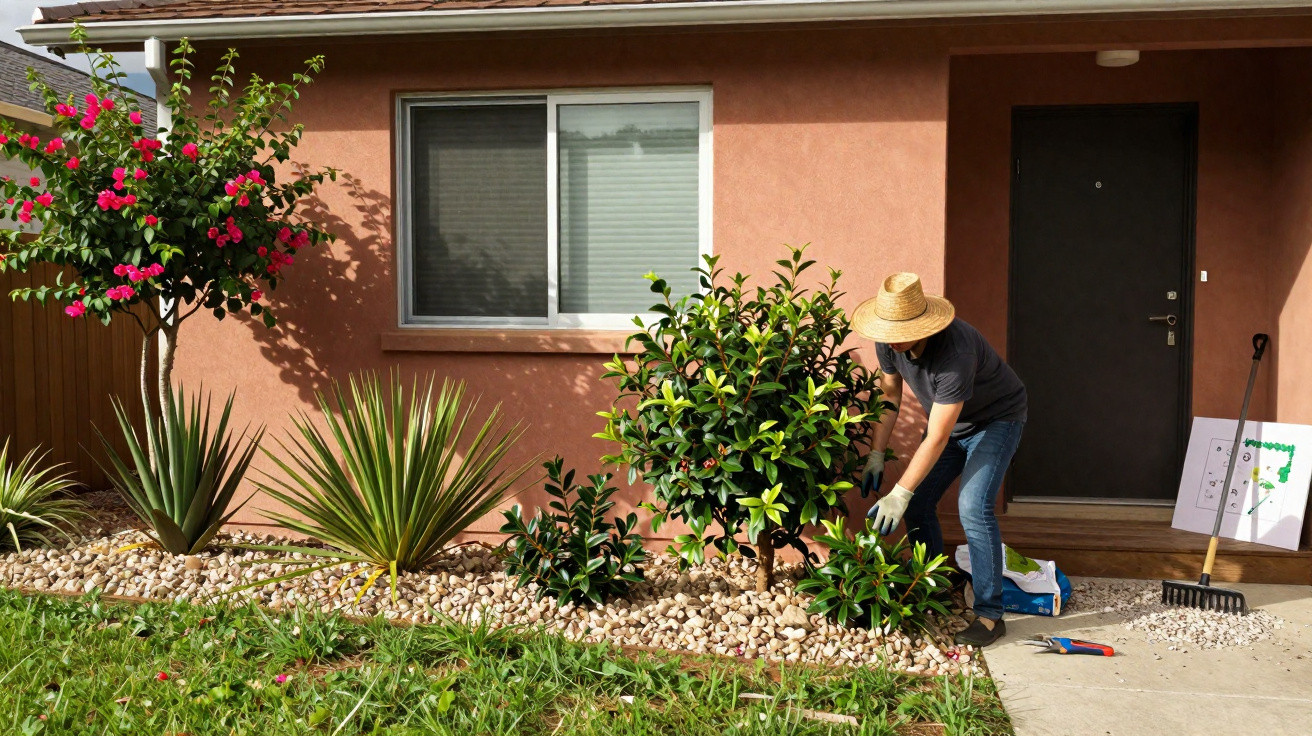
Many people immediately think of an alarm system, cameras and a security door when considering burglary prevention. That is understandable. Yet one detail is often overlooked entirely: the front garden and planting around the home. Planned properly, greenery can become an unpleasant, thorny barrier that leaves burglars frustrated at the fence – without high-tech equipment or costly alterations.
Why thorny shrubs genuinely deter burglars
A typical burglar will always choose the easiest route: rapid access, minimal risk, no injuries where possible and no noise. This is exactly where a carefully arranged “defensive hedge” comes in. Dense shrubs with pronounced thorns make getting onto the property far more difficult. Anyone attempting to squeeze through is likely to get caught, scratch their arms and clothes, and leave evidence behind.
“A dense, thorny hedge with crunching gravel in front turns an easy entry point into a risky obstacle.”
There is also a second, less obvious benefit: coarse gravel or chippings underfoot makes a clearly audible crunch with every step. Someone climbing over a fence or slipping through a gap quickly gives themselves away – whether to neighbours or to a motion sensor that triggers a light.
Crime-prevention studies suggest that properties clearly visible from the street, with a difficult-to-cross outer boundary, are considerably less likely to be targeted for burglary. Gardens that resemble small fortifications can discourage intruders without looking like a prison. Thorny plants offer a particular psychological advantage here: the sight of long thorns alone signals risk.
Even so, planting is not a replacement for an alarm system or sturdy doors and windows. Plants are one component of a package of measures, not a cure-all. If a hedge is neglected for years, its bushes may eventually provide hiding places for offenders themselves. Regular pruning and unobstructed views of entrances therefore remain essential.
Four plants that create a natural defensive wall
Four species in particular are suitable for effective yet visually appealing burglary prevention, and they also grow well in UK gardens:
- Firethorn (Pyracantha) – extremely thorny and vigorous, making it ideal as a hedge along fences or beneath low windows.
- Barberry (Berberis, also known as sour thorn or barberry) – a compact, dense shrub with strong thorns, well suited to side passages.
- Rugosa rose (Rosa rugosa) – a very prickly, hardy rose shrub, excellent for beds immediately below windows.
- Cherry laurel (Prunus laurocerasus) – an evergreen privacy screen that forms a dense barrier in front of patios and large glazed areas.
It is the combination that matters: firethorn and barberry create a painful, difficult-to-pass section; rugosa roses obstruct low-level entry points; and cherry laurel prevents burglars from looking directly into the home.
“Anyone faced with an overgrown, thorny belt is usually going to look for an easier target – that is the sober reality.”
Correct spacing is important. To establish a continuous hedge that is difficult to penetrate, plant firethorn and barberry in rows roughly 50 to 70 centimetres apart. Depending on the variety, this creates a thorny wall between 1.5 and well over 2 metres high. Local rules often require tall hedges to stand at least two metres from the property boundary, so homeowners should check this beforehand.
How to plan a “security garden” without sacrificing appearance
No one wants their home to resemble a fortress. With a considered layout, a garden can remain welcoming while being unattractive to intruders. One possible basic arrangement is:
- Facing the street: cherry laurel as an evergreen hedge, with a strip of gravel or chippings at its base.
- At the sides: a tightly planted mixed hedge of firethorn and barberry.
- Below easily accessible windows: a broad band of rugosa roses.
- The route to the house: a driveway and path made from gravel that produces an obvious crunch underfoot.
To prevent the frontage from appearing intimidating, the front door itself should remain visible from the street. Burglars do not like being seen by passers-by. Adding motion-activated lights provides an extra layer: as soon as someone moves through the shrubs or steps onto the gravel path, the light comes on.
Where thorny plants are best avoided
Despite their benefits, prickly plants are unsuitable in certain areas. Thorns pose a risk near play equipment, sandpits, trampolines or pools. Children run, fall and climb, so these areas need separation. Long thorns can also damage paintwork and tyres beside a parking space or garage when somebody gets out carelessly.
Clear zoning makes sense:
| Area | Recommended planting |
|---|---|
| Ground-floor windows | Rugosa roses, firethorn |
| Side passages / narrow access points | Barberry, firethorn |
| Street-facing side / privacy screening | Cherry laurel, mixed hedge |
| Children’s areas and seating spaces | Safe, non-thorny shrubs |
Maintenance: without regular pruning, the effect is reversed
Anyone who leaves a security hedge to grow unchecked risks achieving the opposite result: excessively tall, tangled shrubs create dark recesses. Strangers can hide there unnoticed or take their time forcing open a window. Thorny hedges should be pruned at least once a year, and preferably twice.
Three points help when planning maintenance:
- Control the height: do not allow hedges to grow indefinitely; keep them at eye level or slightly above.
- Check sightlines: entrances and windows should at least be partly visible from the street and neighbouring properties.
- Keep access routes clear: escape routes and straightforward access for fire crews and paramedics must always be possible.
“A well-maintained, clearly structured garden not only looks welcoming; it also sends a message: someone takes care of this place – not good territory for burglars.”
How plants work alongside other security measures
The greatest effect comes from combining several layers of protection. Thorny hedges and gravel paths form the outer line. Behind them come physical measures such as lockable window handles, reinforced door frames and secure locks. Motion sensors with LED floodlights or smart lighting provide a further deterrent by making activity visible.
Many insurers now point out that a well-kept property that appears occupied reduces risk. Timers for lights, blinds that move, and perhaps a neighbour who occasionally puts out the bins or removes post from the letterbox all complement the thorny defences in the front garden perfectly.
Risks, legal considerations and sensible combinations
One issue many people miss is that some thorny plants are mildly poisonous to pets and children if larger quantities of berries or leaves are eaten. Anyone with a dog or young children at home should seek advice from a garden centre or local authority guidance beforehand. Allergy sufferers may also react to certain pollens, particularly where hedges cover a large area.
Neighbours are relevant from a legal perspective too: overhanging branches, heavily shaded gardens and hedges that are too high can quickly cause disputes. Every local authority has its own rules on boundary planting, heights and distances. A quick look at the local regulations can prevent problems later on – and, when in doubt, the hedge can be kept slightly lower without losing its deterrent effect.
Anyone already considering garden design can incorporate the security principle elegantly: a thorny hedge alongside fragrant roses, evergreen cherry laurel with colourful perennials in front of the house wall. This does not look like “fear”; it looks like deliberate design. A layered approach is especially effective: dense shrubs that appear harmless at the front, with the genuinely thorny plants behind them, only becoming apparent when someone is already in the middle of the planting.
Ultimately, the principle is simple: in most cases, burglars choose the easiest target on the street. A property made into an obstacle course with four strategically positioned plant species, a little gravel and some lighting quickly falls much lower down an offender’s list of targets.





Comments
No comments yet. Be the first to comment!
Leave a Comment