
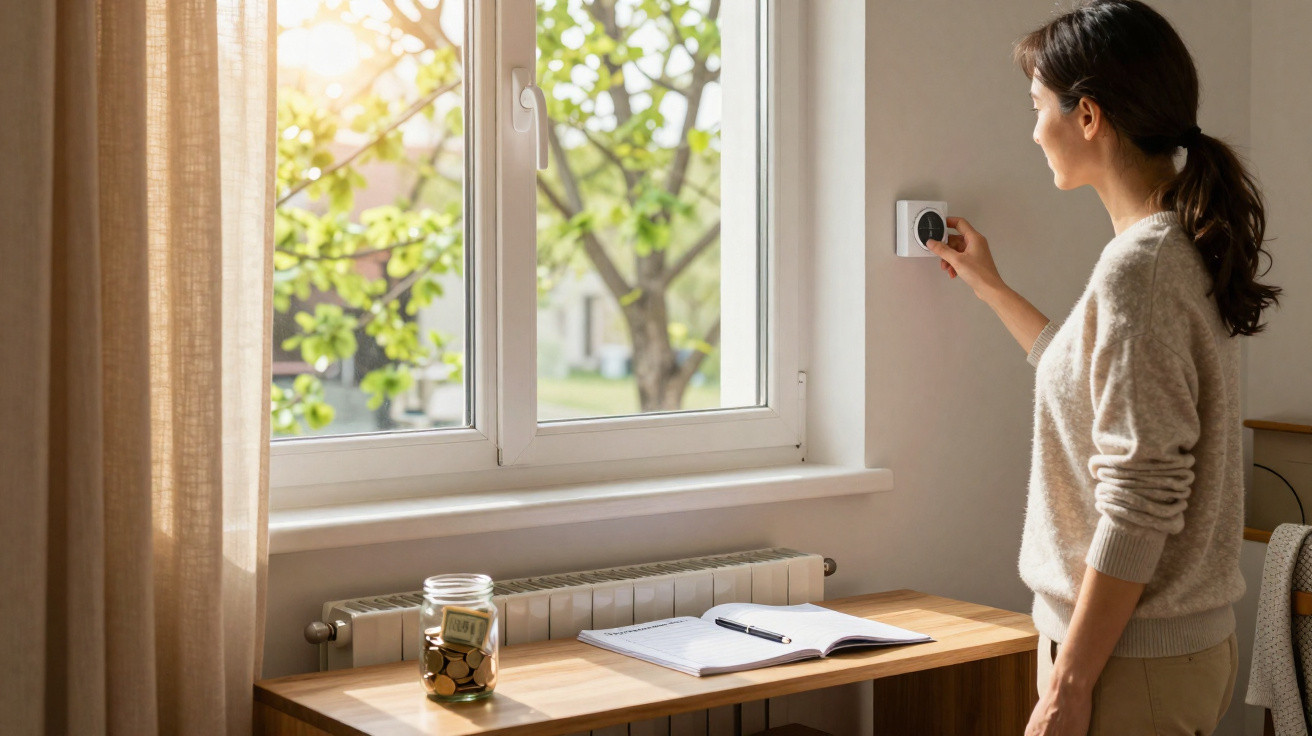
A costly mistake.
When the first mild days arrive, the answer can seem obvious: turn the heating off and save money. Yet this transition period is precisely when many households make the same mistake – and ultimately spend more rather than less. Spring brings not only warmer weather but also major temperature swings, which have a decisive effect on both comfort at home and energy use.
Why abruptly turning off the heating can backfire
Winter may feel as though it has already ended, and outdoor temperatures can reach 15 or 18 degrees in the afternoon. As a result, many people switch their heating off entirely. The catch is that overnight temperatures often drop back towards 5 degrees or below, and can fall considerably further depending on the region.
“Reheating a home that has cooled down uses considerably more energy than maintaining a moderate temperature.”
People who turn the heating off completely during the day will often find that:
- their home cools substantially overnight;
- it feels unpleasantly cold in the morning, particularly in the bathroom and bedroom;
- the heating then has to work at full power to bring every room back up to temperature;
- energy consumption rises instead of falling.
There is also a psychological factor. Anyone shivering in the bathroom in the morning is likely to turn the heating up higher “just to be safe” than is actually necessary. That uses extra kilowatt-hours.
Insulation determines how far you can reduce the heating in spring
Whether heating can be switched off quickly depends heavily on the building itself. This is where the differences become clear.
In a well-insulated flat, the building fabric retains heat and benefits from sunlight entering through windows and patio doors. The walls lose heat more slowly overnight, keeping temperature differences manageable.
Poorly insulated homes are a different matter:
- walls and ceilings can lose heat within a few hours;
- draughty windows create cold air currents;
- tiled floors soon become uncomfortably cold.
Anyone living in an older property without energy-efficiency upgrades should be especially cautious about switching the heating off altogether. In these homes, a careful approach with reduced heating, rather than no heating, is far more worthwhile.
Reduce the heating gradually rather than simply switching it off
A gradual move from winter heating to spring operation makes much more sense than a drastic cut-off.
Lower the temperature in small stages
A useful rule of thumb is to reduce the target temperature by one or two degrees each week. This allows your body to adapt to the slightly cooler indoor conditions while preventing the building from cooling down suddenly.
For example:
- Winter setting: 21 degrees in the living area
- Week 1 in spring: 20 degrees
- Week 2: 19 degrees
- Week 3: 18 degrees, if you are comfortable with it
If you are out frequently or the property is empty during the day, temperatures can be lowered a little further during that time – but they should not be switched off completely.
Make smart use of programmable thermostats
Modern radiator thermostats and room controls are particularly helpful during this changeable period. Even straightforward programmable models let you set schedules, for example:
- slightly warmer in the morning before getting up;
- considerably cooler during daytime absences;
- a comfortable temperature again in the living area during the evening;
- generally one or two degrees cooler overnight.
“The heating does not need to run continuously – it simply needs to provide the right output at the right time.”
Those using smart-home technology can control the system even more precisely, such as according to whether people are at home via a smartphone or through geofencing.
Use solar warmth without losing it again in the evening
Sunlight plays a surprisingly important part during the transition season. Used properly, it can replace some of the heating required.
Useful measures include:
- opening curtains and blinds fully during the day, especially on south-facing windows;
- keeping furniture away from radiators and large windows so that air can circulate more effectively;
- closing blinds and curtains in the late afternoon to retain stored warmth for longer.
Applying these simple steps consistently can noticeably lower the heating curve without making the home feel like a fridge by the evening.
Follow the weather, not the calendar: when does it make sense to turn the heating off?
Many households have a fixed date in mind: “The heating goes off from 1 April.” It is this rigid routine that causes frustration every year, because the weather rarely follows the calendar.
“The better guide is not the date on the calendar, but the overnight minimum temperature over a longer period.”
Energy experts advise waiting for at least two weeks in which overnight lows remain consistently above roughly 10 degrees before switching the heating off for good. Only then do walls and floors cool down much more slowly, while the heating demand drops noticeably.
The region is also highly relevant:
- this is often possible earlier in lowland areas and towns or cities;
- in upland locations or exposed, windy areas, it is generally possible later;
- coastal regions benefit from a milder climate, although wind can cool buildings down more sharply.
Use summer mode on the heating instead of switching it off completely
If you have a gas or oil boiler with central controls, spring is not the time simply to use the main switch. Nearly all modern systems offer what is known as summer mode or hot-water mode.
This setting works as follows:
- the space-heating function is switched off;
- hot water for showers and the kitchen remains available;
- the system stays operational and does not need to be restarted from cold if temperatures fall again.
The benefit is that you cut space-heating costs while retaining the convenience of hot water. If a cold spell returns in April, heating operation can be reactivated without difficulty.
Spring is maintenance time: prepare the heating rather than forgetting it
Many people put off boiler maintenance until the first fault occurs in winter. Spring is a much better time to have the system checked.
“A serviced heating system uses less energy, operates more reliably and lasts longer.”
Typical spring jobs include:
- an annual inspection of a gas or oil boiler;
- checking and cleaning the burner and heat exchanger;
- bleeding radiators;
- flushing the heating system where there are significant deposits, if required.
Booking an appointment early means you do not have to contend with packed schedules in autumn, and you are less likely to be left without heat unexpectedly in winter.
Every household is different: factors to weigh up
There is no universal rule that says “turn the heating off from day X”. Several factors affect the right choice:
- Location of the home: a city flat or a detached rural house?
- Insulation standard: insulated external walls and new windows, or an older condition?
- Household members: young children, older people, or everyone fit and resilient?
- How the home is used: occupied all day or mostly empty during daytime hours?
Anyone who feels cold easily or has health sensitivities should not reduce their comfort temperature too severely. A cold or worsening circulation problems can ultimately cause more stress than the kilowatt-hours saved are worth.
How the right approach to heating affects your wallet
A well-planned spring approach can reduce heating costs noticeably. The aim is less about heroically switching the heating off completely and more about managing energy use intelligently.
Those who:
- lower the temperature step by step;
- take weather forecasts seriously;
- make deliberate use of solar warmth; and
- use technology such as thermostats or summer mode,
avoid the costly stop-start periods in which the heating repeatedly has to ramp up from zero to full output.
There are longer-term benefits too. A correctly adjusted and regularly serviced system operates within its optimum range, burns more cleanly and puts less strain on its components. This saves fuel and reduces the risk of expensive repairs during the heating season.
Anyone who treats the transition period as a season in its own right, rather than merely an extension of winter, can strike a very good balance between comfort and costs with a few simple changes in behaviour – without a thick wool blanket on the sofa or children shivering in the bathroom.






Comments
No comments yet. Be the first to comment!
Leave a Comment