
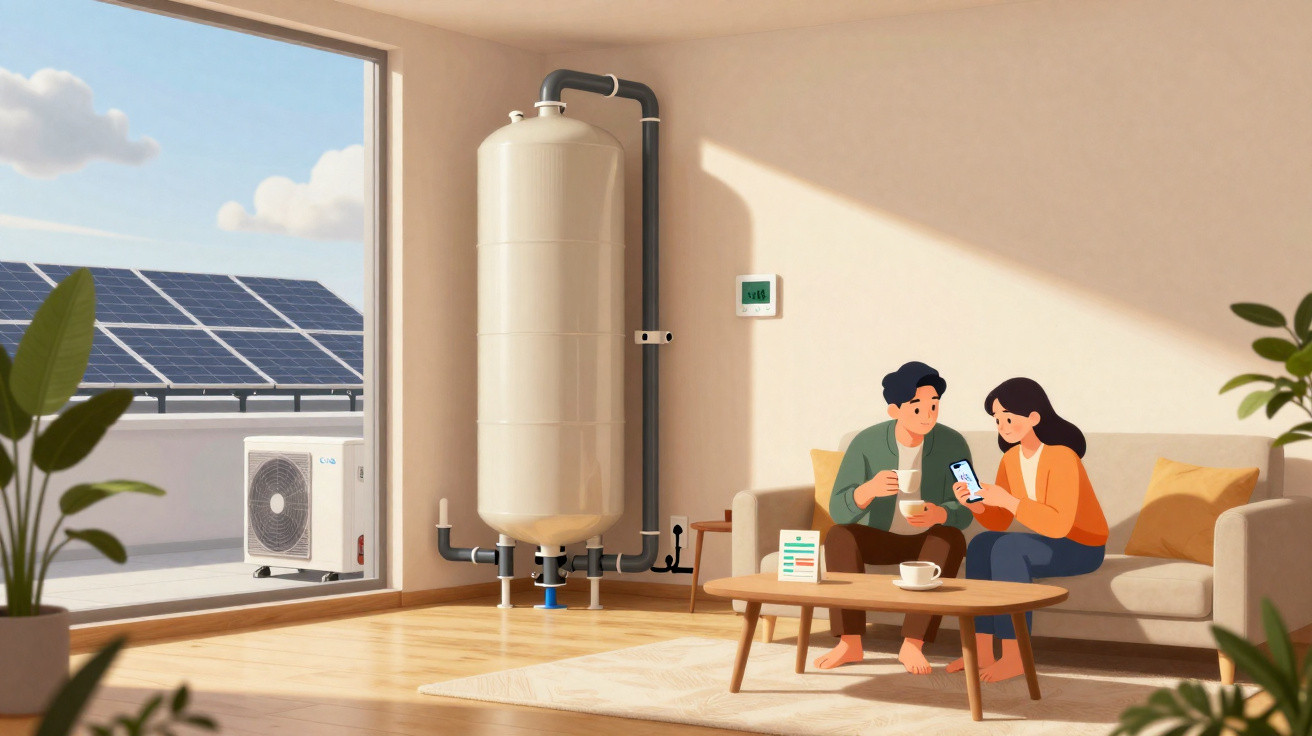
As gas and oil prices fluctuate and pressure to meet climate targets intensifies, engineers around the world are looking for alternatives to traditional central heating. In China, researchers are working on a system that appears simple at first glance: solar power, a heat pump and a layer of sand beneath the floor. This combination could significantly disrupt the heating market.
Why new heating solutions are urgently needed
Energy use in buildings is among the biggest drivers of climate change. Many households still rely on gas or oil heating, while older homes are often poorly insulated. The result is high costs, high emissions and little certainty when planning ahead.
At the same time, tenants and homeowners expect three things from a modern heating system: it must be affordable, dependable and avoid placing unnecessary strain on the environment. This is precisely where the Chinese researchers come in. They are seeking to create a system that stores renewable energy and releases it steadily, without costly high-tech batteries or complex alterations.
Sand as thermal storage: how the new heating concept works
Teams from Zhongyuan University of Technology and Dalian University of Technology have developed a heating system combining several elements:
- a layer of sand in the floor that acts as thermal storage
- solar panels on the roof or façade
- a solar-powered heat pump at the centre of the system
The principle is that the sand beneath the floor retains heat for many hours, and in some cases even days. The solar cells generate electricity whenever the sun is shining. When solar radiation is insufficient, the heat pump takes over, drawing energy from the outside air or the ground to heat the sand again.
“The floor becomes an invisible radiator that delivers even warmth to the room around the clock.”
In practical terms, this could involve a layer of sand around 20 centimetres deep beneath a conventional screed floor. Engineers install pipes or heat exchangers within this layer and connect them to the heat pump. The sand absorbs the energy, distributes it through the material and releases it upwards into the living space as radiant heat.
Heating in sunshine and cloud: the dual-source principle
The system uses two energy sources that complement one another:
When the sun is shining
Solar panels produce electricity that feeds directly into the heat pump. The heat pump raises the temperature of the sand. Some of the energy can be used for heating immediately, while the remainder is stored in the floor as a reserve. On bright winter days, the system is effectively preheated for the evening and overnight period.
When the sky is grey
When sunlight is unavailable, the heat pump does most of the work. It uses grid electricity or power from an additional storage unit and extracts heat from the outdoor air. As the sand temperature remains comparatively stable, the system needs less additional heating than one in which every room is supplied individually.
The benefit is a consistent heat output even when the weather changes or outside temperatures fall rapidly. Conventional radiators often respond slowly or briefly overheat. A sand floor delivers heat far more evenly.
What does living with sand heating feel like?
Anyone who has used underfloor heating will know the basic idea: heat rises evenly from below, creating a comfortable and natural sensation. The sand-based solution takes this further because it offers greater storage capacity.
Typical day-to-day effects include:
- an even room temperature with less sensation of draughts
- hardly any cold corners or cold feet
- less air circulation, potentially meaning less dust in the air
- thermal inertia within the system: temperatures change slowly, with few sharp fluctuations
This makes the system particularly suitable for flats and houses intended to remain at a consistently comfortable temperature over longer periods, rather than being continually turned up and down.
Cost benefits: where could this technology help save money?
There is currently no official installation price. The research team is still at the development stage and expects costs to decline once the system is produced on a larger scale. However, several possible areas for savings are already clear:
| Cost factor | Conventional heating | Sand-solar system |
|---|---|---|
| Fuel | Gas / oil, with highly volatile prices | Sun + electricity for the heat pump |
| Maintenance | Regular boiler and flue inspections | Heat pump maintenance, with few moving parts in the storage system |
| Component lifespan | Boiler wear caused by combustion | The sand floor itself is almost wear-free |
| Dependence on imports | High dependence for gas and oil | Locally generated solar energy; electricity mix depends on the country |
The researchers emphasise that the system is intended to be cheaper to run in the long term than conventional gas heating. In particular, using free solar energy could substantially reduce ongoing costs. Combined with good thermal insulation, a house could operate largely without fossil fuels.
How realistic is its use in Europe and the DACH region?
A sand floor may initially sound unusual, but technically it is not far removed from familiar underfloor heating. For construction companies and installers, the transition could therefore be less significant than a move to entirely new systems.
The concept is especially interesting for:
- new-build homes with planned underfloor heating
- passive houses and low-energy homes
- regions with cold winters as well as plenty of sunshine
Installation would be more complicated in existing buildings fitted with radiators, as the floor would need to be opened and rebuilt. Here, the technology could mainly be relevant during major renovations, when screed and pipework are being replaced anyway.
Benefits and potential risks at a glance
What supports the system?
- a high share of renewable energy through solar electricity
- stable, even heat output throughout the day
- low wear of sand as the storage material
- potential for lower heating costs where insulation is good
- no gas or oil is burned inside the home
Which questions remain open?
- upfront costs for the heat pump, solar installation and storage floor
- space required for technical components in small flats
- performance during extremely long cold periods without sunshine
- lifespan and efficiency of real-world systems in everyday use
The local electricity mix is particularly important: in countries where electricity still depends heavily on coal and gas, the climate benefit is somewhat reduced. The greener the electricity supply, the cleaner the system operates.
What homeowners can take away now
Even though this specific technology from China is not yet available from builders’ merchants, it highlights a clear trend: thermal storage within buildings is becoming more important. Whether using sand, concrete, water or other materials, those who store energy from solar power and heat pumps effectively can use smaller heating units and manage fluctuations more successfully.
Homeowners can already consider three areas today: insulation, the type of heating system and the use of solar energy. A well-insulated home with an efficient heat pump and intelligent storage in the floor or heating system is already regarded as one of the most viable solutions for future heating seasons.
The sand-filled floor developed by the Chinese researchers fits this picture exactly: simple materials, intelligent control and a focus on storage capacity. If the concept proves successful in pilot projects, the traditional gas boiler in the basement could genuinely face competition within a few years - from a construction material that many people currently associate only with the beach.



Comments
No comments yet. Be the first to comment!
Leave a Comment