
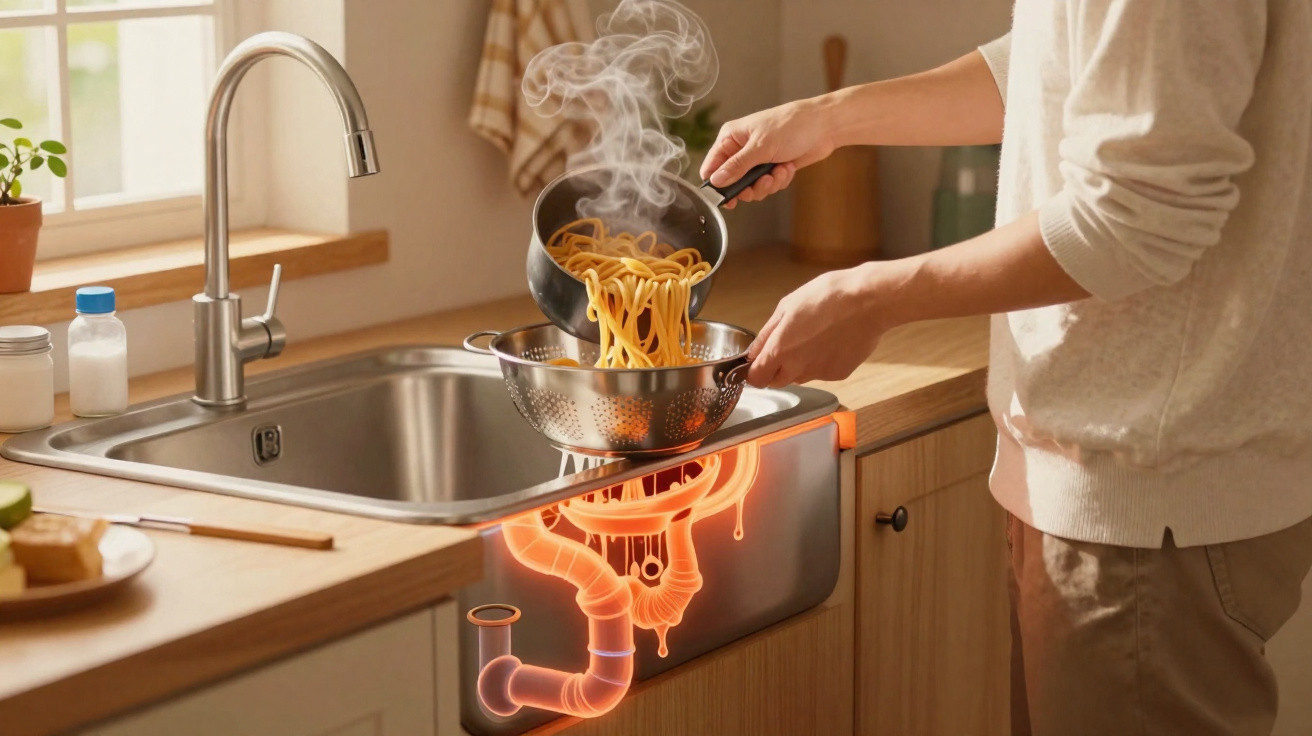
In countless kitchens, the same routine happens every evening: the pasta is ready, the pot is drained, and the boiling water rushes down the plughole. Job done. Nothing appears to be damaged, there are no drips and no smell, so it cannot be a serious issue – or so many people assume. Yet this everyday habit can quietly become a genuine problem for your kitchen plumbing and, in the longer term, for your budget.
Why boiling pasta water puts pipes under strain
In modern homes, kitchen waste pipes are usually made from PVC or a similar plastic. The material is practical, lightweight and inexpensive, but it is sensitive to very high temperatures. At around 60 to 70 degrees, plastic already starts to soften. Pasta water is close to boiling point, at just under 100 degrees.
Repeatedly pouring this extreme heat directly into the plughole places pipes and joints under far more strain than they are designed to handle. The most vulnerable areas include:
- bends and elbows in the pipework
- connections between the pipe and the trap
- seals in push-fit joints beneath the sink
Over time, slight distortions can develop in these places, even though they are not visible from the outside. The pipework may still look perfectly fine, while damage has already begun internally.
“Repeated shocks from near-boiling water cause plastic pipes to fatigue – the real damage often only becomes apparent months later.”
How heat gradually damages seals and kitchen units
Heat stress in the pipes is only one part of the problem. Constantly switching between cold and very hot water creates a second risk. In many kitchen sinks, a small amount of cold water remains in the trap and pipework below the basin. When an entire pot of pasta water is suddenly poured in, scalding water meets cold pipes and seals.
This repeated expansion and contraction particularly affects rubber and silicone seals. They can harden, become brittle and develop tiny cracks. At first, only a few drops may escape, often unnoticed behind the base unit or into the wall.
Early warning signs of this kind of damage include:
- swollen boards inside the sink unit
- a musty, damp smell in the kitchen
- slight discolouration or traces of mould on the wall or skirting board
Failing to act at this stage can result in water damage to floors or walls. Even a straightforward drain-cleaning job can quickly cost £80 to £200. If kitchen furniture, flooring and perhaps even the screed are affected, costs can easily rise well into the hundreds or thousands.
The other culprit: starch acting like glue inside pipes
Temperature tells only half the story. The cloudy liquid left in a pasta pot contains large amounts of starch. This is the very substance that makes the water feel slightly slimy and helps pasta cling well to sauce afterwards.
Inside the drain, starch behaves much like paste. It sticks to pipe walls and forms a thin, slippery coating. That layer then attracts everything else that enters the sink, including:
- crumbs from bread or vegetables
- small pieces of pasta or grains of rice
- leftover sauce, pieces of tomato and cheese residue
- fats and oils from frying
Together with starch, these residues create an increasingly thick coating, especially where water flows more slowly, such as in the trap and pipe bends. The pipe narrows, water drains less efficiently and the first gurgling noises begin. Many people then respond by using even more hot water, often straight from the pasta pot, which only makes the issue worse.
Why hot water does not really make fat disappear
Many households follow this advice: “Once a month, pour a ladle of very hot water down the drain and the fats will dissolve.” It sounds logical, but in practice it has an unpleasant side effect.
“Fats do melt when they come into contact with heat, travel a little further along the pipe – and then solidify again where it is cooler.”
Over time, the grease blockage is therefore merely moved further into the drainage system. Combined with starch from pasta, rice or potato water, it can form an exceptionally hard deposit. Some plumbers compare these build-ups to concrete: grey, solid and difficult to remove without considerable effort.
Draining pasta without damaging the sink or your finances
The good news is that you do not need to abandon your pasta routine completely; only a few simple steps need changing. The most important measure is straightforward: keep the large surge of boiling water from going directly down the drain.
A gentler way to drain pasta water
- Place a colander over a bowl or a second saucepan rather than directly in the sink.
- Pour the pasta water into it and allow it to cool for a few minutes.
- Once the temperature has dropped noticeably, dispose of the water in smaller amounts.
- At the same time, run cold water so that the mixed temperature in the pipe remains around 40 to 50 degrees.
This keeps temperature changes more manageable for pipes and seals. It also gives you the opportunity to reuse the water before it goes down the drain.
Useful ways to reuse pasta water
Pasta or rice water is not simply waste. Its starch content makes it useful in the kitchen. Anyone who enjoys cooking can use it in several ways:
- Adding a ladleful to a sauce or pan dish helps bind the liquid and creates a creamy texture.
- A little pasta water in the pasta pan helps cheese or pesto emulsify more effectively.
- Cooled, unsalted water can be used for some balcony or house plants, as starch can feed bacteria in the soil.
When using it for plants, only use unsalted water and do not do so every day, to prevent salt or a film building up in the pot.
Gentle drain care instead of aggressive chemicals
Anyone who wants to keep their pipes clear over the long term is better off with regular, gentler maintenance than harsh drain cleaners. Aggressive chemicals can attack seals and put additional stress on pipe materials.
Alternatives that have proved effective in many households include:
- Occasionally allowing very hot, but not boiling, tap water to run down the drain, for example directly from the tap.
- Pouring one tablespoon of coarse salt into the drain, followed by warm water.
- Adding a mixture of bicarbonate of soda or baking powder, followed by a little household vinegar; allow it to react briefly, then rinse with lukewarm water.
These measures can loosen light grease films and reduce odours without putting as much strain on the material as boiling liquids or strong chemical cleaners.
Signs that your drain pipe is becoming a problem
Many issues develop gradually and give warning before the drain becomes completely blocked. Typical signs include:
- Water drains noticeably more slowly than it used to.
- There is audible gurgling in the trap or inside the wall.
- An unpleasant smell constantly comes from the drain.
At the latest, it is worth taking a careful look beneath the sink. Are all connections secure? Can you see any dampness? If the floor of the cupboard feels soft or bowed, this points to prolonged moisture. Taking action at this stage can often prevent an expensive emergency repair.
Why kitchen drains are particularly sensitive
Compared with bathrooms, kitchens face a particular combination of pressures: high temperatures, grease, food scraps and washing-up liquid. Pasta water brings all these factors together: heat, starch and often oil or sauce residue as well. This combination places greater strain on the pipework than clear water from a shower or bathroom basin.
In addition, many people are inclined to put things down the kitchen drain “just quickly” even though they do not belong there: cooking fat, leftover sauces, milk and small food scraps. All of this intensifies the effect that pasta water already has.
By getting used to a few simple habits – putting food waste in the bin rather than the sink, allowing pasta water to cool, and disposing of fat in a jar instead of the drain – you can noticeably reduce the strain on your pipes. A drain may appear robust at first glance, but it is actually very sensitive to what goes into it every day.




Comments
No comments yet. Be the first to comment!
Leave a Comment