
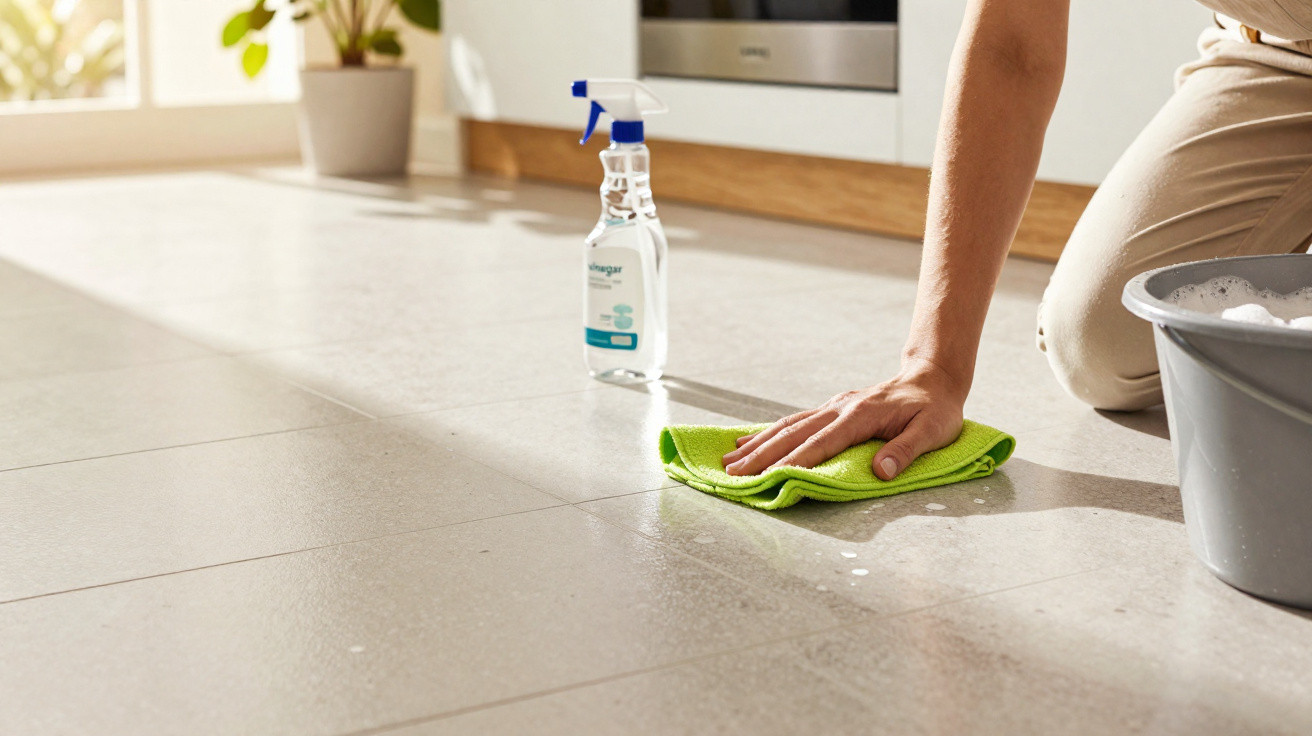
In kitchens and living spaces with porcelain stoneware flooring, a dull grey haze can build up surprisingly quickly. Even people who mop regularly know the frustration: stains remain, streaks show up in the light and the floor appears lacklustre. It is hardly surprising that many turn to increasingly harsh products, from strong cleaners to improvised mixtures of powder and acid. However, professional building cleaners recommend a straightforward product that is already in most kitchen cupboards.
Why porcelain stoneware floors quickly lose their sheen
Porcelain stoneware, often sold as fine porcelain stoneware or grès cérame, is considered durable, easy to maintain and well suited to high-traffic rooms. In reality, though, it often looks less refined than it did in the showroom after only a few months.
- Fine dust and sand act like abrasive paper.
- Kitchen grease settles on the surface as a film.
- Unsuitable cleaning products leave deposits that attract more dirt.
What is often overlooked is that not only aggressive chemicals can damage the surface over time: some traditional home remedies can do the same. Once the delicate glossy layer has been affected, dirt adheres more easily. As a result, the floor needs cleaning more often, yet the finish continues to worsen.
Why citrus juice and powder can ruin the floor
When a floor starts to look dull, many households instinctively reach for citrus juice or alkaline powders. The reasoning seems simple: one cuts through grease, while the other is regarded as an all-purpose solution. Yet this combination can be risky for porcelain stoneware.
Acidic mixtures may attack the glaze if used repeatedly. In larger quantities, alkaline powders can work like an abrasive. The damage is often gradual rather than immediate: after several months, the floor can lose its deep shine and develop a patchy appearance.
There is another issue too. Many DIY mixtures contain several ingredients that cannot be rinsed away properly. They leave behind a pale, streaky film that becomes particularly obvious in backlighting. The tiles can then look permanently smeared despite being cleaned.
“Professionals rely on a small number of clearly measured products – and on rinsing thoroughly rather than on improvised mixtures.”
The overlooked kitchen-cupboard solution for porcelain stoneware floors
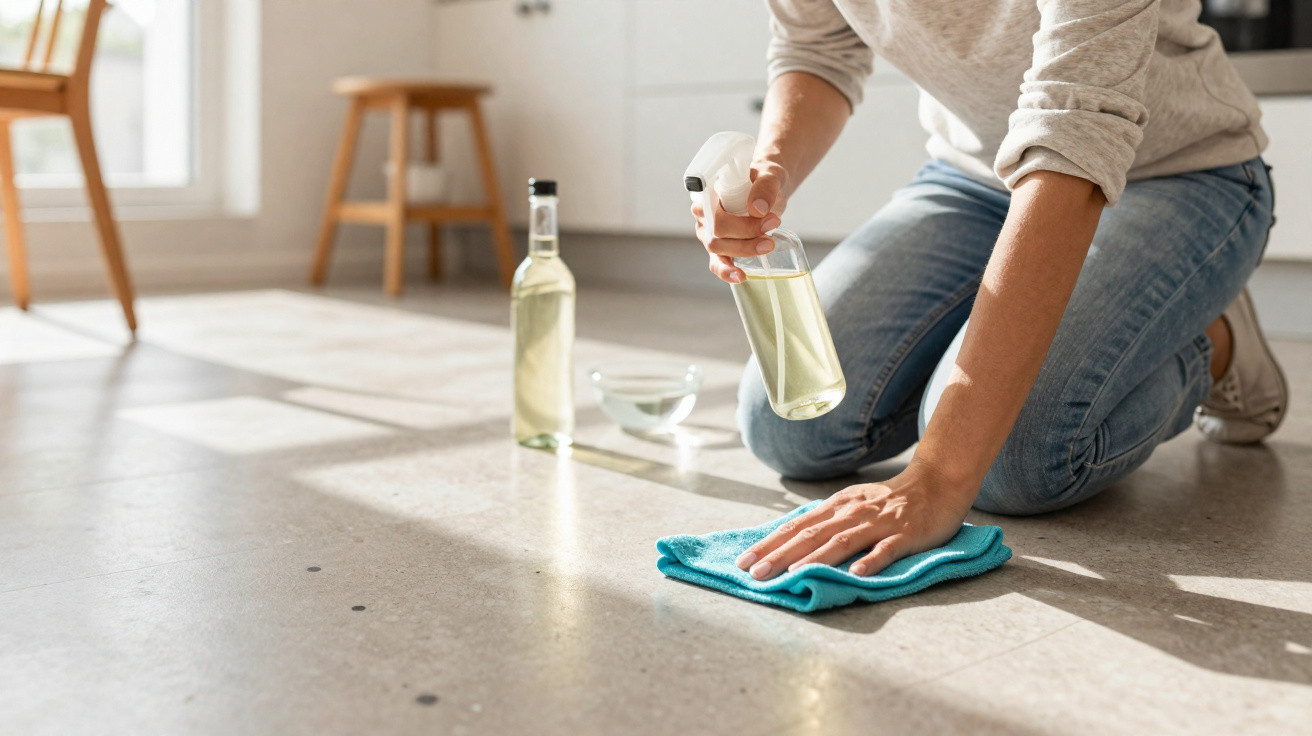
For porcelain stoneware floors, professional building-care specialists particularly recommend one product: clear table vinegar. Used correctly, it breaks down grease, removes light limescale marks, reduces germs and leaves the floor looking fresher, without placing unnecessary strain on the surface.
The ideal everyday mixture
Professionals suggest a simple ratio:
- 1 part clear table vinegar
- 3 parts lukewarm water
Mix these in a clean mop bucket used exclusively for floors. Lukewarm water boosts the effect and loosens greasy deposits more quickly.
Using the right equipment is equally important: choose a microfibre mop pad or mop. Its fine fibres pick up dirt more effectively and spread the solution more evenly.
How professionals clean step by step
- Remove loose dirt first: vacuum or sweep thoroughly so that small stones cannot scratch across the floor.
- Prepare the mixture: pour the water into the bucket, add the clear table vinegar and stir briefly.
- Dip in the mop and wring it out well, so the floor is not left sitting in water.
- Mop the area strip by strip rather than moving randomly across it, ensuring that no sections are missed.
- Rinse the mop afterwards and go over the floor a second time using only clean water to remove excess acid.
- Finally, dry the surface with a dry cloth or dry microfibre mop until no droplets remain.
“The difference comes less from the product itself than from the combination of correct dilution, rinsing afterwards and drying the floor.”
Why drying brings out the shine
Many people mop the floor when wet and then simply allow it to air-dry. This is precisely where the greatest shine-enhancing effect is lost. Water marks and final traces of residue remain visible as soon as light falls across the surface from the side.
Drying the floor with a cloth after mopping prevents these marks. The cloth lifts away the last drops of water along with fine particles of dirt. The result is a more even-looking surface, noticeably greater brightness and a cleaner feel underfoot.
Gentle rules for caring for porcelain stoneware
For everyday cleaning, a neutral cleaner in a low dose is usually sufficient. It removes dust and ordinary household dirt without attacking the flooring. A few simple habits can help maintain its shine for longer:
- Take off shoes with heavily treaded soles near the door whenever possible.
- Place large doormats down to catch sand and grit.
- Treat stains locally rather than immediately washing the entire floor with strong products.
Tackling stubborn stains precisely
If isolated marks cannot be removed with the vinegar mixture, professionals try to treat them as locally as possible:
- Grease stains: Apply a little alkaline powder directly to the affected area, work it in gently with a soft brush and rinse thoroughly.
- Rust marks: Make a small paste from clear table vinegar and powder, apply it, leave it to work for around 15 minutes and rinse it away without applying firm pressure.
The important point is not to extend these specialist treatments across the whole floor. This protects the rest of the surface.
What causes lasting damage to the floor
Porcelain stoneware can withstand a great deal, but it is not resistant to everything. Specialists repeatedly encounter the same mistakes that can ruin a floor in the long term:
- Regular use of strong acids or highly concentrated cleaners.
- Products containing abrasive particles or scouring sponges.
- Using too much care product, which creates layers on the surface.
Once the shine has been worn away, professional restoration is often the only option – and that costs considerably more than a bucket of water and clear table vinegar.
How to enhance the shine even further
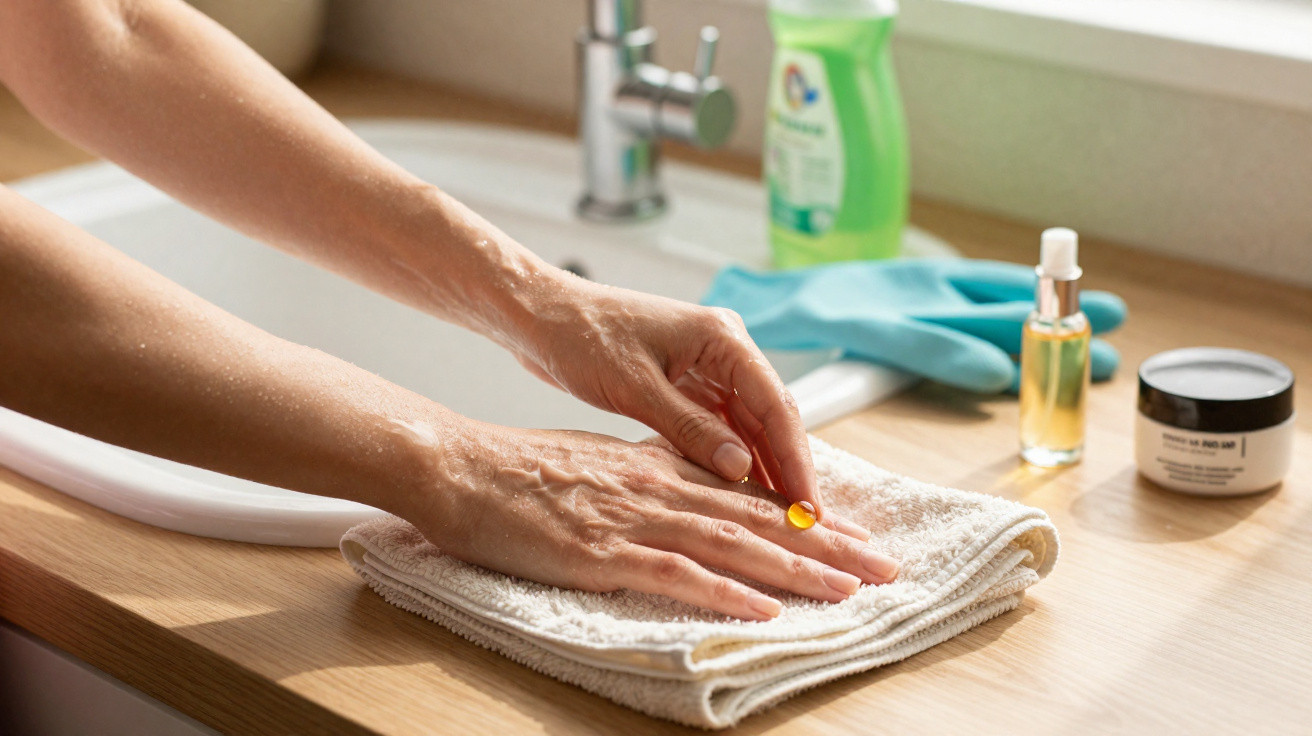
For special occasions, or where a living-area floor is meant to look especially elegant, some professionals use an optical trick. An extremely thin coating of natural oil or wax can enhance the shine.
The quantity is crucial: a tiny drop on a cloth is enough for an entire tile. Spread the material thinly, then buff it for a long time and firmly with a dry cloth. The aim is a subtle sheen, not a greasy surface. Households with pets or young children should use this method very sparingly and only around the edges, to reduce the risk of slipping.
What the term “porcelain stoneware” means
Many flat or house owners do not know exactly which type of tile they have at home. Porcelain stoneware is made from material fired at a particularly high density. This means it absorbs less water and is considered harder than standard ceramic flooring. Its surface may be glazed or matt. Glazed versions in particular look elegant, but they are more sensitive to strong chemicals and abrasive products.
Anyone who is unsure should check with the developer, look in the property particulars or consult an old invoice. Knowing the precise material makes it easier to choose suitable cleaners – and, when in doubt, reaching for clear table vinegar can avoid costly experiments with specialist chemicals.

Comments
No comments yet. Be the first to comment!
Leave a Comment