
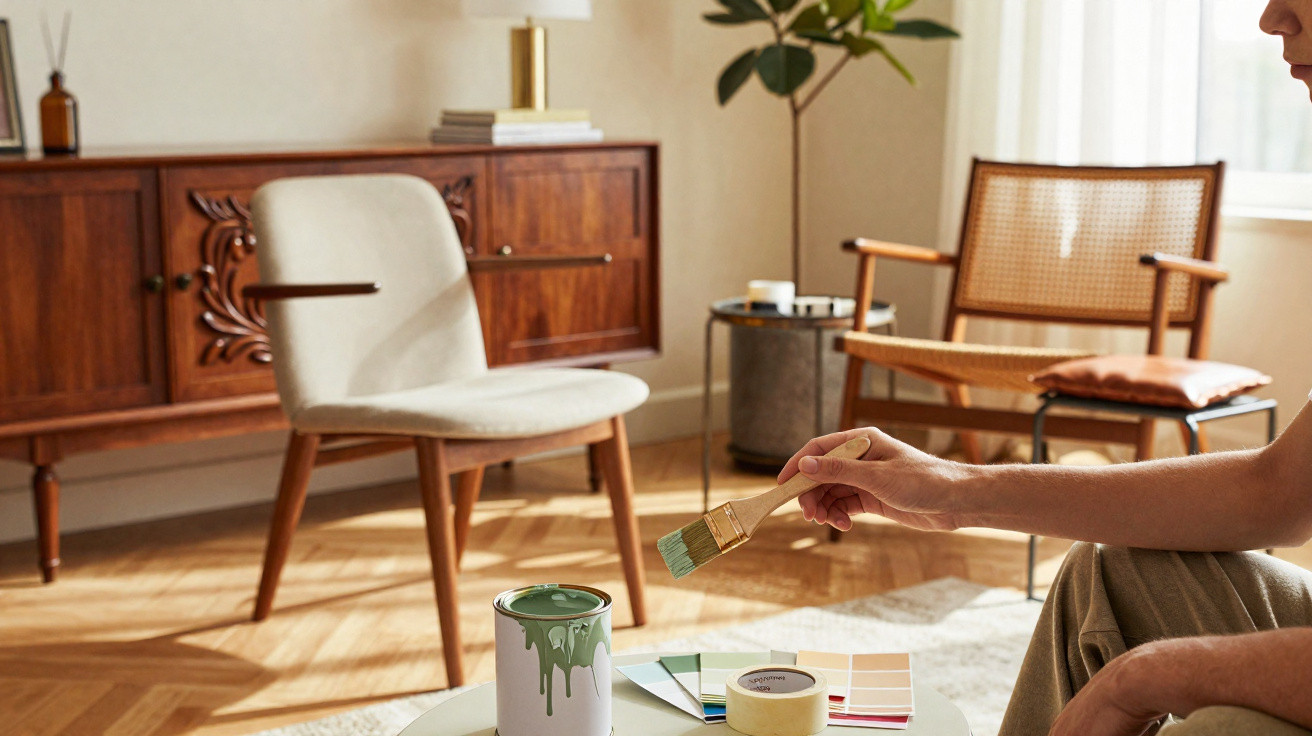
Social media is full of dramatic before-and-after videos: an old wardrobe becomes vivid blue, while a dark chest of drawers is transformed into bright white. The enthusiasm for upcycling and speedy makeovers can make it tempting to cover every inherited or second-hand piece of furniture in paint. Yet, with certain items, this is an expensive mistake that can almost completely destroy both their appearance and their value.
Why paint does not improve every piece of furniture
The 2025 interiors trend clearly favours natural wood, visible grain and handcrafted details. Collectors, dealers and many interior designers value patina, minor scratches and signs of age. These are precisely the qualities that opaque paint permanently conceals.
“Anyone who reaches for varnish or chalk paint without thinking can reduce a piece of furniture’s value by up to 90 per cent – within a few hours and irreversibly.”
Before beginning the first round of sanding, take a closer look. Is it mass-produced furniture from a high-street retailer, or could it be more significant than it initially appears?
1. Antique solid-wood furniture and family heirlooms
Genuine solid-wood antiques, especially those dating from the 19th century or earlier, require particular care. Typical examples include large farmhouse cupboards, tall narrow cabinets, writing bureaux and elaborately carved chests of drawers.
For collectors, the original finish is what matters: aged shellac polishes, hand-applied wax layers, darkened corners and faded edges. These details tell a story and account for a substantial part of an item’s value.
- Opaque paint removes the wood’s depth and character.
- Original fittings and locks often look out of place after a “shabby-chic treatment”.
- Restoring the former finish later is extremely costly and rarely achieves a perfect result.
Even if an old kitchen cupboard is advertised online for only a few hundred pounds, it may be priceless to a family. Once it has been painted over, that emotional connection is lost. Gentle cleaning, a light application of wax and acceptance of small imperfections will preserve the piece – and can often look more interesting in a contemporary setting than a completely reworked version.
2. Design classics and mid-century modern furniture
Furniture from the 1950s to the 1970s is another major danger zone: low sideboards, teak enfilades, slim desks and elegant armchairs with tapered legs. Although many were not made by celebrated designers, they follow the same design language and are now in high demand.
Common features of these pieces include:
- slim, uncluttered lines without unnecessary ornamentation
- high-quality teak, walnut or rosewood veneers
- original brass or moulded-wood handles
Painting this type of furniture white, anthracite or sage green destroys its proportions. The delicate edge detail disappears, as does the grain. Its quality is then difficult to identify, and its market value falls sharply.
“Many restorers recommend for mid-century furniture: clean gently, repair the veneer, oil it – but retain the original appearance as far as possible.”
Anyone wanting to give a sideboard a fresher look can use replacement handles, a glass top or carefully chosen accessories instead. These alter its impact without damaging the underlying material.
3. Fine timbers: walnut, aged oak and more
Even without official collector status, some woods are simply too good to hide beneath opaque paint. A walnut top with striking figuring, an old oak plank with knot holes or a solid table made from reclaimed timber is compelling precisely because of its irregularities.
Rather than reaching for a paintbrush, try:
- thorough cleaning with a slightly damp cloth and wood cleaner
- light sanding with an ultra-fine grit
- oil or wax that enhances and protects the grain
Teak, including teak garden furniture, is especially sensitive. This timber naturally contains oils that make it weather-resistant and allow it to develop a silvery-grey patina over time. When a sealed paint layer is applied, moisture can no longer escape properly. This encourages rot, blistering and flaking. In other words, the supposed “refreshing coat of paint” removes the very protective quality that makes teak so popular.
4. Veneer, marquetry and other fine workmanship
Veneered furniture may look solid at first glance, but it consists only of a thin layer of fine timber over a plainer core material. Many high-quality 20th-century cabinets use this construction, as do numerous design classics.
The issue is that sanding is usually needed to make paint adhere properly. Just a few careless strokes can cut through the extremely thin top layer. The result can be bare patches, ripples or cracks that are almost impossible to repair.
Marquetry and inlay work are even more delicate: carefully assembled decorative patterns made from different woods or materials. Painting over them conceals hours of skilled craftsmanship completely.
“If you are unsure about veneer or marquetry, ask a joiner or restorer when in doubt – rather than trusting a random DIY video.”
Often, a specialist cleaner, a little oil and targeted repairs to individual damaged areas are enough to make these pieces presentable again.
5. Delicate materials: rattan, metal, leather and fabric
Wood is not the only material harmed by unsuitable paint. Several other materials are just as sensitive.
Rattan, wicker and woven furniture
Woven chairs, armchairs and baskets have an airy, lightweight appearance. Thick sprayed or brushed-on paint clogs the weave, causing it to lose flexibility and quickly start flaking. Dirt also collects in the gaps, where it is very difficult to remove.
Metal with patina
Old lockers, workshop cabinets and industrial lamps gain their appeal from rust marks, chips and scratches. An opaque coating turns them into generic new-looking furniture. To protect them, a clear matt varnish or wax is a better choice, as it preserves the look while still sealing the surface.
Leather and textiles
Online guides often suggest painting sofas, armchairs or chairs with fabric or leather paint. In reality, surfaces frequently become stiff, cracked or patchy. This is particularly likely with seating that is constantly moving, where the paint layer often comes away again – sometimes onto clothing or carpets.
Instead of painting, upholstery cleaning, professional reupholstery or replacing the cover are far more durable options.
Modernising valuable furniture without a paintbrush
Anyone looking to incorporate old furniture stylishly into a modern home does not necessarily need to use paint. Small changes can have a considerable effect.
- Replace the fittings: New handles in black, brass or ceramic can immediately make a chest of drawers look more contemporary.
- Upgrade the interior: Soft-close runners, new shelves or integrated lighting improve comfort and practicality.
- Create contrast: An old cupboard looks fresher when surrounded by light walls, restrained furniture and clean lines.
- Use the 80/20 rule: Around 80 per cent of the interior remains simple and modern, while 20 per cent consists of expressive vintage accents.
If you are determined to paint, choose furniture with no historical or material value: basic MDF cabinets, melamine-covered shelving from discount retailers or functional fitted furniture. With these pieces, appearance matters more than the material itself.
How to identify furniture that could be problematic
Not everyone has specialist knowledge of timber types, periods and design history. Even so, a few indicators can help with an initial assessment:
| Feature | Possible significance |
|---|---|
| Very heavy construction, solid wood | May indicate older, higher-quality manufacture |
| Fine, even veneer patterns | Veneer work, often of a higher quality than solid wood |
| Original locks, keys or decorative fittings | Possible collector value or artisanal workmanship |
| Maker’s label, stamp or signature | A design piece or workshop-made item; research it before painting |
| Visible handcrafting, irregular edges | An individual piece with value beyond its raw material cost |
Why natural finishes are back in fashion
The return of visible wood reflects the broader desire for greater calm and authenticity in the home. Rather than smooth, artificially flawless surfaces, the focus is shifting towards warm, slightly uneven finishes. They feel more homely and age better because every new mark is welcome.
In practical terms, this means that anyone who cares for their furniture today instead of painting over it is not only making the right choice from a collector’s perspective. They are also closely aligned with the interiors trends of the coming years, while retaining the option to have the piece professionally restored or sold later if needed.
A carefully oiled table, a gently refreshed sideboard or a metal cabinet that has simply been cleaned says more about style and attitude than even the most flawless coat of paint. The most important decision is therefore often made before the paint tin is ever opened.


Comments
No comments yet. Be the first to comment!
Leave a Comment