
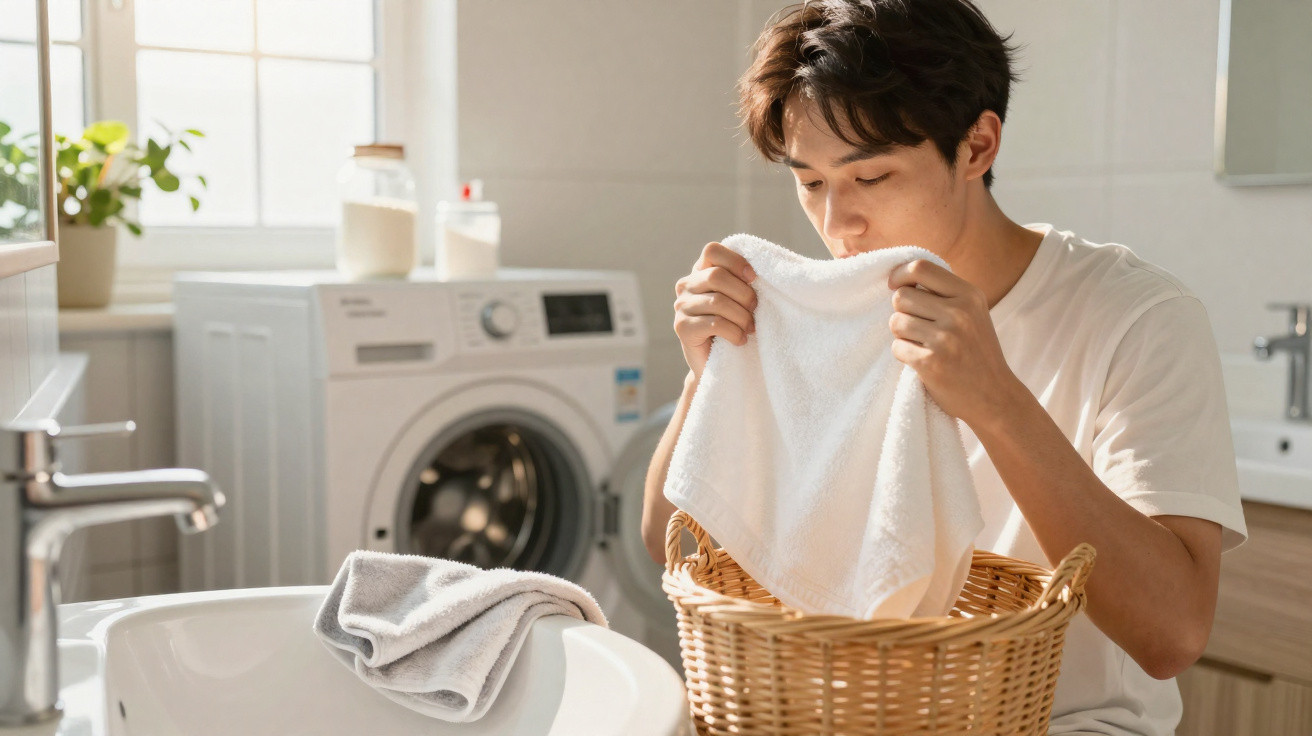
Towels can look fresh and may even smell of shower gel, yet they often go unwashed for weeks. That is exactly the issue: looking clean is far from the same as being germ-free. Microbiologists therefore suggest taking a hard look at our established laundry habits.
Why towels become “dirty” sooner than you think
After a shower, we feel clean, so the towel cannot be that bad – can it? The idea seems reasonable, but it is only partly true. Our skin remains “alive” even after washing.
- It continually sheds dead skin cells.
- It produces natural oils and sweat.
- Traces of shower gel, shampoo and cream remain behind.
When we dry ourselves, all of this transfers straight into the fabric. There, it meets moisture and warmth – the ideal combination for microorganisms.
“A damp towel is not an innocent piece of fabric, but a miniature habitat for bacteria and fungi.”
If the towel is then left in a poorly ventilated bathroom, growth speeds up further. Studies indicate that bacteria on a wet towel can double in around 20 minutes. The longer the towel hangs there, the denser this invisible layer of germs becomes.
Expert advice: how often towels should really be washed
Many households wash bathroom textiles once a week, or even less frequently. Hygiene specialists consider this far too infrequent. One widely quoted guideline is to stop using a towel after three to four uses.
Applied to everyday life, this roughly means the following:
| Type of towel | Recommended washing frequency |
|---|---|
| Bath towels for the body | After 3–4 uses (usually every 2–3 days) |
| Hand towels by the basin | Every 1–2 days |
| Sports and sauna towels | After every use |
| Face towels / flannels | Daily, especially for sensitive skin |
The reason is simple: the face is particularly sensitive, hand towels are touched by many hands, and sports towels absorb a great deal of sweat – and sweat is a feast for bacteria.
Anyone living in a very warm, humid climate, with an internal bathroom that has no window, or in a crowded home should wash towels even more often. Extra care is also sensible for people with a weakened immune system, allergies or skin conditions.
Harmful consequences: when towels become a breeding ground for germs
Most germs found on towels are harmless because they already occur naturally on our skin. The situation becomes problematic when their concentration rises or vulnerable areas are involved.
- Skin irritation: Red patches, itching or small spots can be aggravated by heavily contaminated textiles.
- Acne flare-ups: People prone to acne can further irritate their skin by repeatedly using the same face towels.
- Inflammation: Germs can enter more easily through open areas, shaving cuts or insect bites.
- Infections: Certain bacteria, including staphylococci, can in the worst cases cause pus-filled inflammation.
Shared use is especially risky: when every family member uses the same towel for their hands or face, germs pass from one person to another. This can make infections, fungal conditions and even ordinary cold viruses easier to circulate.
“Anyone who shares their towel may also be sharing bacteria, fungi and viruses – willingly, every day.”
How to care for towels properly – not just in the washing machine
Drying: the crucial step between washes
How towels are hung after a shower can matter more than when they are washed. The fabric needs to dry fully and quickly.
- Always hang towels spread out rather than bunching them up in thick folds.
- In very humid bathrooms, it is better to dry them on a hook in the hallway or bedroom.
- Ventilate regularly; otherwise, the room remains permanently damp.
- If you have a heated towel rail, use it – heat speeds up drying.
When a towel stays damp for hours, the risk of bacterial and fungal growth rises considerably. A musty smell is another clear warning sign: in that case, a hot wash is often the only answer.
The right washing temperature and detergent
For cotton towels, hygiene experts recommend washing at 60°C. Most germs are only reliably reduced at temperatures like these. If you wash at a lower temperature to save energy, you should:
- use a full-duty powder detergent, which usually contains bleaching components;
- avoid overloading the machine so that water and detergent can reach every item;
- run a 60°C cycle occasionally to reduce germs inside the appliance.
Disinfectant additives are generally unnecessary in an ordinary household. Homes with immunocompromised people or contagious infections may be an exception, for example where someone has athlete’s foot.
Fabric softener, vinegar and more: what towels really need
Many people enjoy fluffy towels and pour fabric softener generously into the machine. However, there is a drawback: its chemicals coat the fibres like a film, making them softer but also less absorbent. New towels in particular can quickly lose their effectiveness this way.
For towels that are soft but still practical, you can:
- use fabric softener sparingly and not with every wash;
- occasionally add a little white household vinegar to the fabric-softener compartment, as it loosens residue in the fabric;
- warm towels briefly in the tumble dryer, which fluffs up the fibres without “coating” them.
When towels should be replaced
Even the best wash cycle cannot turn a worn-out towel into a hygienic one. Over time, fibres become brittle, absorb moisture less effectively and cannot be cleaned as thoroughly.
A replacement is due at the latest when:
- the towel quickly develops a musty smell despite washing;
- its surface feels hard, thin or looks badly discoloured;
- it dries noticeably less well.
As a broad rule of thumb, many towels reach the end of their life after around two years of intensive use, depending on their quality and care.
Practical routines for everyday life
To ensure these recommendations work beyond the page, small household routines can help. Here are a few examples:
- Give each person in the home their own colour or pattern for hand towels and bath towels.
- Put a small hook schedule in the bathroom to show when each towel should be changed.
- Store and wash face towels separately from body towels to minimise the spread of germs.
- Keep a separate towel solely for the gym, then put it straight into the laundry when you return home.
An open discussion about bathroom hygiene can be especially worthwhile with teenagers or in shared flats. Most people are not doing anything “wrong”; they simply do not know how quickly germs multiply in fabric.
Who should pay particular attention to towel hygiene
Some groups benefit more than others from stricter rules for changing towels. This includes people with:
- severe or inflammatory acne;
- eczema or other chronic skin conditions;
- known allergies;
- a suppressed immune system, for instance due to medication or illness.
People who regularly use inhaled medication also leave additional particles on their face and hands. Clean face towels reduce the risk of germs settling there or irritation becoming worse.
“A fresh towel is no replacement for treatment, but it can noticeably ease day-to-day symptoms.”
Those who adjust their laundry routine often notice another effect: the bathroom feels fresher overall, unpleasant odours disappear, and the daily shower feels genuinely “new” – not only because of the shampoo, but because of the towel waiting afterwards.


Comments
No comments yet. Be the first to comment!
Leave a Comment