
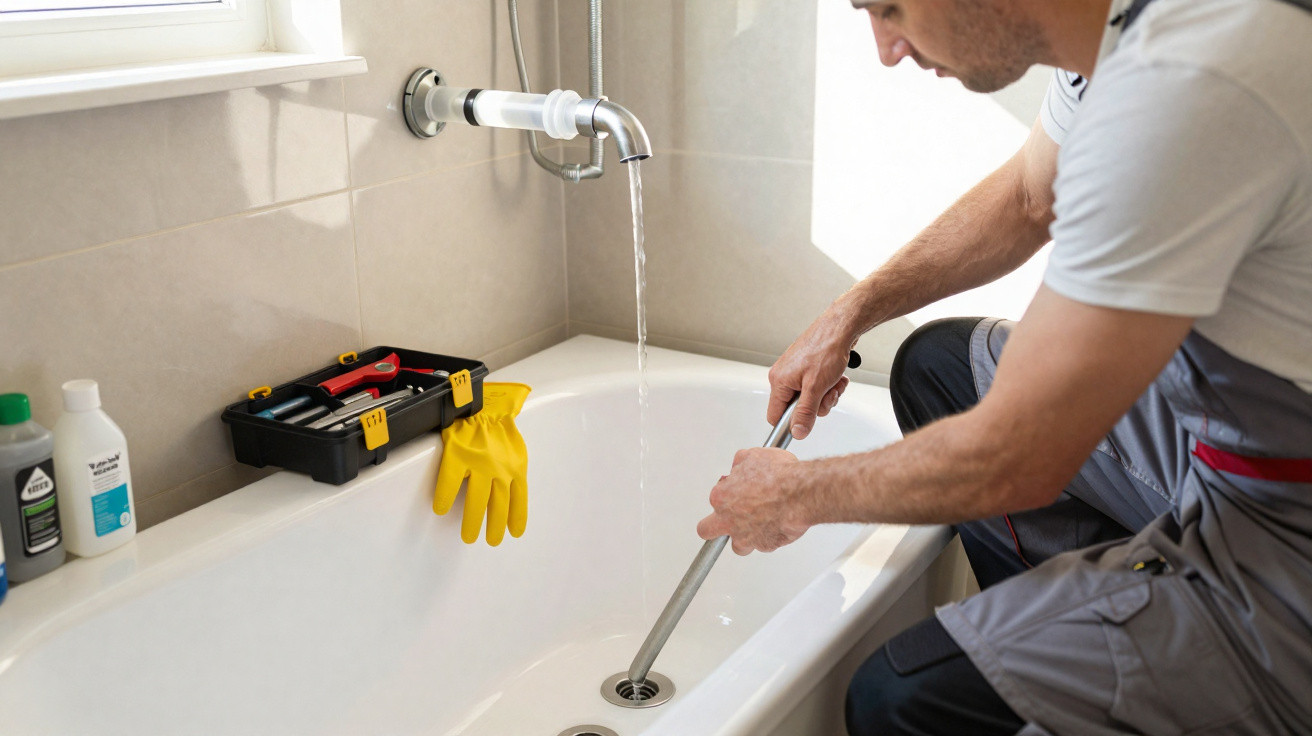
When water suddenly stops draining as it should, many people immediately turn to vinegar and baking soda. Social media is packed with frothing “miracle hacks” that appear convincing in a 30-second video. However, looking inside the pipe and speaking to professional plumbers gives a very different view of which methods genuinely work.
Why bathtub drains become blocked
Bathroom drains block for different reasons from kitchen sinks. Food scraps and cooking grease are not usually the issue. In most cases, hair is the real culprit.
Hair strands gather inside the drain, creating a miniature net that catches soap scum, flakes of skin, shower gel residue and small limescale deposits. Eventually, this material forms a compact blockage in the first curve of the pipe or in the trap beneath the bath.
Most bathtub blockages are not soft sludge, but a tough hair knot glued together with soap and skin residue.
This kind of knot is not easily dissolved. It is springy, fibrous and remarkably durable, which explains why many supposedly gentle solutions either have only a brief effect or make no difference whatsoever.
Why vinegar and baking soda are overrated for blocked drains
The familiar online formula seems persuasive: tip baking soda into the drain, pour in vinegar, watch it fizz and flush everything through with hot water. The reaction appears energetic and effective, which is likely the reason for its widespread appeal.
In chemical terms, though, it does very little to a solid plug of hair. The fizz largely affects surface grime and loosened soap deposits around the pipe. Meanwhile, the main blockage lodged deeper in the bend will often stay exactly where it is.
The vinegar–baking soda show is great theatre, but it rarely reaches the real blockage sitting deeper in the pipe.
Plumbers commonly see the same outcome. Drainage improves slightly for a day or two, and unpleasant smells can disappear temporarily. Water then begins pooling again because the hair mass is still there and continues to build up. Believing the trick worked previously, people repeat it and delay dealing with the real problem.
Can boiling water clear a bath drain?
Boiling water may soften soap scum and wash away a little residue near the surface. Where a pipe is only mildly restricted, it can offer some limited help. It is unlikely to resolve a substantial hair blockage.
There is a potential downside, too: extremely hot water can put strain on ageing plastic pipework or rubber seals. An occasional kettle of water is unlikely to harm modern plumbing, but regularly exposing vulnerable pipes to thermal shock is unwise, particularly in older houses and flats.
The bathtub drain method plumbers trust: mechanical removal
Rather than depending on foaming reactions, professionals use mechanical equipment that can reach the obstruction, break it up or draw it out physically.
The most effective way to unclog a bathtub drain is to hook or twist the hair plug and remove it by hand or with a tool.
For ordinary household jobs, this generally involves one of three methods:
- Drain snake (drain auger): a bendable metal coil inserted into the drain, turned to catch the hair and then withdrawn.
- Stiff wire or hook: a basic metal wire fitted with a small hook, suited to shallow obstructions immediately beneath the plughole.
- Manual removal at the trap: accessing the area below the bath, unscrewing the trap and clearing it by hand.
Mechanical clearing has one major benefit: it can remove the whole blockage at once. After the hair mass has been extracted, water will normally flow freely again and is likely to continue doing so for far longer than it would following chemical treatment.
Step-by-step: using a drain snake safely
For recurring bath blockages, many homeowners will find that a simple drain snake is all they need. The process can be followed as below:
| Step | Action | What to watch out for |
|---|---|---|
| 1 | Remove the plug or drain cover | Lift or unscrew it carefully to prevent damage to chrome components. |
| 2 | Insert the snake into the drain | Feed it in slowly, following the pipe’s curve without forcing it. |
| 3 | Turn it to catch the blockage | Rotate the handle; gentle resistance can indicate that you have reached the hair plug. |
| 4 | Withdraw the snake | Be prepared for a messy bundle of hair; wear gloves and have a bin bag nearby. |
| 5 | Flush with warm water | Run the tap to confirm that the water is draining normally again. |
Most plumbers recommend not using too much force. If the snake repeatedly catches without bringing anything back, or if it meets a solid metal obstruction, it may be hitting a pipe fitting rather than the blockage. Stopping is safer in that situation than risking a bent or punctured pipe.
Everyday habits that prevent future blockages
Once the drain has been cleared, a few straightforward habits can make another blockage less likely.
Prevention in the bathroom is mostly about catching hair before it reaches the pipe and clearing light residue early.
One inexpensive item is frequently recommended by plumbers: a hair catcher. This small mesh or sieve sits over the drain, preventing most hair from entering the pipe. It is cheap and can be emptied after every shower.
Other useful routines include:
- Brushing or combing long hair before showering, so loose strands go into the bin rather than the bath.
- Removing visible hair from around the plughole regularly instead of rinsing it into the drain.
- Letting warm water run briefly after using oily bath products to minimise sticky build-up.
These measures will not prevent blockages indefinitely, but they extend the time between clean-outs and make the job easier when drainage eventually begins to slow.
Why certain “home chemistry” mixtures are risky
A great deal of online advice recommends combining several substances for a stronger effect: vinegar on one day, a powerful drain cleaner on the next, followed by boiling water. Plumbers are doubtful about this tactic.
Some mixtures can create fumes or generate heat within the pipe. Combining acidic and alkaline products, or using homemade mixtures after a shop-bought drain cleaner, may gradually harm seals and metal pipes. There is also the risk of inhaling irritating vapours while bending over the drain.
When chemistry meets guesswork, the pipe often pays the price – especially in older installations.
Using a single product precisely as directed is safer than piling several hacks on top of each other. Where clogs are caused by hair, professionals still regard mechanical removal as the first option, reserving chemicals for occasions when they are clearly suitable and needed.
When you should call a professional plumber
Some blockages cannot, and should not, be tackled without help. Certain warning signs indicate that the issue may be further into the system than ordinary household tools can reach.
- Several drains in the property back up simultaneously.
- Other fittings make gurgling sounds when you empty a bath or basin.
- Bad odours persist from more than one drain, even after cleaning.
- Water backs up containing visible dirt or sewage.
In these circumstances, the obstruction may be in the main waste pipe or even the building’s shared pipework. Professional plumbers use longer motorised augers and inspection cameras to identify the blockage, while also checking whether a pipe has sagged, cracked or shifted out of alignment.
What “siphon” and “trap” mean in bath plumbing
Many how-to guides refer to a “siphon” or “trap” without clarifying the term. This component is particularly important in a bath drain.
The trap is the U-shaped pipe section beneath the bath that permanently retains a small quantity of water. This water creates a seal that prevents sewer gases entering the bathroom. Unfortunately, the same bend is also where hair and heavier debris are most likely to gather.
Most bath clogs form in the first bend after the drain – a place designed to hold water, but all too happy to hold hair as well.
Some baths have a small access panel that allows the trap to be reached. If you are confident with basic plumbing and have a bucket and towel to hand, you may be able to take it off and clean it yourself. With built-in baths that lack easy access, a plumber will instead need to reach the trap using suitable tools.
A realistic scenario: from the first sign to a clear drain
Consider a typical flat: one week, the bath starts draining slightly more slowly, and by the following week a shallow pool remains in it. The occupant initially uses vinegar and baking soda. The fizz seems encouraging, and drainage appears marginally better that evening.
Two weeks afterwards, the bath nearly overflows during a shower. A stale smell develops and the water takes a very long time to drain away. On this occasion, a basic hair catcher and a £10 drain snake solve the problem. The first withdrawal produces a dark, sticky clump of hair and soap. A second pass with the tool, followed by a warm-water rinse, leaves the drain flowing freely once more.
This brief example reflects what plumbers describe every day: chemistry for appearance, followed by tools for the genuine solution. Once a hair catcher is fitted and emptied after each shower as a regular habit, the bath can remain free of trouble for months at a time.





Comments
No comments yet. Be the first to comment!
Leave a Comment