
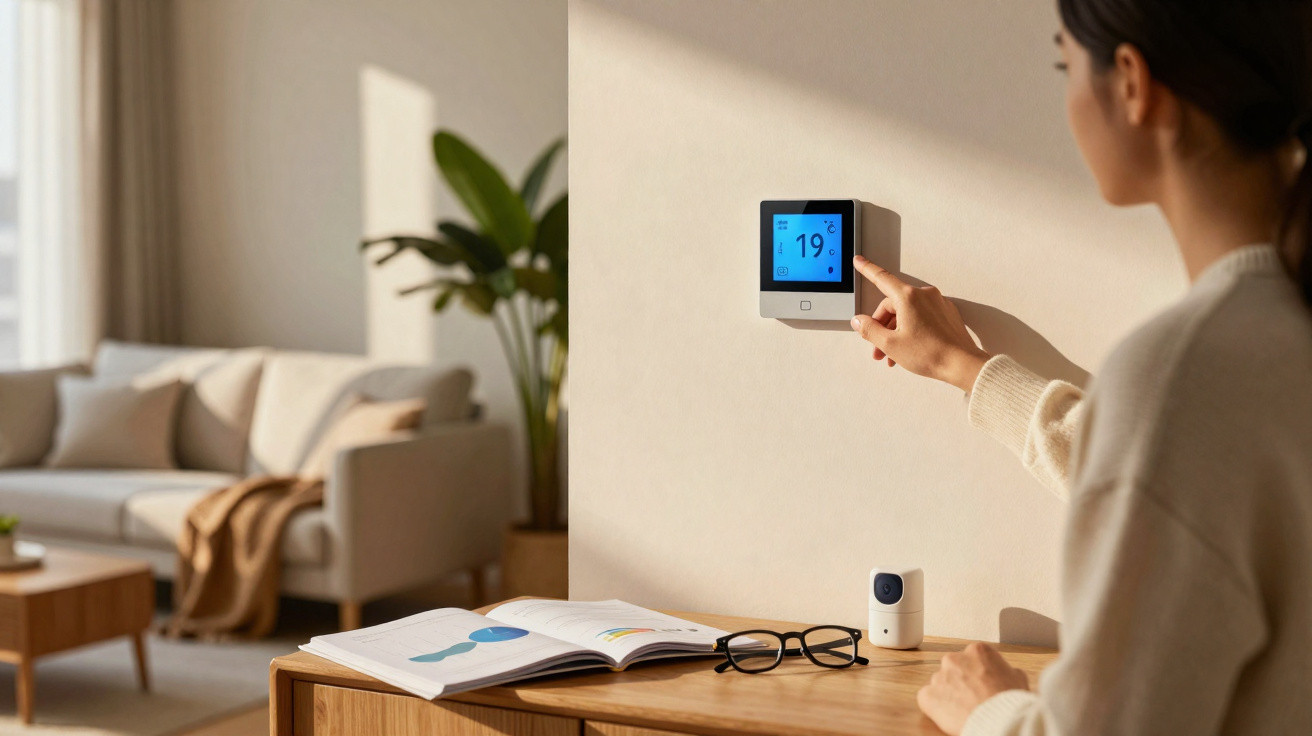
For decades, domestic heating has been dominated by one figure: 19°C. Energy experts are now challenging that benchmark, advocating a more adaptable, room-by-room approach that gives households greater control over comfort and energy bills.
The end of the 19°C myth
The well-known 19°C recommendation emerged from the oil crises of the 1970s. Governments needed an easy-to-understand instruction: lower the heating and use less fuel. It represented a political and financial compromise rather than a precisely calibrated standard for comfort.
Most properties at that time had limited insulation. Heat escaped through draughty windows, thin walls and single glazing, while central heating systems offered little sophistication. People also spent less time sitting indoors in front of screens and were generally more active, affecting how warm or cold they felt.
The situation is now different. Newly built homes have much stronger insulation, renovation of older properties is gradually progressing, and heating technology is more accurate. Today’s boilers can modulate, heat pumps operate at lower temperatures, and smart thermostats allow settings to be changed in half-degree increments.
The old “one temperature fits all” rule no longer matches how we live, work and heat our homes today.
Building physics and energy-efficiency specialists increasingly identify 20°C as a more practical reference point for the principal living spaces in a typical modern home. It better reflects the way the body manages heat during extended sedentary activities, including working from home or watching streaming programmes on the sofa.
Why 20°C feels different from 19°C
One degree may appear insignificant, but it is noticeable to the body. At 19°C, many people experience a slight chill, particularly when remaining seated for several hours. At 20°C, this persistent feeling often fades, reducing the temptation to use a portable heater or take an additional hot shower.
However, air temperature is only one element of thermal comfort. Humidity, draughts, the temperature of walls and floors, clothing, and activity levels all play a part. A warmer space with cold walls may feel less pleasant than a cooler room whose surfaces are well insulated.
Researchers note that at roughly 20°C, an average person can maintain a stable core temperature without continual small adjustments, such as tightening their muscles or wrapping themselves in blankets. This is particularly relevant when working at home, reading or gaming, when movement is minimal.
Moisture is another consideration. If homes are kept overly cool for prolonged periods, condensation is more likely to form on cold surfaces, especially at windows and thermal bridges. In time, this dampness may cause mould and stale, musty smells.
Raising living areas from 19°C to 20°C can reduce condensation risk on vulnerable surfaces, cutting the likelihood of mould.
That modest adjustment may have meaningful health implications for people with asthma or respiratory conditions, since damp and mould spores are recognised triggers.
From one number to a tailored map of temperatures
Rather than applying a single fixed temperature across an entire property, specialists increasingly advise setting each room according to its use. The principle is straightforward: provide warmth where it is needed and keep other spaces cooler.
Suggested temperatures by room
- Living room / main living areas: around 20°C
- Bedrooms: 16–18°C
- Bathroom when in use: about 22°C
- Hallways and corridors: roughly 17°C
- Unused rooms: maintained just above the threshold for damp, often 15–16°C
The 20°C recommendation is especially useful for living rooms. Families often spend many hours there sitting, talking and working. A marginally warmer setting can lessen the need to make up for discomfort with electric heaters or bulky clothing indoors.
Bedrooms, by comparison, generally suit cooler conditions. For many people, a temperature of 16–18°C supports quicker sleep and helps them remain asleep, as long as their bedding is sufficient. Hotter bedrooms may result in disrupted nights, particularly for those who overheat easily.
Bathrooms are a distinct case. Leaving a hot shower for a room at 19°C can feel harsh, especially for children and older people. Heating the bathroom to approximately 22°C while it is occupied reduces that sudden temperature change and makes morning routines more comfortable.
A warmer bathroom for short periods often costs less than blasting a fan heater because the main system runs more efficiently.
Smart thermostats and zoning change the rules
Not long ago, setting different temperatures in different rooms meant manually adjusting valves and relying heavily on trial and error. Modern heating controls have transformed that process.
How modern controls support the new recommendations
| Technology | Main benefit |
|---|---|
| Smart thermostat | Schedules temperature by time of day to match routines |
| Connected radiator valves | Sets different temperatures for each room |
| Room sensors | Measures actual comfort where people are, not just at the boiler |
| Weather compensation | Adjusts flow temperature automatically when outside conditions change |
Through zoning, these systems could keep a home office at 20°C during working hours, lower the setting in the evening, and heat the lounge instead. Bedrooms may stay cooler throughout the day, with a short increase before bed only if necessary.
Manufacturers and independent research frequently refer to possible heating-bill savings of up to 15% from properly configured smart controls. This estimate depends on users creating active schedules and not repeatedly overriding them in ways that make the system run hotter than needed.
There is a compromise involved: conventionally, increasing the thermostat by 1°C raises energy consumption by about 7%. Yet that broad rule assumes that both the rest of the heating system and household behaviour remain unchanged. In reality, a more comfortable baseline temperature may reduce reliance on inefficient plug-in heaters and the regular opening of windows to “fix” stuffy rooms or unevenly distributed heat.
Real-life scenarios: what 20°C looks like
Consider a standard two-bedroom flat. With the previous 19°C approach, one hallway thermostat controls the whole property. The lounge is slightly cold, the bedroom becomes a little too warm, and the bathroom feels icy after a shower. Most evenings, someone turns on a 2 kW fan heater in the living room. Comfort is still inconsistent and the energy bill remains high.
Under the newer approach, the flat is divided into zones. The living room is set at 20°C from late afternoon until bedtime. At night, the bedroom is allowed to settle at around 17°C. The bathroom reaches 22°C for an hour around shower times before returning to a lower setting. Fan heaters are no longer used, while windows stay shut because temperatures feel more even.
Better targeting of warmth can offset the extra degree, leading to similar or even lower energy use with higher comfort.
The impact may be even greater in a larger home. Maintaining unused guest bedrooms at 19°C throughout winter consumes energy unnecessarily. Keeping those areas cooler while giving priority to the kitchen and living rooms directs heat towards the spaces where it genuinely supports wellbeing.
Key terms and concepts worth knowing
Two ideas explain why specialists are moving away from an inflexible 19°C recommendation.
Thermal inertia refers to the speed at which a building’s temperature changes. Heavily built, well-insulated homes hold warmth for longer. Because their air and surfaces cool more slowly, they can often use slightly lower settings without feeling cold.
Operative temperature combines the air temperature with the temperature of nearby surfaces, including walls and windows. A 20°C room with warm walls can feel as comfortable as a 22°C room surrounded by cold, poorly insulated surfaces.
Knowing these concepts can help households decide whether higher temperatures are genuinely required or whether insulation improvements, draught-proofing or better glazing would deliver greater benefits.
Practical tips for adjusting your heating this winter
Households thinking about leaving behind the 19°C dogma can make changes gradually. A practical starting point is to use 20°C in the main living space and adjust the rest of the property around that reference point.
- Measure bedroom temperatures overnight with a basic thermometer to prevent overheating.
- Set timers so bathrooms reach 22°C only when they are being used.
- Keep doors shut between warmer and cooler zones to limit heat loss.
- Wear lightweight layers indoors instead of T-shirts during midwinter.
- Check energy use each week to understand how adjustments change consumption.
Older adults, people with medical conditions and households with babies may require marginally warmer rooms or a different balance of temperatures. A short discussion with a doctor or energy adviser may help adapt the guidance to individual circumstances.
As energy grids decarbonise and heat pumps are installed in more homes, the discussion about the “right” temperature will continue to develop. What is increasingly apparent is that one national figure no longer reflects the reality of modern homes. A smarter, room-based approach centred on roughly 20°C in living areas is replacing it, one thermostat setting at a time.




Comments
No comments yet. Be the first to comment!
Leave a Comment