
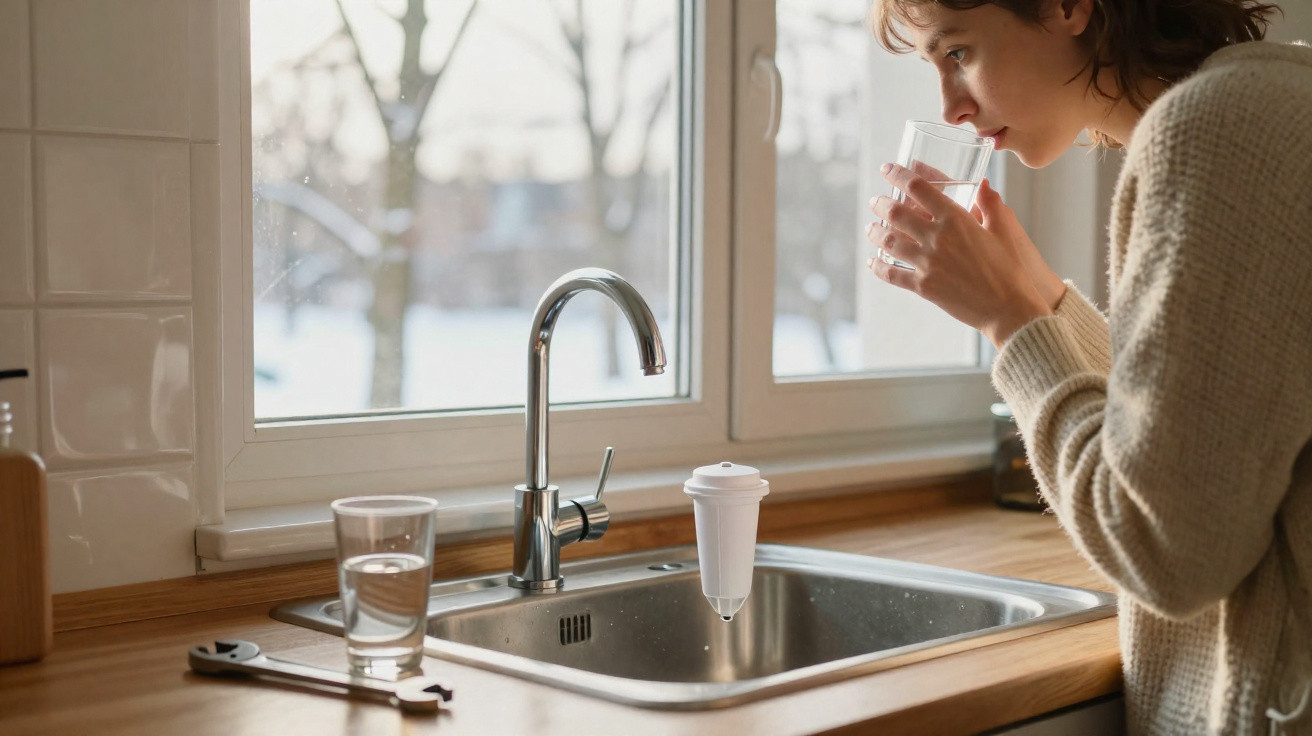
The first time my tap water had a metallic taste, I assumed the water company must have made a serious mistake. It was one of those sharp January mornings when the cold reaches your fingertips before you have even located the kettle. I opened the kitchen tap, poured a glass and took a generous mouthful – then noticed it. A subtle, coin-like flavour, as though I had licked a pocketful of loose change. It was hardly the reassuring beginning you want before facing emails and household bills.
You know the reaction: standing at the sink, holding the glass to the light and smelling it like a doubtful sommelier, unsure whether you ought to drink it. Is it unsafe? Are the pipes responsible? Could it simply be your imagination? Your mind begins replaying every worrying article you have ever skimmed about drinking water and chemicals. Before long, a more practical concern follows: can it be sorted easily, or is this going to be expensive?
There is, in fact, a reason tap water can taste different during winter – along with a remarkably inexpensive trick that many plumbers rely on without making much fuss about it.
When winter reaches your kitchen tap
Water with a metallic taste feels particularly dramatic because it touches on an old, deep-rooted worry: the fear that something invisible in the home is not quite as it should be. It often seems more noticeable in winter, when the whole house feels harsher and slightly more vulnerable. You spend more time indoors, the heating is running, and every small issue suddenly appears amplified. A dripping tap at 2am in January sounds far louder than it does in June.
Plumbers hear a similar account throughout the UK: as the weather turns colder, reports of “weird-tasting water” increase. Customers describe a metallic flavour, “like blood” or “like aluminum foil.” They are often slightly embarrassed about calling, yet concerned enough to do so. Nobody wants to seem overdramatic about a glass of water, but when it tastes unusual, the underlying worry tends to linger.
There is something distinctly British about attempting to solve the issue by boiling the kettle especially vigorously, as though determined bubbles might chase the taste away. Some people stockpile bottled water, filling every available kitchen space as if preparing for a siege. Others carry on drinking tap water while acting as though they have noticed nothing, privately wondering whether it could be affecting them.
What is really happening inside your pipes?
At first glance, the word “metallic” sounds alarming when linked to drinking water. Plumbers generally begin with the most likely explanation: the pipes and fittings in your home. Many UK properties still contain lengths of older copper, or even steel, pipework concealed behind plaster and beneath floorboards, rather like an underground archive of previous decades. When these pipes become very cold, they contract a little, while the chemistry at their internal surface alters enough to make a difference.
Winter water that is cold and slightly more acidic can dissolve tiny quantities of metal from ageing pipe interiors. These are not visible fragments, but ions that are too small to see and large enough for your taste buds to detect. Water left in the pipes overnight, when the heating is largely off and the house is at its coldest, may acquire a distinct taste before you turn on the tap in the morning. That first glass can seem as though it has been steeping in your plumbing overnight.
UK water companies treat and monitor supplies extremely carefully, and water leaving the treatment works is generally very clean and neutral-tasting. The key detail is what occurs between the street main and your glass. Those final metres of pipework are part of your home rather than the water supplier’s network, and that is where most flavour problems arise. The older the property, the more likely winter is to reveal plumbing characteristics that go unnoticed in July.
The cold reality of standing water
A further, rather unglamorous culprit is that water left motionless in cold pipes for several hours behaves differently from water that is flowing freely. Winter nights are longer, people often go to bed sooner, and the first water from the tap may have been sitting in the pipework all night. That lack of movement allows it to interact with every millimetre of metal it touches. It is a little like leaving a teabag in a mug for far too long.
Realistically, hardly anyone lets the kitchen tap run for ages before preparing that essential first cup of tea. Most of us are half-awake, padding over cold tiles, immediately filling the kettle and hoping for the best. By the time the taste becomes apparent, the water has already been boiled, poured and perhaps even mixed with milk. Then you take a sip and recognise that something is not right. You may not always be able to explain it, but you know it is not your normal brew.
Winter chemistry: why cold water tastes sharper
Winter also brings a subtle chemical change that cannot be seen but can certainly be tasted. Colder water retains gases differently, particularly dissolved oxygen and carbon dioxide. As a result, its pH can shift slightly, making it a touch more corrosive to some metals. This is not dangerously corrosive, but it can be sufficient to release metallic notes that the tongue is exceptionally good at detecting.
Our taste buds react to metallic flavours in a highly instinctive way. A coppery taste is associated by the body with blood, injury and the sense that “something’s wrong.” When cold winter water triggers those receptors with a hint of that flavour, the brain quickly becomes suspicious. Even where concentrations are safe, the sensation can feel sharp and oddly personal. It is not imagined: metallic flavours can genuinely seem stronger in colder liquid.
Temperature itself can also create an illusion. Chilled drinks often suppress certain flavours while bringing others to the foreground. Bitterness becomes gentler, whereas bright mineral flavours and unusual aftertastes become more noticeable. This is why tap water may seem perfectly fine in a hot cup of tea yet taste metallic when drunk cold from a glass. It is the same water experienced in two very different ways, simply because of a few degrees of temperature.
When the boiler and pipework clash
Plumbers also point to another pattern seen in winter: heating systems are working at their hardest. Boilers turn on and off more frequently, pipes repeatedly warm and cool, and expansion and contraction become a daily process within the walls. Small weaknesses in joints or older fittings can become more pronounced. Over time, the inside of those pipes may become rougher, making it easier for minerals and minute metal particles to collect, cling on and eventually return to the water.
If the metallic taste is worse on certain days, you may be noticing a small domestic dispute between the boiler and the plumbing. Days on which the heating has been running heavily before being switched off suddenly can leave the system in an unusual thermal state. It is not something most people notice until it becomes apparent in a glass. For a plumber, however, it is a familiar seasonal trend: December, January, February – followed by a stream of calls saying, “my water tastes funny”.
Is metallic-tasting water dangerous?
This is usually the question people ask quietly: could it be harming me? In normal circumstances, in a typical UK home, water specialists offer a reassuringly unexciting answer. Small quantities of dissolved metals, including iron, copper or zinc, can alter the taste of water without coming close to creating a health risk. The unpleasant flavour is likely to put you off long before you reach an amount that would concern toxicologists.
More serious metal problems, such as lead, are different and should be investigated, especially in older homes with very old pipework. However, metallic flavour alone is not a dependable indicator of lead, as lead often has no taste whatsoever. UK water companies test for such issues routinely and operate under strict regulations, while you can also arrange an independent test if you are worried. For most households, though, a metallic winter taste is an annoyance rather than an emergency.
Most of us have experienced looking up a minor symptom online, only to tumble into a maze of worst-case possibilities. Water is especially good at setting off that anxiety because it is so ordinary and essential. What usually reassures people, once they have spoken with a professional, is learning that this is a common seasonal issue rather than evidence that their kitchen has suddenly become toxic overnight.
The inexpensive fix plumbers quietly recommend
At this point, the situation becomes much less alarming and far more practical. Ask several plumbers what they do personally when tap water tastes metallic in winter and most will offer the same answer, usually with a knowing shrug. They let the cold tap run for a few seconds until it flows properly cold, then fill their glass or kettle. That is all. No sophisticated filter, no technical device and no extensive plumbing work.
It may sound almost too simple to be useful. Yet during those ten or fifteen seconds, you are flushing away water that has been sitting in your household pipes and replacing it with fresher water from the mains. That newly arrived water has spent less time touching metal pipes and fittings. It will often taste cleaner, fresher and less like coins. The improvement can be surprisingly obvious, particularly early in the morning.
Most plumbers will tell you: if the taste goes after running the tap, the problem is almost certainly your internal pipework, not the water supply itself. Repeating this small step a few times each day costs only pence over a month. Compared with buying cases of bottled water, or paying for an unnecessary plumbing overhaul in a panic, it is clearly the more sensible option.
A low-cost filter rather than a complete overhaul
If running the tap improves the taste but does not entirely resolve it, plumbers often suggest another affordable option: fitting a straightforward carbon filter to the cold kitchen tap. This does not have to mean an enormous under-sink scientific installation. A simple inline filter, or even a jug with a good cartridge that is replaced when due, can be enough. Activated carbon performs remarkably well with tastes and odours, capturing a variety of compounds that noses and taste buds notice long before they reach the bloodstream.
A basic under-sink carbon filter can cost less than a Friday takeaway and last several months. For many homes, that is sufficient to stop winter metallic episodes and return the water to tasting of “nothing” – which is generally exactly what people want. It will not repair deteriorating Victorian pipes or resolve every possible issue, but in many kitchens it is a gentle and highly affordable move in the right direction.
Some plumbers also recommend checking visible pipework when other work is being carried out. Identifying and replacing one or two short sections that are badly corroded can have a greater effect on taste than an entire kitchen refurbishment. It may not be Instagram-worthy, but the next glass of water could quietly benefit from it.
Small habits that alter how your water tastes
A few tiny, nearly unnoticed routines can also influence the taste of winter tap water each day. Briefly running the cold tap before filling the kettle is one example. Another is using the cold tap for drinking water instead of the hot tap, as hot water has already travelled through the boiler and cylinder. Keeping the aerator on the kitchen tap – the small mesh piece at the end of the spout – clean and clear of build-up can also prevent strange flavours from developing there.
One plumber described it as “brushing your teeth, but for your tap.” Every few weeks, remove the aerator, leave it to soak in vinegar, scrub it gently and refit it. This small metal-and-mesh disc is the final surface your water contacts before reaching your glass. If it is gathering limescale, tiny rust particles or biofilm, your tongue may spot the difference before you consciously do.
A wider change in perspective can help too: treat the house as a living system rather than a completed object. Pipes expand and contract, boilers grow older and fittings gather their own history as the seasons pass. When tap water tastes metallic in winter, it is not necessarily a serious warning; sometimes it is simply the home quietly complaining about the cold. Once you recognise the pattern, a few low-key solutions can replace panic.
When to stop guessing and ask for help
Even with these straightforward measures, there are occasions when metallic-tasting water should be assessed by a professional. If the flavour appears suddenly and is particularly strong, if the water is discoloured, or if you see staining in sinks or toilets, contact your water supplier or a reliable plumber. The same applies where just one tap is affected, or where neighbours are reporting the same problem. Patterns are important, as they give a clearer indication than one questionable glass of water.
You can ask your supplier for a water-quality report and, if you remain particularly concerned, arrange testing through a private laboratory. It is seldom required, but it can offer reassurance. Sometimes a dull PDF containing safe figures from somebody with a clipboard is exactly what is needed. Once you have that reassurance, you can stop eyeing every mouthful suspiciously and return to reminding the children to switch off the lights.
For many homes, the route from “why does this taste strange?” to “oh, that is all it was?” follows the same routine: run the cold tap briefly, flush out the standing water, perhaps replace a filter cartridge, then feel quietly relieved. The kettle clicks on, the kitchen begins to warm and the drama disappears. The water may not suddenly taste like it came from a mountain spring, but it should no longer resemble pocket change.
The quiet reassurance of solving an invisible problem
There is a small, personal satisfaction in fixing something nobody else can see. Metallic-tasting tap water in winter can seem like one of those irritating household problems that simply has to be tolerated, much like draughty windows or the one radiator that never gets properly warm. Yet it can often be improved with a simple habit and one or two inexpensive parts. There is no need to break tiles, open walls or create a driveway drama involving a skip.
The next time you raise a glass on a frosty morning and notice that faint metallic note, you will understand the possible story behind it: cold pipework, winter chemistry, ageing fittings and tiny ions travelling along with the water. You will also know the very ordinary, almost embarrassingly easy solution that many plumbers use in their own homes. Run the tap, flush the line, perhaps fit a modest filter and give your pipes a small act of winter care.
Your house may still creak and sigh in a hard frost, the boiler may still grumble during the night, and the radiators may still require bleeding at precisely the most inconvenient time. But the water in your glass can return to tasting of nothing at all – which, in a noisy world, is a luxury in its own right.


Comments
No comments yet. Be the first to comment!
Leave a Comment