
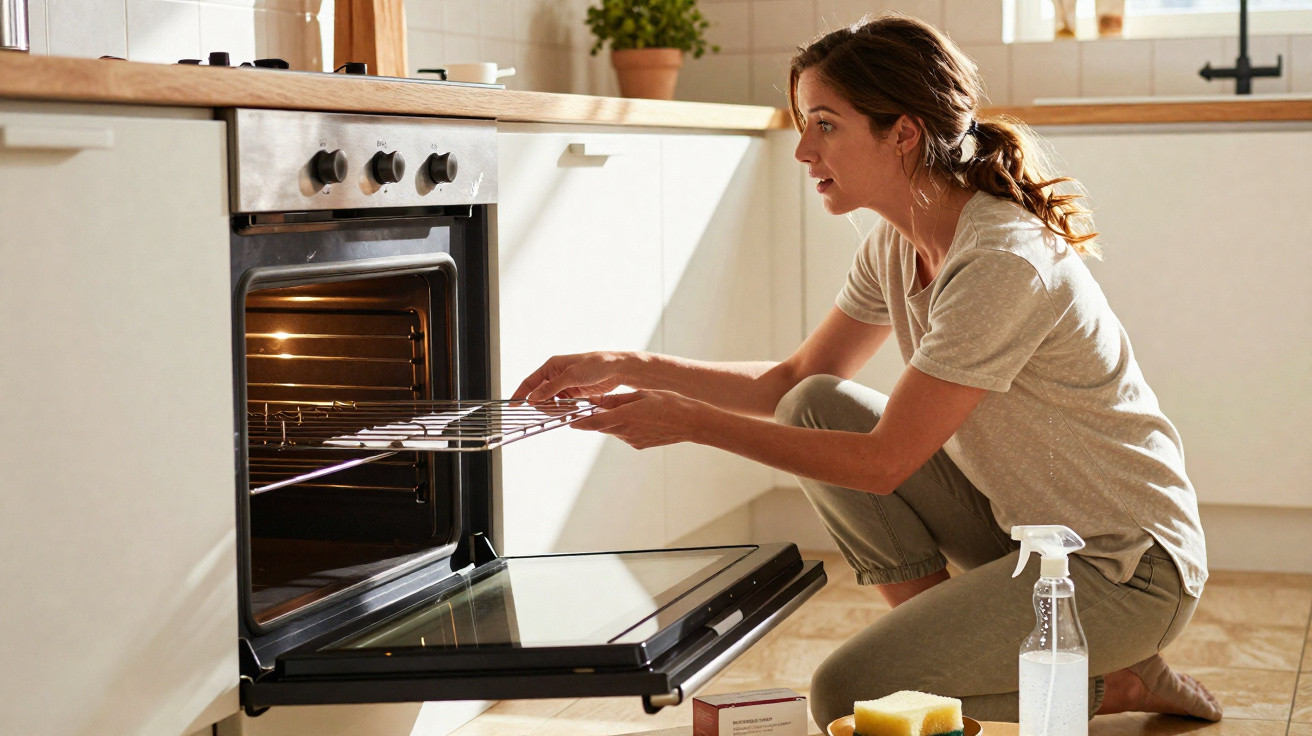
At 10.30 pm, the gratin has been delicious, the plates have been cleared away… but the oven is still there. A light mist of grease on the glass has become a brown film. At the bottom, a few black splatters tell the story of last Sunday’s dinner, and the one before that. We all know the moment when we close the door and promise ourselves we will deal with it “tomorrow”. Then the days go by. The good news is that a very simple baking soda and white vinegar mixture can do much of the work overnight, without spending an hour with your arm wedged inside the cavity. You simply need to follow the right sequence and give it time to work. The morning may bring a pleasant surprise.
Why the oven always seems to get dirty faster than expected
A grimy oven does not become spectacularly dirty all at once. It gradually collects sauce splashes, overflowing cheese and drops of oil that settle on the still-hot walls. With each use, another layer sticks and hardens, particularly on the base and against the glass. When you open the door to check a tart or roast chicken, the smell of heated grease can eventually overpower the aroma of the meal.
In many kitchens, the turning point comes when friends or family are due to visit. You want to bake a cake, switch on the oven, and a faint plume of smoke rises before the dish has even gone in. A study carried out by appliance manufacturers estimates that high-temperature cooking can throw tiny droplets of grease several dozen centimetres around the dish. The oven takes it all, without ever really complaining.
Baking soda works as a mildly abrasive, alkaline powder: it helps loosen baked-on grease without harshly affecting enamelled surfaces. White vinegar comes into play mainly after the resting period, reacting with baking soda residue and softening the marks that remain. The secret is not to combine everything in a bowl. It lies in a long, quiet and almost invisible application period, during which the dirt gradually loses its grip.
The overnight baking soda and white vinegar method
Start with a completely cold oven, and unplug it if its installation allows. Take out the racks, then combine around 8 tablespoons of baking soda with 3 to 5 tablespoons of water: the result should be a pliable paste, similar to thick cream. Spread it across the base, walls and inside of the door, avoiding the heating elements, fan and technical openings. Close the oven, then leave it overnight, ideally for between eight and twelve hours.
The following day, use a damp cloth or soft sponge to remove the paste, which will have turned brownish. Then spray a little white vinegar onto any areas where baking soda remains: the foam that appears is normal and helps lift the final deposits. Let us be honest: nobody actually does this every day. For very old oven glass or drips that have been carbonised for months, a second gentle treatment may be needed, but most of the work does not require hours of scrubbing.
It can be tempting to reach for a metal scourer when a stain will not shift, particularly if cleaning has been put off for too long. It is better not to: it can scratch the enamel, dull the glass and create areas where grease will cling even more readily.
“Leaving it to work is often more effective than scrubbing hard: patience protects the oven too.”
- Wear gloves if your skin is sensitive to vinegar or grease residue.
- Clean the racks separately, in a bath or large basin with hot water and baking soda.
- Thoroughly wipe away all product traces before switching the appliance back on.
The small routine that prevents a seasonal cleaning battle
Once the oven looks respectable again, the hardest part is often stopping it from being forgotten once more. Running a sponge over the warm - never scorching - glass after greasy cooking already makes a considerable difference. Placing a baking tray beneath a generously filled dish also limits spills, without stopping lasagne from being generous. This homemade method does not replace the manufacturer’s instructions, especially for pyrolytic models or those with a specialist coating, but it provides a straightforward alternative to strongly scented oven cleaners.
There is something satisfying about opening a clean oven the following morning. The kitchen instantly feels lighter, even if no one really notices except you. The baking soda works while you sleep, and the vinegar completes the task when you wake: this small routine gives time back when you thought you would need a great deal of elbow grease. Everyone can then choose their own rhythm, after large meals, before guests arrive, or simply when the oven door starts telling too many stories.
| Key point | Detail | Added value for the reader |
|---|---|---|
| Baking soda paste | 8 tablespoons of baking soda with a little water | Loosens baked-on grease overnight |
| White vinegar after the application | Spray once the paste has been removed | Helps remove residue without hard scrubbing |
| Light maintenance | Soft sponge after messy cooking | Prevents build-up and major cleans |



Comments
No comments yet. Be the first to comment!
Leave a Comment