
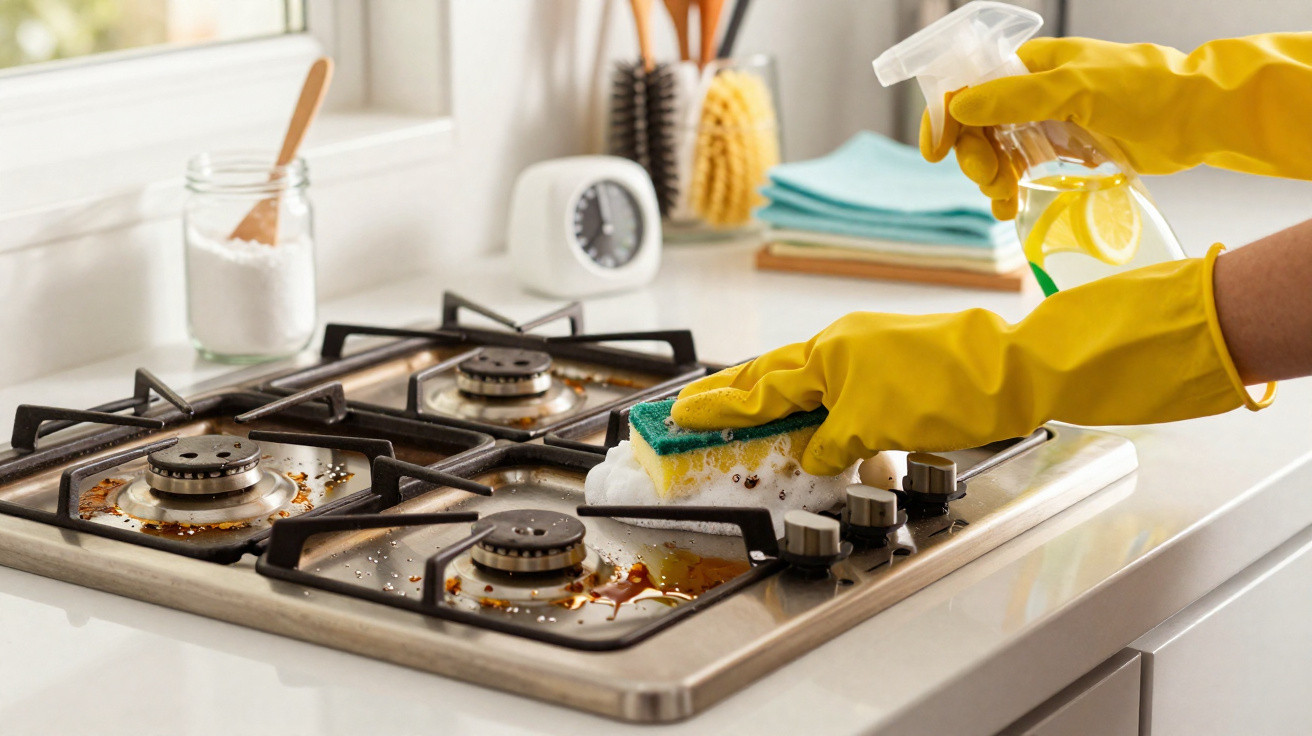
Preparing daily meals for the family can be deeply satisfying, yet the build-up of grime often disrupts the routine. When heat turns residue into stubborn layers, burnt grease can withstand ordinary cleaning attempts, calling for smart solutions that protect the cooker.
Why does burnt grease stick so firmly to the cooker?
While everyday food is being prepared, tiny droplets of oil and sauces can splatter unnoticed. Constant heat repeatedly bakes these splashes onto the metal components, creating a dark crust of dirt that clings tightly to the metal.
This powerful adhesion is not accidental: it results from a strong chemical bond caused by high temperatures. Vigorous scrubbing rarely breaks down the layer completely, making the task tiring and leaving unwanted scratches on the appliance.
How can you remove heavy grease on a budget?
Some surprising household methods use simple ingredients to soften even the toughest crust without needing to… Read more
How do household ingredients break down the crust effortlessly?
Rather than relying on manual force or buying expensive products, the most effective approach is to use chemistry. White distilled vinegar provides efficient acidic action, while an alkaline powder completes the method by easily breaking apart the hardened layer in the kitchen.
When the two ingredients meet, they create fizzing that loosens grime stuck to burner caps and pan supports. Bicarbonate of soda boosts removal without harming the materials, allowing the dirt to lift away naturally without any effort.
Below is a video from the Método Liberado YouTube channel that explores the points covered in this topic in greater depth:
What is the step-by-step method for the ideal soak?
Before beginning any practical cleaning, make sure every burner is cold to prevent household accidents. Carefully take off the pan supports and delicate burner caps, then wipe them with dry kitchen paper to remove surface dust before fully soaking the parts.
Place the items in a sturdy bag and cover them with the acidic liquid for thirty minutes. Once removed, sprinkle the powder directly over the damp parts and allow the fizzing reaction to restore their original shine without damage.
Essential Cleaning Kit
Materials required
Gather these basic items to clean the cooker parts:
- Traditional white distilled vinegar;
- Standard bicarbonate of soda;
- A sturdy plastic bag or container for soaking.
How should you apply the mixture to restore the appliance base?
The stainless-steel or glass structure also needs special care to retain its attractive, smooth finish. A smooth paste made with washing-up liquid and bicarbonate of soda can soften burnt-on patches, making the complete removal of oil residue easier.
Covering the treated area with cling film enhances the paste's effect by preventing it from drying before it has had enough time to work. After leaving it to sit for a few minutes, simply wipe it with a soft, damp cloth to achieve a clean, grease-free surface.
For the best results when cleaning the base, follow these steps:
- Spread the paste evenly across the burnt areas;
- Cover the entire surface with cling film for fifteen minutes;
- Remove the plastic covering and finish by wiping with a soft cloth.
How can you keep cooker parts clean for much longer?
Creating a small preventative routine greatly reduces the need for frequent heavy-duty cleaning in the home kitchen. Wiping with vinegar straight after cooking removes fresh splashes and prevents new crusts from forming on the stainless steel.
Repeating the basic soak every month keeps the burners in excellent working condition and continuously well maintained. With these simple, economical habits, your cooking space becomes far more practical while retaining an impeccable appearance and strong durability in everyday life.





Comments
No comments yet. Be the first to comment!
Leave a Comment