
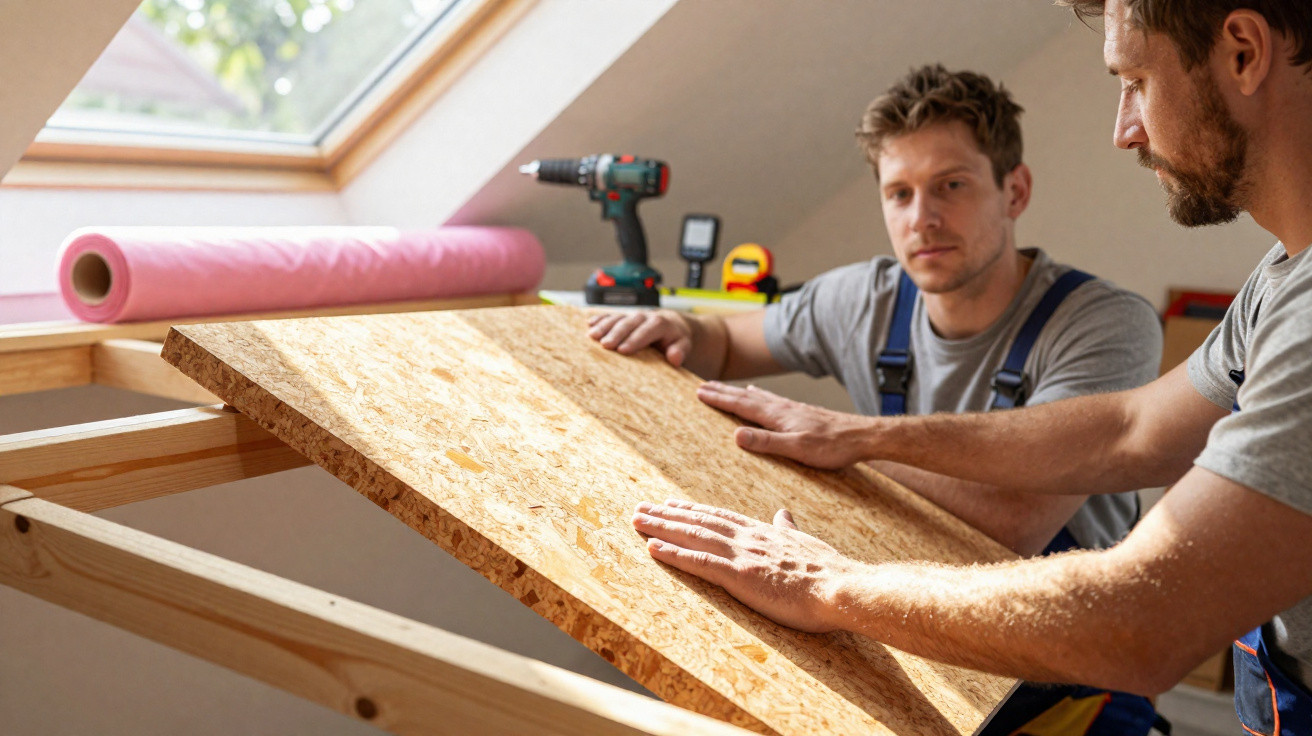
Quietly, an established material is losing ground on building sites, while a ‘living’ insulation material is attracting fresh supporters.
The shift is subtle but steady: renovation and construction projects are beginning to replace glass wool with a natural insulation material made from tree bark, valued for its environmental and technical credentials. Although the trend remains a minority one, it is already influencing architects, engineers and homeowners seeking comfort, savings and lower environmental impact.
Why glass wool is being set aside
For decades, glass wool was almost synonymous with thermal insulation in homes and buildings. Affordable, lightweight and readily available, it dominated the market. In practice, however, many homeowners have started to question the full package: discomfort during installation, concerns about environmental impact and uneven performance in certain settings.
- Unpleasant installation, with fibres that irritate the skin and respiratory tract
- Manufacturing reliant on mineral resources and energy-intensive industrial processes
- Difficulties with recycling at the end of its service life
- More limited acoustic comfort than denser natural alternatives
At the same time, pressure is growing for homes that are more energy efficient, quieter and built with traceable materials. In this context, a long-standing material from the cork industry has acquired a new appeal: cork, a natural insulation material produced from the bark of the cork oak.
From being the bane of those installing glass wool to becoming the star of eco-friendly renovations, natural cork insulation has become a symbol of a new stage in residential construction.
Natural cork insulation from tree bark
Cork used as insulation comes from the bark of the cork oak, a tree native to the Mediterranean region. Its harvesting method is particularly noteworthy: the bark is stripped every 9 to 12 years without felling or killing the tree. It then regrows, in a cycle that continues for decades.
This makes cork a renewable resource, which is unusual in a sector still heavily dependent on fossil-fuel-derived products or intensive mining. For homeowners looking beyond the price per square metre, this characteristic is becoming increasingly important.
Less energy, fewer chemicals
Producing expanded or agglomerated cork boards generally requires less energy than making many synthetic insulation products. In many cases, cork dust itself is used as fuel during the industrial process.
Reduced use of chemical additives is another feature that appeals to homeowners. With some products, cork’s natural resin acts as a ‘glue’, removing the need for synthetic binders. This is especially relevant to people seeking homes with better indoor air quality and no significant emissions of volatile organic compounds.
Thermal performance: greater comfort with the same wall
Technically, cork benefits from a remarkable microscopic structure: millions of tiny air-filled cells, resembling a compact honeycomb. This arrangement gives it low thermal conductivity, meaning it restricts the transfer of heat.
In practical terms, this gives the homeowner two benefits:
- Winter: heat produced by heating systems or by occupants takes longer to escape through walls and roofs
- Summer: external heat takes longer to pass through the insulation layer and warm internal rooms
Cork’s so-called ‘thermal lag’ - the time heat takes to travel through the material - is generally higher than that of many conventional insulation materials. In everyday terms, the home feels more stable, without sharp temperature peaks.
For people living in very hot regions, this delay in heat entering the property can mean less use of air conditioning during the most difficult afternoon hours. In colder areas, heating bills are likely to fall.
Acoustic insulation: a quieter home
Noise is another reason behind the gradual move away from glass wool. Cork has greater density and an elastic structure, helping it absorb and disperse sound vibrations.
In flats or semi-detached homes, this can make a difference in three areas:
- Outdoor noise: traffic, voices and sirens
- Internal noise: footsteps from upstairs, furniture being moved and impacts on floors
- Echo inside rooms: acoustically ‘drier’ spaces that are more pleasant for working or resting
Acoustic engineers have been combining cork in floors, partition walls and ceilings to create a ‘sound cushion’ that glass wool alone cannot always provide, particularly if it has been poorly installed.
Uses for cork insulation: from roof to floor
Its versatility is also a factor in the switch. Insulating cork is now available in a range of formats, allowing the material to be adapted to the needs of each project.
| Application | Most common form | Main benefit |
|---|---|---|
| Internal wall | Rigid boards | Thermal and acoustic comfort in bedrooms and living rooms |
| External façade | Exposed or clad boards | Continuous insulation without reducing usable internal space |
| Roof | Boards beneath the roof covering | Protection from intense summer heat |
| Floor | Rolls or mats | Reduced impact noise and a ‘warm’ underfoot feel |
This flexibility is welcomed in both new-build projects and sensitive refurbishments, such as older houses or listed properties, where altering the structure is more complicated.
Durability, an advantage for long-term thinking
Cork is naturally resistant to moisture and does not rot easily. It is also unattractive to insects and rodents, often avoiding the need for harsh chemical treatments.
Specialists also point to its behaviour in a fire. Cork tends to be slow to ignite and, when burned, does not release the same level of toxic gases associated with some synthetic insulation materials.
For occupants, this combination of longevity, low maintenance and more predictable behaviour in a fire carries as much weight as the number of degrees lower or higher on the thermometer.
Higher price, but a calculable return
The upfront cost is the main obstacle to widespread adoption. Insulating cork usually costs more per square metre than glass wool. Even so, many homeowners are assessing the figures differently.
When its longer service life, the potential savings on heating and cooling, and the possible increase in a property’s market value are taken into account, the investment is seen as a strategy rather than simply an expense.
Scenario simulation
For a medium-sized home of around 120 m², many specialists estimate that replacing old insulation with a properly specified cork system can cut the energy used for thermal comfort by several percentage points, depending on the local climate and the equipment used.
Over several years, these savings may offset the initial cost difference between cork and glass wool, particularly in areas with very hot summers or harsh winters.
What homeowners need to know before switching
Anyone considering moving away from glass wool and changing to cork should take several practical matters into account:
- Assess the local climate and construction type to specify the insulation thickness correctly
- Check the origin of the cork, looking for forestry certifications or assurances of responsible management
- Plan the work to minimise waste, as the material has a higher added value
- Speak to professionals who already have experience of projects using natural insulation materials
Technical terms such as ‘thermal conductivity’ and ‘thermal lag’ can often seem daunting, but they can be explained simply. Conductivity indicates how much heat a material allows to pass through it. Thermal lag shows how long heat takes to travel through it. An ideal insulation material combines low conductivity with good thermal lag, which is precisely cork’s strength.
For anyone hoping for a more comfortable, energy-efficient home that follows environmentally responsible practices, changing insulation stops being a minor construction detail and becomes part of a domestic lifestyle more consistent with what is expected of buildings in the coming decades.




Comments
No comments yet. Be the first to comment!
Leave a Comment