
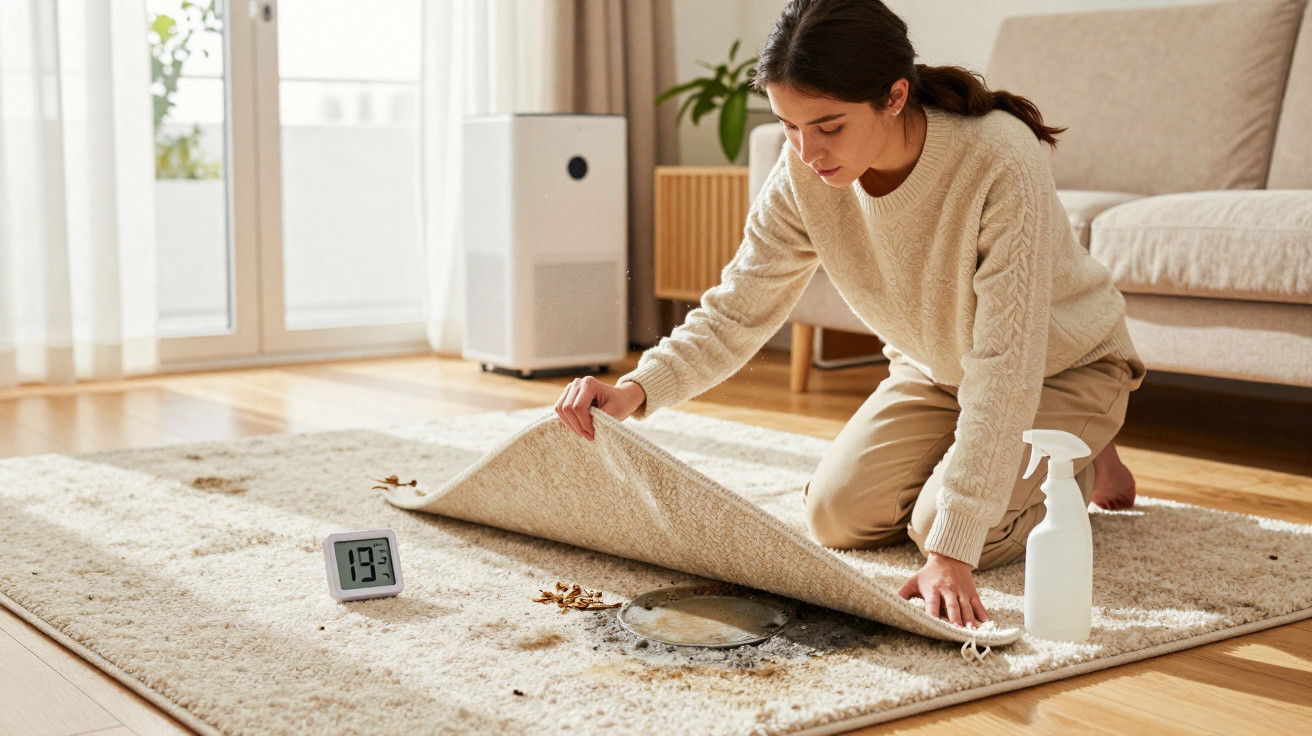
When colder weather drives us indoors, we tend to shut up our homes to hold on to the heat. That warm, enclosed setting is precisely the sort of environment mould thrives in. Although bathroom grout and cold external walls often get our attention, a significant source is commonly overlooked: the rugs and carpets underfoot every day. Their fibres retain moisture, dust and allergens, and without proper care they can gradually become a hidden mould hotspot.
The real culprit is under your feet
Mould often brings to mind black marks on walls or damp-smelling areas behind furniture. A lounge rug, hall runner or mat beside the bed is seldom suspected. However, these items are designed to retain debris: they collect crumbs, hold pet hair and, importantly, take in moisture from both the air and footwear.
Winter makes the problem more likely. We return indoors with rain- or snow-dampened shoes. Wet umbrellas and coats are left to dry nearby. While the heating is on, little air moves around because the windows remain closed. That additional moisture must land somewhere, and dense floor textiles readily absorb it.
Every step you take on a damp rug can send a cloud of invisible spores and dust back into the air you breathe.
Whereas mould on a wall is often immediately visible, mould in a rug initially develops at the bottom of the pile. The top can still appear clean and soft. Beneath it, however, warm and mildly damp fibres may support fungal colonies that cannot be noticed at a glance. Children playing on the floor, pets resting on a preferred mat or people simply passing through a room can unsettle these spores and carry them elsewhere in the home.
Why cosy rugs become moisture traps
Your rug's fibre type has a major effect. Some of the most luxurious options are, ironically, the hardest to manage in humid air. Wool and cotton, for example, are very absorbent and hygroscopic, which means they draw water out of the atmosphere even when nothing has been spilled.
Such fibres may retain several times their own weight in water before they noticeably feel wet. When a wool rug starts to seem a little clammy, its base could already be heavily saturated. In a heated space with a colder floor, such as one above a concrete slab or badly insulated tiles, the underside remains cool and damp for longer, allowing moisture to persist.
Long-pile and shaggy rugs are the perfect trap: they lock humid air at the base while the top feels perfectly dry.
This concealed moisture gives mould its opportunity to develop. When sections of a rug remain damp for longer than 24 to 48 hours, fungi and bacteria start multiplying. The danger is greater in already humid spaces, including:
- compact lounges containing lots of houseplants and receiving little ventilation
- bedrooms where washing is dried on clothes airers
- hallways where wet shoes and boots are repeatedly left on the same mat
Health impacts: from sniffles to asthma flare-ups
Mouldy rugs are not merely an appearance or odour concern. They have a direct effect on indoor air quality. Spores and pieces of fungal material mix with dust mites, pet dander and pollen held in the pile. Collectively, these can cause many different reactions.
Those with asthma, eczema or established allergies are particularly susceptible. Possible symptoms include irritated eyes, a runny or blocked nose, night-time coughing, difficulty breathing and skin irritation. Healthy adults can also develop ongoing sore throats, tiredness and headaches after long-term exposure to mouldy conditions.
Children, who commonly spend time playing on the floor, and pets, with their noses nearer the carpet, can encounter higher levels than other household members. This is why reducing unseen mould reservoirs is about much more than basic cleanliness.
The simple weekly routine that keeps mould away
Fortunately, there is generally no need to throw out rugs or replace them with bare flooring. Following a practical routine consistently can stop them becoming moisture-laden sponges. Treat rugs like clothing worn every day: they benefit from frequent attention rather than one major annual clean.
A few quick habits, repeated each week, are far more effective than an intense clean done only when you spot visible mould.
Core care steps for winter
- Vacuum twice a week: Make slow passes that work into the pile instead of quickly skimming the surface. Where possible, use the brush attachment to raise the fibres.
- Dry wet spots immediately: Dab the area with an absorbent towel, then dry it completely using a hairdryer on a low setting or by placing the rug close to a mild heat source.
- Wash small rugs monthly: Read the care label; many bath mats, hall runners and bedside rugs are suitable for machine washing at 40 °C or above.
- Air the room daily: Open the windows fully for 5–10 minutes, including during cold weather. Walls and furniture retain their stored warmth while the humid air is released.
For bigger rugs that cannot go in a washing machine, occasional professional cleaning or hiring a carpet cleaner may be useful, provided you arrange complete drying afterwards. A newly washed rug left on a cold floor without circulating air may simply drive the moisture issue further into its fibres.
Managing the room, not just the rug
Rugs do not develop mould in isolation; it is the surrounding conditions that create the right setting. Where an entire flat has high humidity, even a very well cared-for carpet will find it difficult to stay dry. Minor adjustments to everyday routines can return moisture levels to a safer range.
Consider these frequent sources of moisture:
| Source | What happens | What to do |
|---|---|---|
| Drying clothes indoors | Moisture in fabrics evaporates, then condenses on cold surfaces and textiles | Use a heated airer, dehumidifier, or a well-ventilated room without thick rugs |
| Cooking without extraction | Steam travels through open-plan rooms and is absorbed by soft furnishings | Run the cooker hood and open a window during and after cooking |
| Blocked vents | Humid, stale air cannot escape | Keep trickle vents and air bricks open, clear and unsealed |
| Wet shoes on mats | Mats remain damp for hours, encouraging mould and odours | Rotate mats, stand them upright to dry, and use a boot tray for very wet footwear |
Choosing better rugs for damp-prone homes
If your area is naturally humid, or you live in a poorly insulated flat with frequent condensation, certain materials are simpler to look after than others. Synthetic fibres including polypropylene and nylon normally take up less water than wool or cotton. As a result, they dry more quickly and are less likely to encourage mould, as long as they are kept clean.
Low-pile styles also dry more readily than thick shaggy rugs. For entrance halls and areas near patio doors, washable mats that can be put in the machine every few weeks are worth considering. In a bedroom, a smaller bedside rug that can be hung near a window or radiator to air is less risky than wall-to-wall fitted carpet that is never exposed to daylight.
When to worry – and when to let go of a rug
Certain signs can indicate that mould is already established within a rug, meaning a straightforward clean may not solve the issue:
- a musty or earthy odour that quickly returns after vacuuming
- regular sneezing or coughing in one room but not in others
- grey, green or black marks that reappear following surface cleaning
In these circumstances, particularly where babies, older people or anyone with breathing difficulties lives in the home, replacing the rug may be safer than repeatedly attempting treatments. Mould filaments, known as hyphae, can reach deep into fibres beyond the reach of household cleaning products.
A few terms worth unpacking
Two concepts appear repeatedly in this subject: humidity and hygroscopic materials. Humidity is the quantity of water vapour in the air. Once indoor humidity rises beyond around 60%, the likelihood of condensation and mould growth increases considerably. An inexpensive digital hygrometer can now display this level in real time.
Hygroscopic materials, including wool, cotton and certain foams, naturally draw in and retain water molecules from the air. This quality makes them pleasant to touch, but in a sealed and heated winter flat it also means they can remain mildly damp for extended periods, providing fungi with a comfortable habitat.
Imagining a typical winter day at home
Imagine a Saturday in January. You make a large pasta meal with the windows shut. Steam drifts from the kitchen into the lounge. Afterwards, damp jeans are hung on an airer beside the radiator, once again close to the living-room rug. The children return from the park with slightly muddy shoes and leave them on the hallway mat. Individually, none of these actions seems especially serious.
During the evening, this moisture moves towards the coldest areas: windows, external walls and floor textiles. Mould will not emerge overnight, yet repeating this pattern for weeks provides everything it requires. Interrupting that cycle, even by opening windows twice daily and vacuuming more often, greatly reduces the likelihood of a soft, stylish rug becoming a concealed mould reservoir this winter.




Comments
No comments yet. Be the first to comment!
Leave a Comment