
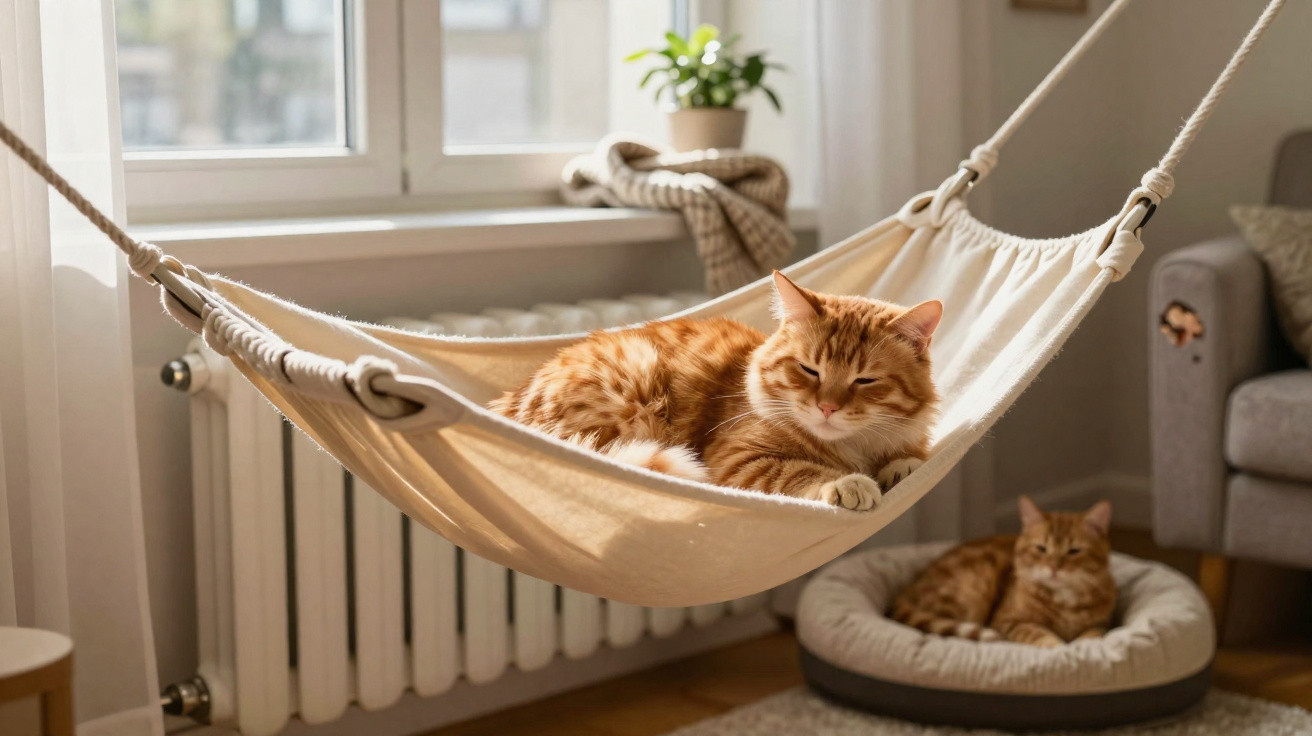
As people reach for blankets and hot drinks, cats quietly remap the house, leaving floor baskets behind to sprawl beside radiators, pipes and sunlit window ledges. A low-cost find at B&M turns this natural instinct into a safer, more practical and unexpectedly affordable solution.
A bargain gadget that turns radiators into luxury cat lounges
B&M shops in France have been selling a radiator hammock bed for cats for less than the price of a coffee: only €5. Marketed under the Kittykins name, the accessory attaches straight to a standard radiator, forming a raised, cocoon-style bed directly beside the warmth.
For around €5, the Kittykins radiator hammock lets a cat nap in the warmest spot in the room without stealing your chair.
This is more than an appealing novelty. It responds directly to feline habits, as many cats already perch precariously on slim radiator tops or press themselves against boilers and pipes. The bed offers a dedicated space that is safer and more comfortable, while also releasing floor space in smaller homes.
Why cats are so drawn to warmth in winter
Higher body heat and a strong attraction to warmth
Cats have a warmer normal body temperature than people, typically around 38–39°C. As a result, a cool flat that seems comfortable to you may still feel chilly to them. During winter, they also use more energy to maintain that temperature.
This explains the familiar habits many owners see whenever the weather turns cold:
- cats swapping floor-level beds for radiators or boiler cupboards
- felines slipping behind curtains to perch on window ledges above heaters
- extended naps on laptops, routers and other electronics that produce mild heat
A cushion placed on cold tiles or wooden flooring cannot rival a radiator steadily giving out warmth at head height. An elevated bed positioned over a heat source reflects the way cats naturally select their resting places.
The overlooked drawbacks of conventional cat beds
Standard baskets and cushions may appear snug, but cats can find two important disadvantages: they are placed on the floor and often get in the way. Cooler air gathers at floor level, while draughts commonly travel through hallways and along skirting boards.
Bulky pet beds can also take up valuable room, particularly in compact flats where every square metre counts. Owners often move them into corners, which tend to be the coldest parts of the room.
Raising the sleeping area off the ground brings a cat closer to the warmest air in the room while clearing space for humans.
Inside the Kittykins radiator hammock found at B&M
How the hammock functions and why it is secure
At first, the Kittykins bed has a straightforward design: a metal frame hooks firmly over the top of a standard radiator, while soft fabric spans the frame to create a hammock-like cradle. Once fitted, the frame sits tightly against the radiator and provides a stable surface able to support a cat without wobbling.
That secure fit is important. Plenty of owners have attempted to place blankets or cushions on radiators, only for them to slip when a cat jumps up. In this case, the frame provides the necessary support. It can also be folded away, and its fabric section is machine washable, helping to manage fur, dust and odours over time.
The washable, foldable design makes this more than a seasonal gimmick – it behaves like proper furniture, not a novelty toy.
A space-saving design suited to the home
For those in smaller properties, the main benefit may not be the heat but the floor space recovered. As the bed hangs from an existing radiator, it does not require extra room for pet accessories.
The cat receives:
- a warm, raised viewing point
- a secluded space away from passing feet
- a dedicated perch that frequently becomes their “main” bed
The owner benefits from clearer routes through the room and fewer trip hazards. With its neutral, unobtrusive appearance, the Kittykins hammock is also easier to accommodate in a carefully decorated living room than a brightly coloured plastic cat house.
Why the €5 price is prompting a rush
A genuinely useful pet accessory for under €5
Its most notable feature is the price: B&M sells the hammock for just €5. Pet accessories can quickly reach double-figure prices, particularly products with a metal frame and a removable cover. At this cost, many shoppers view it as an easy impulse buy.
| Feature | What you get for €5 |
|---|---|
| Price | About €5 per unit |
| Function | Radiator-mounted hammock-style cat bed |
| Maintenance | Foldable frame, machine-washable fabric |
| Benefit for cat | Warm, elevated, secure sleeping spot |
| Benefit for owner | Space saving, cleaner furniture, low running cost |
Demand has increased sharply at this price point. Reports from shoppers in France indicate that the item is sold out throughout much of the wider network, with stock remaining only at isolated branches.
The Click & Collect method for finding remaining stock
Given the low cost, simply visiting a random branch in the hope of seeing the hammock on the shelf is increasingly uncertain. Shoppers who have checked online availability with reference number 520987 have found that most stores list no stock, although a small number still provide units through Click & Collect.
Recent searches have identified some remaining stock in towns including Cusset, Plaisir and Corbeil-Essonnes. Anyone looking for the offer is therefore better reserving online before travelling across town. As energy prices rise, products that help keep pets warm without increasing the thermostat setting are quickly finding their way into shopping baskets.
How this type of bed affects day-to-day life with a cat
Greater comfort for cats and less wear on furniture
Providing a warm, designated space can also affect behaviour. Many owners say that, after a cat “claims” a warm bed, sofas and armchairs receive a little more respite. The radiator hammock becomes highly desirable territory, making chairs less attractive.
A cat that sleeps six hours a day in its own warm hammock spends six fewer hours shedding fur across your favourite armchair.
There is a safety benefit too. Rather than balancing on the narrow top of a hot radiator or stretching awkwardly over a heater, the cat can rest in a cradle that supports its body and reduces the risk of an uncomfortable fall.
Energy, warmth and its place in winter routines
Many households aim to keep heating at a moderate setting to control bills, often at around 18–19°C. People can put on a jumper, whereas cats cannot, so they gather around sources of heat. A radiator bed does not itself increase energy use, but it focuses the warmth the cat already seeks in a place it will genuinely use.
This may slightly lessen the urge to turn up the thermostat “for the cat’s sake”, as the animal feels the existing heat more directly. It is a modest efficiency benefit, but alongside measures such as shutting doors and closing curtains at night, it helps create a cosier winter environment without significant additional expense.
Before buying: a few practical checks
Before looking for a radiator bed, there are several points worth considering at home. First, check the type of heater: these hammocks are generally made for standard metal radiators with a clearly defined upper edge. Very slim or contemporary panel heaters may not provide enough purchase for the hooks.
Next, consider your cat’s usual behaviour. If it already favours the radiator area, it is likely to take to the hammock within days. If it prefers concealed corners or dens under the bed, it may use the hammock as a lookout point rather than a permanent sleeping spot.
Lastly, bear in mind that once a cat becomes attached to a warm bed on one radiator, a second unit for another room may become tempting, especially in homes with more than one cat. At €5, this small improvement in feline comfort is surprisingly achievable for many budgets.




Comments
No comments yet. Be the first to comment!
Leave a Comment