
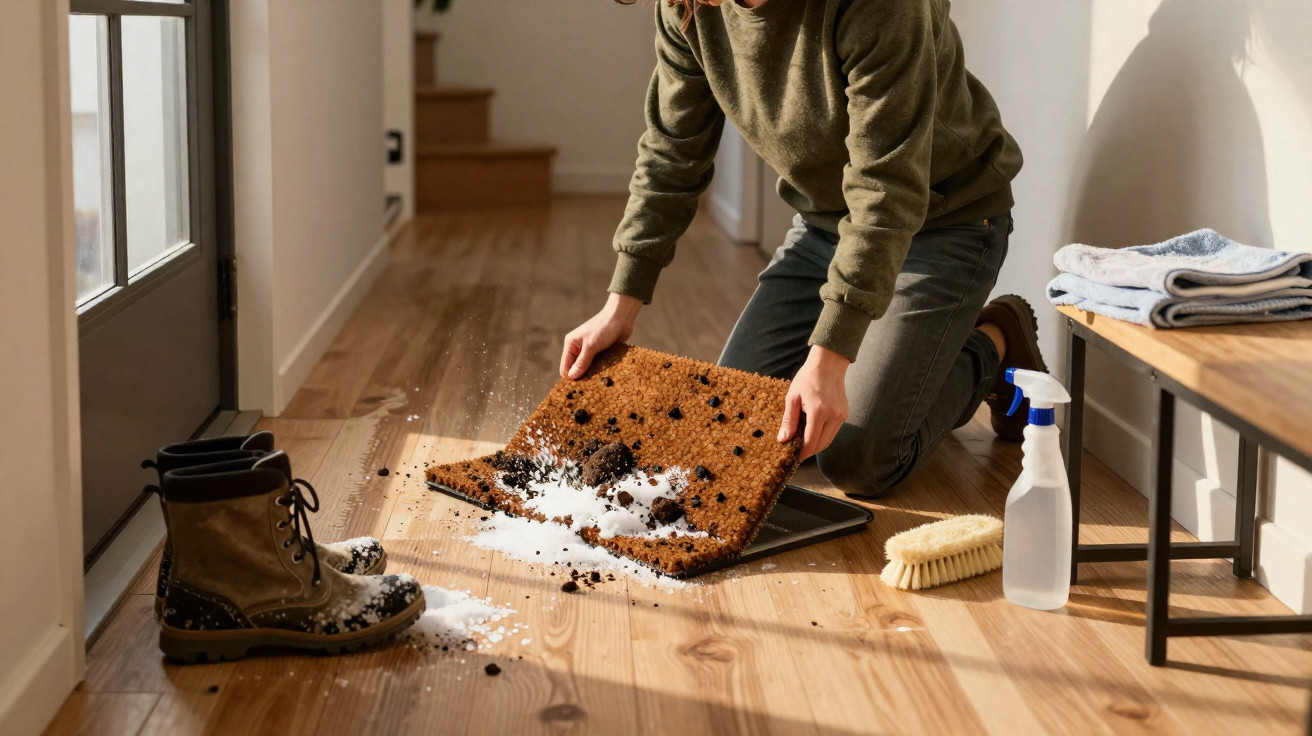
Something else takes place at the entrance: quietly and out of sight.
Wet tarmac, grit salt and muddy shoes turn the floor into a collection point for dirt. It welcomes every visitor, yet can go unnoticed for months.
The overlooked culprit in the hallway
The modest dirt-trapping mat by the door catches everything winter brings indoors: moisture, salt, fine dust and particles worn from the road surface. When clean, it prevents a great deal; when overdue for cleaning, it spreads much of it. People arrive home, wipe each sole twice, walk on and forget about this foundation. The result can be odours, grey marks on the next carpet and an overall unclean feel in the hallway.
Mats operate continuously, particularly on cold days. Their fibres grip microscopic particles, moisture keeps germs alive for longer, and draughts from the communal hallway stir up what should have stayed outside. Families with children and a dog notice it first: the blend of wet fur, road grime and the metallic smell from the handrail lingers in the air.
A well-maintained dirt-trapping mat significantly reduces the amount of dirt brought into living areas – often by more than half.
Why the mat holds so much dirt
Winter creates the ideal microclimate at an entrance: cool temperatures, limited light and humid air. Grit salt and mineral dust retain water within the fibres, while rubber or vinyl backings seal the underside. As a result, the material dries slowly, organic matter decomposes and odours develop.
- Coir fibres and hard-wearing synthetic blends catch grit and salt residue.
- Rubber ridges hold puddles but leave behind fine sludge.
- Microfibre develops a static charge and gathers fine dust carried in by draughts.
- A cool hallway extends drying times and increases the germ load.
Anyone who wants a clean entrance area needs to maintain the first contact surface – not just the rest of the home.
Cleaning a dirt-trapping mat properly by material
The material determines both the right method and how quickly the task can be done. Cleaning thoroughly once is more effective than doing a half-hearted job every day. This guide helps you plan.
| Material | Method | Avoid | Drying |
|---|---|---|---|
| Coir/brush fibres | Beat it firmly outdoors, vacuum thoroughly on both sides, then work across and along the fibres using a stiff brush and lukewarm soapy water. Rinse briefly with clean water. | Do not soak it through or leave it submerged in a bucket; avoid hot water. | Stand upright or lay flat with an air gap until dry at its centre; only then put it back. |
| Microfibre/textile | Shake out and vacuum the mat, sprinkle a thin layer of bicarbonate of soda over it, wait 30 minutes, then brush it. If permitted, machine-wash it in a laundry bag on a cold short cycle with a low spin speed. | Do not use fabric conditioner; avoid washing too hot to protect the fibres. | Dry flat and use a draught; finish by directing a lukewarm airflow into the deeper layers. |
| Rubber/natural rubber | Rinse with a hose, lightly brush with a 1:1 water-and-vinegar solution, then rinse thoroughly with clean water. | Do not use solvents or abrasive scouring pads that roughen the surface film. | Prop it up at an angle and allow it to drain; check its slip resistance before laying it down again. |
Quick winter routine
- Every week: beat out and vacuum the mat, remembering the reverse side.
- After days of salt or snow: rinse it briefly with water so the salt cannot damage the fibres.
- Every two to three weeks: carry out a thorough clean suited to the material.
- A practical option: rotate two mats. One dries while the other is in use.
Common mistakes that create more work
- Putting it back while damp: wet fibres trap odours and encourage mould.
- Cleaning only the surface: salt sits deeper down and returns.
- Neglecting the underside: dust can work its way back up from below.
- Using too much water on coir: its structure swells, distorts and takes exceptionally long to dry.
Every half-litre of water in the mat adds hours to its drying time – and locks in odours.
Hygiene in a block of flats: what matters in the communal hallway
In a block of flats, the building rules and fire-safety requirements determine where a mat may be placed. Many landlords permit only narrow mats directly outside the flat door so escape routes remain clear. Slip-resistant backings are essential where tiles become slippery. Anyone planning a larger dirt barrier should speak to the property management company or caretaker first to prevent disputes.
A useful everyday addition is a small shoe drip tray immediately inside the door, within the private area. This keeps salty water in the tray rather than in the mat’s fibre core.
Better air quality with less effort
A clean mat reduces cleaning work in living spaces: there is less dust on skirting boards, fewer marks on carpets and less frequent mopping. Allergy sufferers notice calmer noses and less irritation. Households with children benefit too, as the floor stays cleaner when children sit in the hallway to tie their shoes.
- Bicarbonate of soda absorbs odours without perfume.
- Vinegar water neutralises salt and limescale marks on rubber.
- Soapy water is sufficient for coir; harsh products damage the fibres.
Keeping cost and sustainability in mind
Two straightforward choices save money and reduce waste: choose a high-quality mat with stitched edges and a non-slip backing, then rotate it with a second one. This noticeably extends its lifespan. For machine-washable models, use a short cold wash to reduce energy use. If a mat remains musty despite care, give it a sunny window: winter sunlight and a draught have an antibacterial effect.
When replacement makes sense
- The fibres lie flat and no longer form an edge.
- The backing is cracked or the mat slides even on a clean floor.
- A persistent smell remains after drying.
- Salt residue forms hard crusts that cannot be removed.
Extra: mini checklist for salty days
- Quickly loosen coarse mud outside the door with a brush.
- Place shoes in the drip tray indoors and adjust the laces there.
- Rinse the mat briefly in the evening, let it drain and lay out the spare mat.
- Check that it is dry the following morning before returning it to its place.
Clean entrance, calm mind: one small action at the door saves three big ones in the living room.
Everyday practical extra
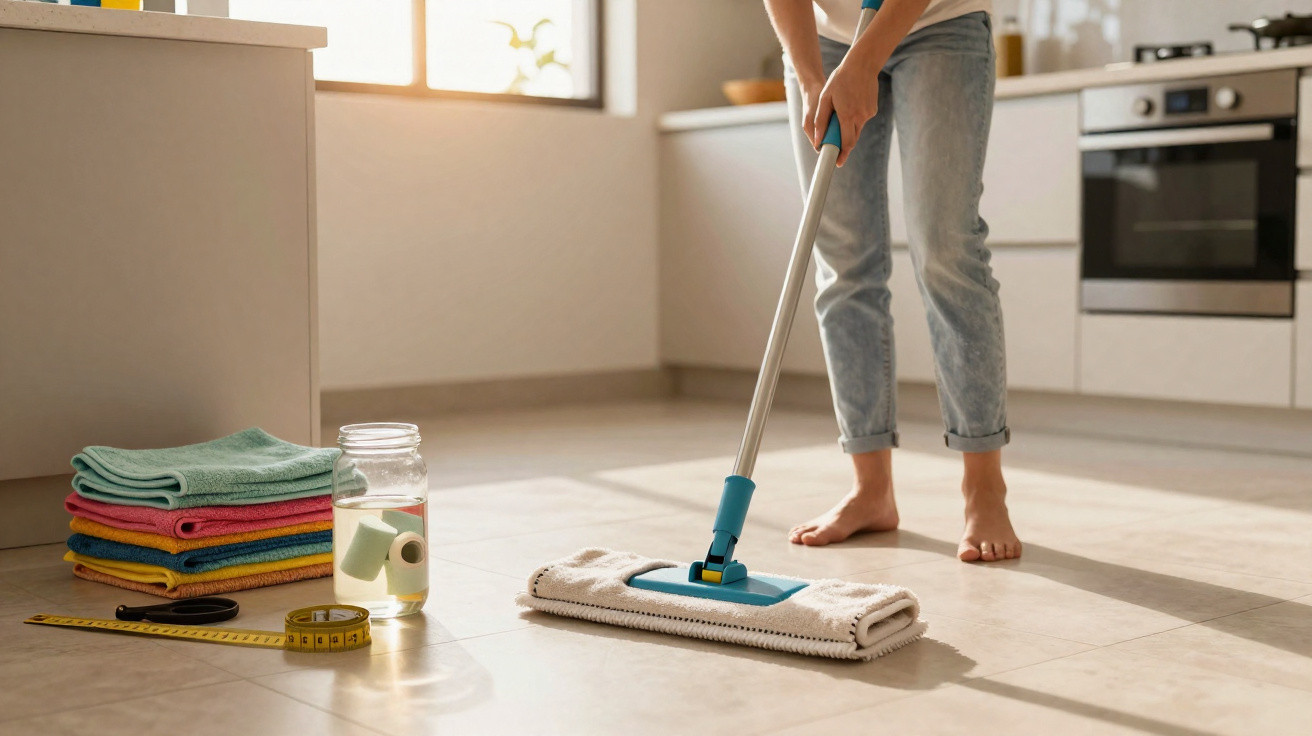
For anyone who likes to measure results, try a simple comparison: follow the old routine for one week, then maintain the mats consistently for a week. Weigh a dusting cloth before and after each week, and photograph the carpet edge. The difference provides motivation to keep the new habit. This works for offices too, especially ground-floor premises with heavy footfall.
One further detail is often underestimated: pairing an outdoor mat with a coarse rubber profile with an indoor microfibre mat. Dirt falls away outside, while fine dust is stopped inside. This creates a two-stage barrier. Anyone with enough space saves time, stress and cleaning products this way – especially during the long German winter.
Comments
No comments yet. Be the first to comment!
Leave a Comment