
The bathroom mirror is clouded with steam before the shower has even reached its hottest setting. In the kitchen, the tap is left running for several seconds “to get the water really warm” before you wash a plate that held nothing more than a slice of toast. The washing machine stays set at 60°C because that is how your parents always used it. It seems clean and comforting: a modest daily indulgence in a world that can feel hard to control.
Then the energy bill lands.
All at once, those instinctive routines seem less innocent. You begin to question whether that much hot water is achieving anything at all, or simply wasting energy and money in the pipes through force of habit.
Hot water: a reassuring habit with a bigger cost than expected
Ask ten people why they use hot water for nearly everything and the same answers will keep coming up: hygiene, cleanliness and safety. We have almost been conditioned to believe that “hot equals clean”, while “cold equals not quite enough”. As a result, we turn up the heat even for minor jobs, such as rinsing vegetables or washing a T-shirt worn for a single afternoon.
In reality, much of that heat disappears down the plughole before it has had any meaningful effect on germs or stains. It simply feels like the right thing to do.
Think of a familiar household setup: a family of four in a compact flat, with two children who play sport, one parent working from home and the other doing shifts. The washing machine is used almost daily. By habit, most loads go in at 60°C “because the clothes get cleaner.” The dishwasher is put on an intensive hot programme, while the shower mixer is moved almost entirely into the red, even during summer.
Then, one day, the parents review their energy-use breakdown with their supplier. The surprise is that heating water ranks among the household’s three biggest costs. It is not space heating or charging devices. It is simply hot water.
Energy and hygiene specialists say this behaviour is widespread. We have carried over advice from a time when detergents were weaker and hot water seemed the only reliable solution. Today’s products are formulated to perform effectively at 30°C and even 20°C. Many washing-machine programmes marked “eco” use lukewarm water with longer drum rotations to reduce electricity consumption. The major divide is psychological rather than technical. We are still doing laundry as though it were 1989, despite using 2026 appliances.
When hot water matters - and when it does not
So, when is hot water genuinely needed? Laundry specialists say that everyday clothing worn to work, school or on brief outings can be washed perfectly well at 30°C. The same applies to sportswear and lightly marked garments. Higher temperatures are mainly for heavily soiled loads, bed linen when somebody is ill, reusable nappies, or workwear covered in oil and substantial dirt.
The principle also applies in the kitchen. Plates, glasses and cutlery with only light residue do not require almost-boiling water. Detergent and physical scrubbing do most of the cleaning. The extreme heat is often just… routine.
Most people know the moment: you leave the tap running for 20 seconds “just to get it hot” before rinsing one mug. Timing it can be eye-opening. In those few waiting seconds, litres of warmed water can be sent into the sink for no useful reason. A plumber featured on a French consumer programme explained that, in some flats, more energy is literally wasted heating the pipes than is used to clean the dishes.
For washing clothes, several European consumer associations have found that a 30°C wash can deal with around 75–80% of “normal dirt” as effectively as a 40°C or 60°C cycle, particularly when modern detergents are used. The key difference is that a low-temperature programme can use up to half as much electricity. That is the sort of saving that shows up on an energy bill.
Energy specialists put it simply: in many countries, water heating is one of the most energy-hungry activities in the home, exceeded only by heating living spaces. The higher the temperature, the faster the cost rises. Yet public-health specialists say routine washing at moderate temperatures, when combined with detergent and thorough drying, is more than sufficient in a healthy home. The idea that water needs to be “boiling hot” is largely inherited from an era when households disinfected linen by boiling it in large pots.
Honestly, no one does that every day. We have merely kept the belief that “hot equals safe”, while the science has quietly progressed.
Small hot water changes that reduce the bill without sacrifice
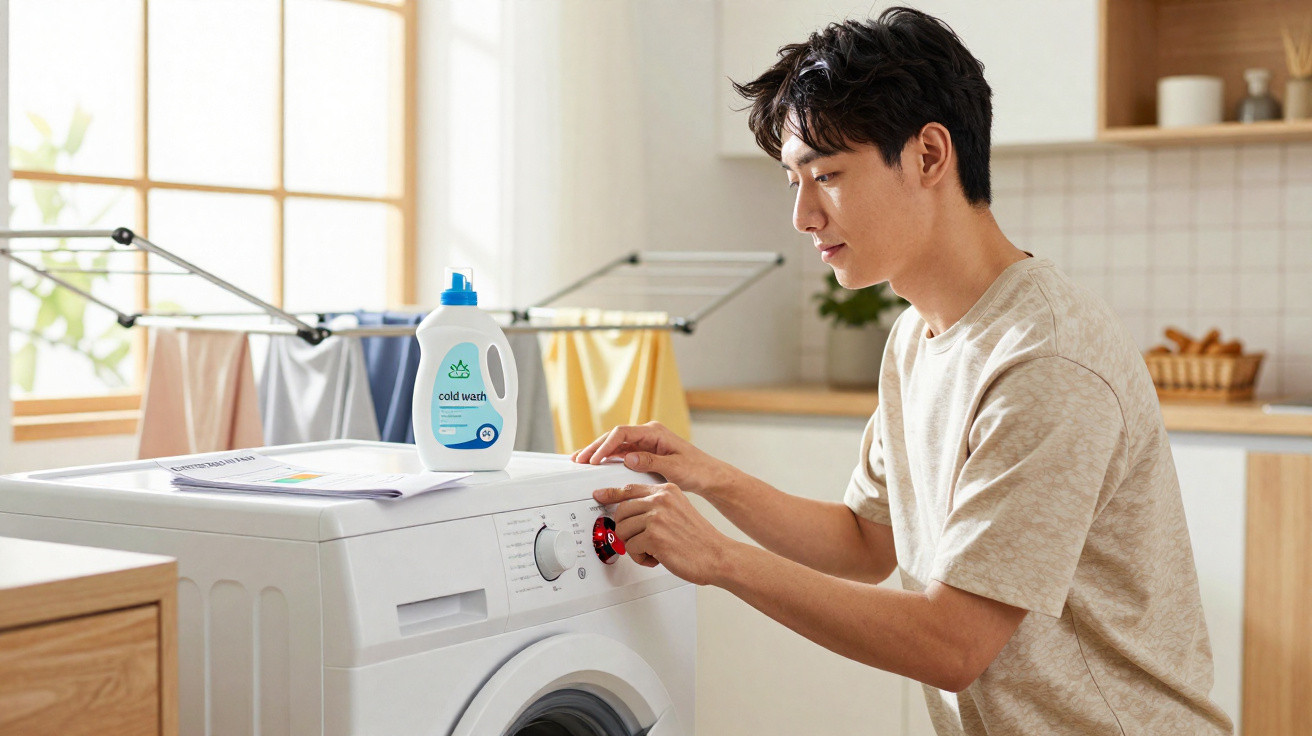
The simplest place to begin is the washing machine. Change your regular 40°C or 60°C setting to 30°C for lightly soiled items, including T-shirts, jeans, loungewear and children’s school clothes. Keep hotter programmes for exceptional situations, such as illness at home, underwear if that is your preference, or greasy kitchen textiles. Many machines now offer an “eco” or “cold wash” setting; try it once or twice a week initially as an experiment.
In the bathroom, reduce the temperature gradually. That could mean setting the water heater two or three degrees lower, or moving the tap one notch closer to blue. Your skin may well be happier too.
The difficult part is not adjusting the controls but changing ingrained behaviour. At first, your clothes may seem “less fresh” simply because the water does not feel scalding when you touch the drum. That response is emotional rather than chemical. Laundry can smell unpleasant at 60°C as well if the drum or filter is dirty, or if damp clothes are left too long before drying.
Start with the washing machine itself: run an empty hot cycle using a dedicated cleaner or white vinegar, wipe the door seal and clean the detergent drawer. After that, spread out your hot washes. Specialists stress that a clean machine and effective drying make a greater contribution to hygiene than using very hot water for every load.
“People imagine that germs instantly die at 60°C and survive at 30°C,” explains Marie Blanchard, a hygiene specialist who advises households on energy use. “In reality, it’s far more complex. Detergents, wash time, friction, and drying conditions matter just as much. We can cut hot water use dramatically without putting families at risk.”
- Reduce laundry to 30°C. For everyday clothes, bedding and towels without visible dirt, select low-temperature cycles. This saves energy and can help fabrics last longer.
- Keep hot washes for particular situations. Use 60°C or above only for bedding used during illness, reusable nappies, or very dirty and greasy workwear.
- Cut down hot-water tap use. Rinse mugs and plates with lukewarm or cool water, rather than running the tap solely to “feel” it become hot.
- Choose warm rather than scalding showers. This lowers energy use and reduces skin irritation, particularly in winter.
- Look after appliances. Regularly clean the washing-machine drum and dishwasher filters to ensure low-temperature programmes remain effective.
Rethinking “clean” and comfort at home
Moving away from automatic hot-water use is not just about reducing pounds on an energy bill, although that benefit is real and measurable. It also raises a quiet but useful question: what does “clean enough” mean in an ordinary home, with ordinary germs and everyday mess? Must every towel be nearly boiling to make us feel reassured, or have we mistaken intense heat for emotional security?
For some people, lowering the temperature can feel like giving up a comforting ritual. For others, it brings relief: less steam, less dryness and less guilt when the bill arrives. The specialists highlighting waste are not asking anyone to embrace an austere life of cold water. They are encouraging households to match their routines to what science and modern technology already make possible.
Next time your hand automatically turns the tap towards the red marker, pause for a second. Is it really about hygiene, or is it habit? Changing the answer even once a day, quietly, can make a difference to both your wallet and the planet.
| Key point | Detail | Value for the reader |
|---|---|---|
| Reduce hot water in laundry | Use 30°C for everyday clothing, reserving 60°C+ for special loads | Lower energy bills and longer-lasting fabrics |
| Change tap habits | Do not run taps to “get hot” for small rinses; choose lukewarm or cool water instead | Cuts invisible daily waste without reducing comfort |
| Rethink “clean” | Depend on modern detergents, proper drying and appliance maintenance | Maintains hygiene while reducing unnecessary hot-water use |
FAQ:
- Question 1: Does washing at 30°C really clean my clothes properly?
- Answer 1: Yes, for most everyday loads. Modern detergents are designed to work effectively at low temperatures on normal dirt and perspiration. Only heavily soiled, greasy or contaminated items genuinely require hotter water.
- Question 2: Is hot water needed to kill germs in laundry?
- Answer 2: Usually not for routine laundry. Detergents, washing time and proper drying are sufficient. Hot programmes are useful when there is illness, for nappies, or when an additional degree of disinfection is required.
- Question 3: Will using less hot water harm my washing machine or pipes?
- Answer 3: No, although you should still use an occasional hot maintenance cycle to prevent build-up and unpleasant smells. Cleaning the filter and drawer regularly becomes even more important if you mostly wash at cold temperatures.
- Question 4: Is washing up with cooler water hygienic enough?
- Answer 4: Yes, when using a dishwasher on its standard programme, because the appliance controls both temperature and cycle. When washing by hand, detergent and scrubbing are more important than having very hot water.
- Question 5: How much money can I save by reducing hot-water use?
- Answer 5: It depends on the country and energy tariffs, but research shows that lowering laundry temperatures alone can reduce washing-machine energy use by up to 30–60%. When paired with slightly cooler showers and less tap running, the annual saving is far from insignificant.




Comments
No comments yet. Be the first to comment!
Leave a Comment