
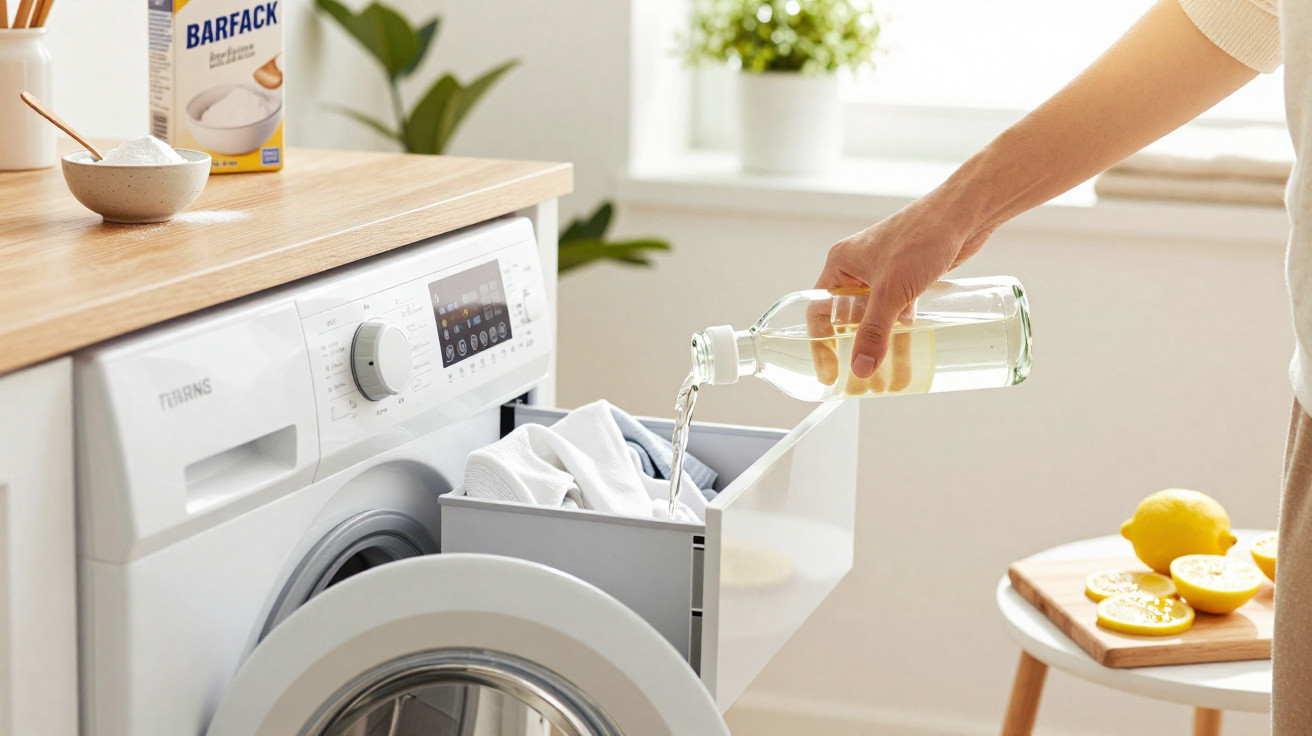
Simple kitchen staples can, however, take the place of conventional laundry products.
Anyone who routinely washes colourful shirts, jeans or sportswear at high temperatures with plenty of detergent will know the issue: colours lose their vibrancy, fabric looks dull, and clothes feel old despite still being relatively new. A number of everyday foods can tackle dirt and odours without putting unnecessary strain on textiles, while also being kinder to both the budget and the environment.
Why we often wash too much
Many people automatically put clothes in the laundry basket even when they have only been worn briefly. Tops, trousers and jumpers in particular can often simply be aired instead. Every machine wash exposes garments to mechanical wear, temperature changes and chemicals, all of which can fade colours and make fibres more fragile.
For this reason, experts advise checking honestly before every wash: Does the item genuinely smell unpleasant? Are there visible marks? Or is washing it simply a habit? Asking these questions can significantly reduce how often clothes are washed, making it easier to use household remedies selectively when a wash is needed.
“The fewer conventional detergent washes you do, the longer colours stay bright and fabrics remain strong – and kitchen ingredients can achieve a surprising amount.”
Which foods can help in the washing machine
Vinegar for odours and limescale
Household vinegar, ideally clear distilled vinegar or diluted vinegar essence, is a genuine all-rounder. It neutralises unpleasant smells and helps loosen limescale deposits inside the washing machine.
- Removing odours: Add around 50–100 ml of vinegar to the fabric conditioner compartment.
- Replacing fabric conditioner: Vinegar leaves fibres feeling softer without coating them.
- Maintaining the machine: Detergent residues and limescale can be removed more easily.
Vinegar is especially suitable for towels, sportswear and kitchen laundry, where freshness matters more than a strong fragrance. It should be used sparingly on delicate fabrics or wool, as it may gradually affect fibres over time.
Baking powder for greying and stains
Baking powder contains bicarbonate of soda and has a mildly alkaline reaction. This can help with dull, grey-looking fabrics and light stains.
- Put one or two sachets straight into the drum.
- It is ideal for greyed T-shirts, underwear or white socks.
- It can reduce odours, particularly around underarm sweat marks.
Baking powder has a slight brightening effect, so it is sensible to test it on an inconspicuous area before using it on coloured loads with very intense shades.
Bicarbonate of soda as an odour neutraliser
Pure bicarbonate of soda from the kitchen works in much the same way as baking powder, but without added raising agents. In the washing machine, it binds odours and can lessen traces of perspiration.
Add one or two teaspoons of bicarbonate of soda directly to the drum. It is particularly useful for sportswear, trainer insoles or T-shirts exposed to heavy sweating.
Lemon for refreshing white laundry
Lemon juice has a mild bleaching action and can remove yellowing, for instance from curtains or white T-shirts. It also gives laundry a fresh scent.
- Mix the juice of one or two lemons with a glass of water.
- Pour the mixture into the detergent drawer.
- Alternatively, place lemon slices in a cotton bag and put it in the drum.
Citrus fruit should only be used with great care on coloured laundry, as strong acid can affect the dyes.
How to wash without conventional detergent
It is not always possible to manage entirely without detergent, especially when washing heavily soiled children’s clothes or workwear. For lightly soiled everyday items, or clothes that merely smell a little musty, a combination of water, temperature and household remedies is often sufficient.
Step-by-step guide
- Sort the laundry by colour and fabric type.
- Select only lightly soiled items, and treat stains locally beforehand, for example with a little bile soap or traditional hard soap.
- Choose a 30°C or 40°C programme; use a delicates or gentle programme for sensitive fabrics.
- Depending on what is needed, add a measured amount of vinegar, baking powder, bicarbonate of soda or lemon to the drum or drawer.
- Take the laundry out as soon as the programme finishes and allow it to dry thoroughly, preferably in the open air.
After trying this a few times, it quickly becomes clear that much laundry can come out clean and fresh-smelling without any conventional detergent being used.
When household remedies reach their limits
Kitchen cupboard remedies are not enough for grease stains, engine oil, heavily ingrained dirt or hygiene-sensitive textiles such as baby vests, underwear and cleaning cloths. In these cases, a full detergent or hygiene detergent is advisable, together with higher temperatures where needed.
Health takes priority: anyone dealing with laundry heavily contaminated with germs due to illness should use tested products that reliably reduce bacteria and viruses. Household remedies may offer support, but they do not replace a disinfecting effect in such situations.
Benefits for the environment, your budget and textiles
Using less detergent benefits more than just clothing; it also reduces environmental impact. Fewer chemicals enter wastewater, less packaging is used, and the washing machine builds up limescale more slowly.
| Measure | Environmental benefit | Benefit for clothing |
|---|---|---|
| Less detergent | Fewer surfactants in wastewater | Gentler on fibres, with less fading |
| Vinegar instead of fabric conditioner | No cocktail of fragrances entering the water | Fewer residues against the skin |
| Baking powder / bicarbonate of soda | Often more readily biodegradable | Tackles odours and reduces greying |
Over time, households can noticeably cut their spending on detergent in this way. Families running several loads each week are particularly likely to notice the difference in their wallets.
Common mistakes when washing with household remedies
Anyone using foods in the washing machine should keep several points in mind to avoid problems:
- Avoid overdosing: Too much vinegar can affect seals, while too much baking powder can foam.
- Check direct contact: Treat delicate materials such as silk, wool and viscose with particular caution.
- Do not neglect appliance care: Despite using vinegar, occasionally run an empty 60°C cycle to reduce germs.
- Do not experiment with fatty foods: Oil, butter and milk do not belong in the drum, as they make dirt worse.
Everyday examples
A typical example is a T-shirt worn for a day in the office: there are no visible stains, just a faint smell under the arms. A short cycle with a little vinegar in the fabric conditioner compartment and a teaspoon of bicarbonate of soda in the drum is enough here. The shirt comes out fresh without requiring a full detergent.
Another example is slightly greyed white socks. Add two sachets of baking powder directly to the wash and choose a 40°C programme; the colour will often look somewhat brighter again and the grey cast will be reduced.
What terms such as “grey cast” and “microfibre damage” mean
Textile care specialists use the term “grey cast” when pale fabrics no longer look bright but instead appear dull and dirty despite having been freshly washed. It is often caused by soap residues and tiny dirt particles becoming trapped in the fibres. Baking powder and bicarbonate of soda can help release these deposits.
“Microfibre damage” refers to tiny breaks in fibres caused by excessively high temperatures, strong friction and chemicals. As a result, fabrics pill by forming small bobbles, feel rough or lose their shape. Using less aggressive detergents and household remedies can slow this damage down.
How household remedies can be combined effectively
Those who do not want to stop using detergent altogether can combine the two approaches: use a much smaller amount of mild detergent alongside vinegar or bicarbonate of soda. This reduces overall consumption while keeping cleaning performance consistent.
One practical combination is half a measuring cap of liquid detergent for coloureds, a dash of vinegar in the fabric conditioner compartment and a teaspoon of bicarbonate of soda added to the laundry. In many cases, this is enough to keep everyday clothes hygienic and free from odours, without relying on aggressive cleaning cocktails.






Comments
No comments yet. Be the first to comment!
Leave a Comment