
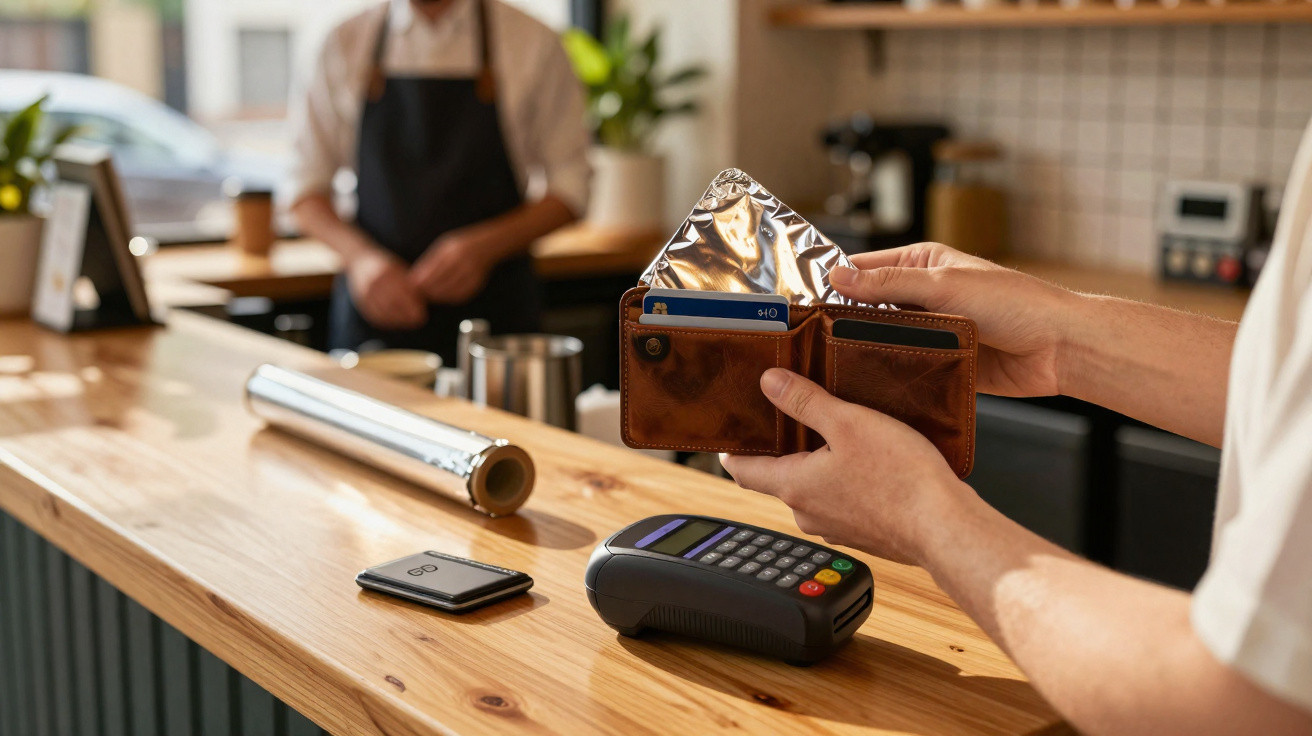
More and more people say they carry a thin layer of aluminium foil in their wallet. At first, it may sound like an online hack or a superstition, but the practice sits somewhere between security concerns, psychology and a touch of modern mysticism. The premise is that a piece of metal foil can better protect bank cards, personal information and, ideally, a person’s budget too.
Where the idea of aluminium foil in a wallet comes from
Most people associate aluminium foil with oven dishes, barbecues and leftovers. Yet in some countries it has taken on a second role as an improvised way to protect cash and cards. People there wrap their wallets in several layers of foil or place strips directly inside card compartments.
There are two strands behind this idea:
- an attempt to guard against digital theft of data
- a feeling of giving personal finances a symbolic shield
For some, it is a quick DIY solution; for others, it acts as a kind of lucky charm intended to bring calm to the household budget. This blend of technology, everyday reasoning and superstition is what makes the trend so appealing.
“Aluminium foil in a wallet feels like the budget version of a modern data safe – part technology, part reassurance.”
How aluminium foil can shield bank cards and documents
At its heart is a technology that has long been part of everyday life: RFID. Many bank cards, identity documents and access cards use small radio chips to transmit information through radio waves. A reader can be enough to retrieve that information from a short distance.
RFID, radio signals and the risk of ‘skimming’
In so-called skimming, someone secretly captures data from cards – in theory, even contactlessly and without the owner noticing. Criminals may use concealed or portable readers for this purpose, for example in crowds, at tampered cash machines or in shops.
A continuous metal layer can block radio waves or at least interfere with them. This is where the concept comes in: aluminium foil placed in a wallet creates a basic metal barrier, imitating a so-called RFID-blocking sleeve.
- The chip in a card transmits data by radio wave.
- Metal reflects or weakens those waves.
- In the best-case scenario, the reader receives no clear signal.
This is not technically far-fetched. Dedicated protective sleeves and wallets containing built-in shielding material work on a similar principle, although they are optimised and tested.
“Aluminium foil does not replace professional protection, but it can work as an extra layer of interference – a kind of ‘tripwire’ for radio waves.”
How much protection does foil realistically provide?
In practical terms, aluminium foil remains an improvised measure. Its shielding performance can vary considerably depending on the thickness of the foil, the number of layers, the wallet’s construction and where the cards are positioned.
There is another interesting effect. Anyone who takes the trouble to do this tends to think more consciously about their cards. Many people then check account activity more often, carry fewer documents and take greater care with contactless payments. This change in behaviour frequently reduces risk more than the foil itself.
Superstition, energy and feeling in control of money
Money has always been surrounded by stories: whether banknotes should be folded, what colour a “wealthy” wallet should be, or where it ought to be kept at home. Aluminium foil also fits into this tradition.
In many narratives, the shiny metal layer represents protection. Symbolically, it is said to reflect negative energy, envy or “bad luck with money” back where it came from. There is no scientific evidence for this, but the psychological effect can still be genuine.
People who believe their wallet is especially protected may pay closer attention to their financial habits. Some report that they:
- make impulse purchases less often
- allocate their cash more deliberately
- examine their bank statements more carefully
“The foil does not change the bank, but it often changes how people view their own money – and that can make the crucial difference.”
How to use aluminium foil in a wallet sensibly
Anyone wanting to try this trick should take a practical approach. The aim is not to encase the entire wallet in silver armour, but to place a thin metal layer specifically where sensitive data is held.
Practical step-by-step guide
- Cut a piece of aluminium foil to the size of the card compartment.
- Take care with sharp edges so that nothing tears or gets scratched.
- Fold the foil smoothly, ideally into two or three layers.
- Put it between the outer wall of the wallet and the card slots, or wrap it around the full stack of cards.
- Check that cards can still be removed and put back without difficulty.
Importantly, the foil should not scratch magnetic stripes or be so thick that cards bend or break. Once it becomes crumpled, torn or flaky, it should be thrown away and replaced.
Additional precautions for wallet users
Aluminium foil should never be seen as the only form of protection. Those who genuinely want to secure their cards and documents should use several measures:
- Always cover the keypad with your hand when entering a PIN.
- Check bank statements and the banking app regularly.
- Limit or disable the contactless function if it is rarely used.
- Do not carry every identity document and card at all times.
- Contact your bank or building society immediately if you spot suspicious transactions.
“The best security is still staying alert – foil is only an extra, not a shield from a spy film.”
When professional RFID protection makes more sense
For people who travel extensively, such as those regularly using trains, airports or railway stations for work, tested RFID protection may make more sense than a kitchen-based solution. Manufacturers specifically test dedicated sleeves and wallets for their ability to dampen radio signals.
Such products generally offer:
- consistent shielding across the whole surface
- hard-wearing materials that do not damage cards
- no fiddling with replaceable pieces of foil
Anyone already needing a new wallet can choose a model with integrated shielding. The additional cost is usually modest, while the convenience is greater than that of folded foil made at home.
Why the aluminium foil wallet trend still resonates
The combination of a technical threat, a feeling of uncertainty and an extremely simple remedy explains why aluminium foil in a wallet fascinates so many people. It is found in almost every kitchen, costs next to nothing and suggests quick protection from invisible risks.
Behind it lies a need that reaches far beyond the foil itself: control over personal data and finances in an increasingly contactless, digital payments world. People who reach for foil do not simply want to protect their cards; they also want to regain the feeling that they can take action themselves.
In everyday life, aluminium foil can certainly serve as a small additional measure, but it does not replace responsible handling of money, cards and documents. Anyone who uses it as a prompt to look more closely at limits, security settings and their own spending discipline will benefit most in the end – regardless of how thick the silver layer in their wallet really is.






Comments
No comments yet. Be the first to comment!
Leave a Comment