
Many people instinctively reach for a chlorine cleaner when tea towels turn yellow or grey. The result is stiff fibres, damaged fabric and a harsh smell – yet still no genuinely bright white finish. A rather unassuming powder works far more effectively while being kinder to the material.
Why tea towels become grey, stiff and musty over time
Tea towels are real workhorses. They absorb oil, cooking fat, sauces, coffee, tea, red wine and soap residue, all of which becomes lodged deep within their fibres.
Hard tap water also introduces limescale. It forms a coating around dirt particles and anchors them in the fabric. Even when the towels look clean after a machine wash, an invisible residue can remain.
The grey cast is often not a “dirt line”, but a build-up of grease, colourants and limescale deposited layer by layer.
Common day-to-day consequences include:
- Towels become less absorbent and smear surfaces rather than drying them.
- After only a few washes, they feel rough and somewhat greasy.
- A faint fatty or musty odour lingers despite a fresh wash.
- Light-coloured cotton or linen towels look dull and never seem truly “fresh”.
Turning straight to a very hot wash often makes matters worse. High temperatures can effectively set protein and coloured stains into the fabric, much like textile dye. Chlorine cleaner may disguise some of the discolouration visually, but it attacks cotton fibres, makes them brittle and can even leave the material with a yellowish tint.
The overlooked whitening powder: what makes Percarbonate so effective
The powder that can brighten neglected tea towels again is sodium percarbonate, commonly known simply as percarbonate or oxygen bleach. Many people buy it once for “more natural cleaning”, then leave it forgotten in the cupboard.
It is a white, slightly granular powder blend. At first glance, it resembles bicarbonate of soda or ordinary laundry powder, but a different chemical process takes place.
How Percarbonate works in practice
When percarbonate is added to hot water, two reactions occur at the same time:
- Washing soda (sodium carbonate) is released, helping to dissolve grease and soften stubborn deposits.
- Hydrogen peroxide, a stable source of hydrogen peroxide, releases what is known as active oxygen.
This active oxygen “breaks down” the colourants from coffee, tea, red wine and tomato sauce, while also tackling organic residue. In most cases, the textile fibres themselves remain considerably better preserved than they would with chlorine cleaner.
Percarbonate works best between 40 and 60 degrees – ideal for cotton and linen towels.
Once the reaction is complete, the active ingredient breaks down into water, oxygen and soda. Many households see this as an advantage, as no aggressive chlorine compounds enter the wastewater.
Which fabrics are suitable for the method?
Percarbonate works well with many fabrics, though not every material. Here is a quick guide:
| Material | Suitability |
|---|---|
| Cotton (white) | Very suitable; ideal for tea towels and cloths |
| Linen (light-coloured) | Also well suited |
| Coloured laundry with colourfast dye | Use carefully; test first on an inconspicuous area |
| Wool, cashmere | Not suitable |
| Silk | Not suitable |
| Very delicate, vivid colours | Best avoided or used at a very low dose |
Anyone with sensitive skin should wear gloves when handling the powder, as it may irritate the skin.
Step-by-step guide: making grey tea towels bright again
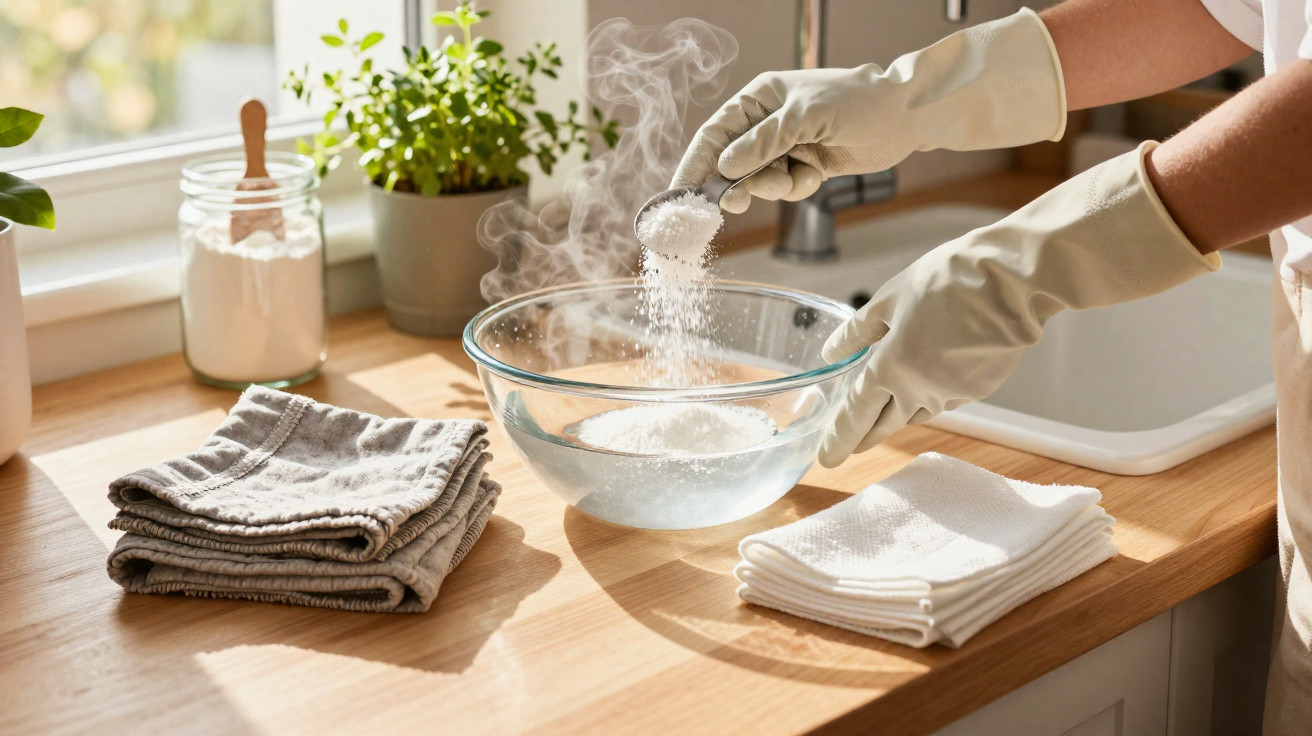
The real secret is not the usual washing cycle, but a carefully prepared soak before machine washing. This allows the dirt to loosen before the drum starts turning.
1. Prepare hot water
Fill a large bowl, bucket or sink with the hottest water possible. Use at least 40 degrees; around 60 degrees is much more effective, provided the towels can withstand that temperature.
2. Measure out the Percarbonate
Stir roughly one to two tablespoons of powder into every litre of water until it is evenly dispersed. The heavier the grey film and the older the stains, the more appropriate the higher dose becomes.
3. Treat fresh stains beforehand
Fresh oil splashes, tomato sauce marks and coffee spills can first be treated briefly with traditional soap or a solid stain-removing soap bar. Rub gently under lukewarm water rather than scrubbing too vigorously, so the fibres do not become roughened.
4. Soak the towels
Submerge the tea towels completely in the hot Percarbonate solution. Nothing should be floating above the surface; every part must be properly covered. Depending on how dirty they are, two to six hours is sensible. For older towels with heavy greying, leaving them overnight is worthwhile.
When you remove them, it is often clear how much dirt has already lifted: the water may look cloudy, sometimes slightly brown or yellow.
5. Into the washing machine – without fabric conditioner
Gently squeeze out the towels and put them straight into the washing machine. Choose a cycle of at least 40 degrees, or 60 degrees for pure cotton towels. Liquid detergent or powder detergent is sufficient; skip the fabric conditioner. It merely leaves another coating on the fibres and reduces absorbency.
Where possible, let the towels dry in the air, ideally outdoors in the sunshine. UV light boosts the brightening effect, while fresh air removes lingering odours.
Important safety and household tips for Percarbonate
Percarbonate is not a toy. A few rules make it safer and more effective to use:
- Never mix it with vinegar or lemon juice in a tightly sealed container: when acids react with it, gases can form and create pressure.
- Do not expect “something to happen” during cold washes – below 30 to 40 degrees, the active ingredient remains largely inactive.
- Always store the powder somewhere dry, out of children’s reach and not directly beside strongly acidic cleaners.
- If you have asthma or sensitive airways, measure the powder carefully and avoid creating dust.
Percarbonate does not replace an entire collection of cleaning products, but it is a surprisingly versatile addition for white laundry and stubborn kitchen stains.
Keeping tea towels fresh rather than permanently grey
To make the effort of using oxygen bleach worthwhile, it helps to look at everyday towel habits. Using them consistently and correctly prevents fresh greying.
A hygiene routine for tea towels
A few straightforward habits are often enough:
- Replace the tea towel at least every two days, or daily if it is used heavily.
- Do not leave it crumpled while damp or lying on the worktop; hang it spread out over a rail instead.
- After contact with raw meat, put it straight into the laundry basket rather than continuing to use it.
- Wash regularly at 60 degrees if the material permits it.
For households that do a great deal of cooking, it is worth keeping a small supply of plain white cotton towels. They tolerate oxygen bleach particularly well and can be washed at high temperatures.
More uses for Percarbonate: where else the powder helps
Once the packet is open, it can be used for far more than tea towels. The same principle also works on:
- greyed white socks or underwear
- slightly yellowed bed sheets
- kitchen sponges and cloths that have developed a strong smell
- coffee pots or travel mugs with brown deposits, using a hot soaking solution
There are limits, however: colour-sensitive sportswear, technical clothing with membranes and luxury fabrics cope poorly with this type of treatment, if at all. It is worth checking care labels closely.
So, anyone wanting to turn grey kitchen essentials back into fresh white everyday helpers needs neither new towels nor aggressive chlorine cleaners. A simple powder, some hot water and a little time are enough to make a cupboard full of “emergency towels” fit for everyday use again – with a far less aggressive chemical approach.


Comments
No comments yet. Be the first to comment!
Leave a Comment