
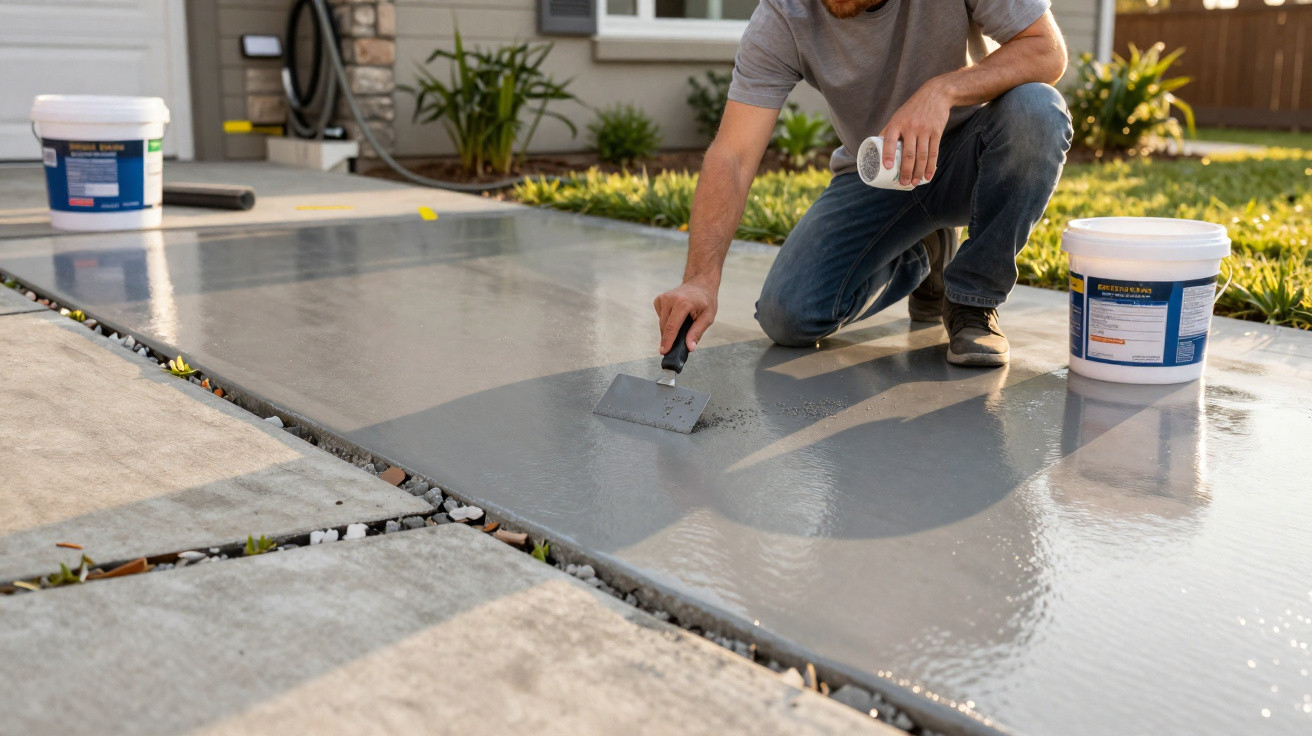
Refreshing residential paving now has a practical new trend that removes the need for heavy demolition of old flooring. Many homeowners want to transform their property entrance with modern two-component microcement, achieving an excellent urban aesthetic and a contemporary appearance.
How does microcement transform residential paving?
This technological innovation produces a seamless, refined surface without creating rubble or requiring excessive spending on lengthy renovation work. The material coats existing smooth concrete paving perfectly, delivering a renewed finish with strong durability in varied weather conditions.
Its direct-application process is particularly quick, meaning the front of a property can be completely enhanced within just a few days. This sensible option updates the façade design while permanently addressing surface imperfections, providing substantial savings and convenience.
Discover the key benefits this innovative solution offers for exterior surfacing:
- No demolition: Applied directly over existing paving.
- Waterproofing: Shields against seepage and moisture from the ground.
- Customisation: Available in several colours to complement the façade.
- Clean look: An even finish with no visible joins.
- Easy cleaning: The sealed surface prevents dirt from building up.
Why is waterproofing essential for an exterior finish?
Continual exposure to the elements means exterior surfacing needs maximum protection from excessive moisture and regular rainfall. Without proper sealing, the floor structure can be compromised, causing dark marks and premature deterioration of the material applied to residential polished cement paving.
To overcome this major issue, a protective polyurethane resin forms a fully sealed barrier against contaminants. The coating prevents greasy liquids and heavy urban grime from penetrating the surface, ensuring flooring remains clean and highly resistant to unwanted stains.
Watch the full waterproofing test in the exclusive video published on the Maycon Medeiros and You YouTube channel:
Can microcement withstand structural cracks and fissures?
Unlike conventional rigid coatings, which can crack easily as the ground moves, this elastic two-component compound accommodates minor deformation. Its flexible technology prevents gaps from appearing on exterior surfaces, keeping the paving fully protected from structural defects and severe seepage.
Proven elasticity
Flexible resistance
Elastic two-component microcement is made with specialist resins that allow the product to move in line with the floor structure beneath it.
This rubber-like capability stops minor fissures or dynamic cracks, which occur naturally in the ground, from spoiling the appearance of the finish.
This distinctive ability to move lowers long-term maintenance costs by removing the need for continual repairs. Homeowners can keep their property entrance looking impeccable, combining high mechanical durability with flexibility that is unmatched in today’s market.
See where this versatile solution can be used safely:
- Residential garage areas with regular light-vehicle traffic.
- Outdoor verandas and balconies directly exposed to sun and rain.
- Indoor bathroom floors, including the wet shower area.
Is elastic polished cement flooring slippery?
Safety in wet outdoor spaces on rainy days is a frequent concern for homeowners. Unlike polished cement, which can become dangerously smooth, elastic microcement retains excellent physical grip, providing a safe floor for the entire family.
Even when rainwater has completely wetted the surface, this material delivers very good slip-resistant performance. Practical tests demonstrate strong stability for everyday walking, establishing it as an excellent choice for people who value safety.
These are the features that make this surfacing safe for daily use:
- A lightly textured finish that provides excellent grip underfoot.
- Positive results in tests on fully wet surfaces.
- Better anti-slip performance than standard polished floors.
How can you plan your paving renovation without stress?
Updating your home entrance does not need to involve lengthy procedures or removing existing structures. Choosing direct-application technologies speeds up the project, immediately adds value to the property and creates a sophisticated appearance without the hassle of rubble skips or waste.
Before the new surfacing is installed, check for any structural damage caused by local vegetation. Understanding what your tree is trying to tell you when roots begin lifting the paving helps prevent losses and ensures a long-lasting, safe renovation.

Comments
No comments yet. Be the first to comment!
Leave a Comment