
Keeping a home clean involves many daily tasks, and bathroom hygiene often needs continual attention. As this space is exposed to moisture, splashes and residue that can encourage stains and lingering smells, many people look for straightforward, low-cost solutions, including using distilled white vinegar around the toilet.
Why use distilled white vinegar on the toilet?
Distilled white vinegar contains a low concentration of acetic acid, which can help lift mineral deposits and grease from typical bathroom surfaces. It can be used inside the toilet bowl as well as on the exterior, around the base of the toilet and on the surrounding floor.
When applied to areas near the toilet, vinegar can loosen grime that has built up in gaps, corners and joins that a cleaning cloth may not reach effectively. Its distinctive smell may also neutralise other odours, particularly in bathrooms with limited ventilation.
What benefits can vinegar around the toilet provide?
Using distilled white vinegar regularly around the toilet is associated with practical results that make bathroom upkeep easier. Although it does not replace purpose-made disinfectants, it can be a useful addition to a daily cleaning routine.
The most commonly mentioned household benefits of applying vinegar in this area include:
- Reduced odours: it can help neutralise unpleasant smells around the toilet base and in damp areas of the floor.
- Help with stains and limescale: it may assist in loosening mineral deposits and more stubborn dirt around the sanitary ware.
- Surface cleaning: it removes some organic dirt, supporting everyday cleaning.
- Reaching gaps and grout: it can easily get into corners, grooves and grout lines around the toilet.
- Support for managing visible moisture marks: it helps remove early marks in bathrooms with restricted ventilation.
- Low cost and easy availability: it is often already available in the kitchen, making it a practical and economical option.
How can you apply vinegar to the toilet safely and practically?
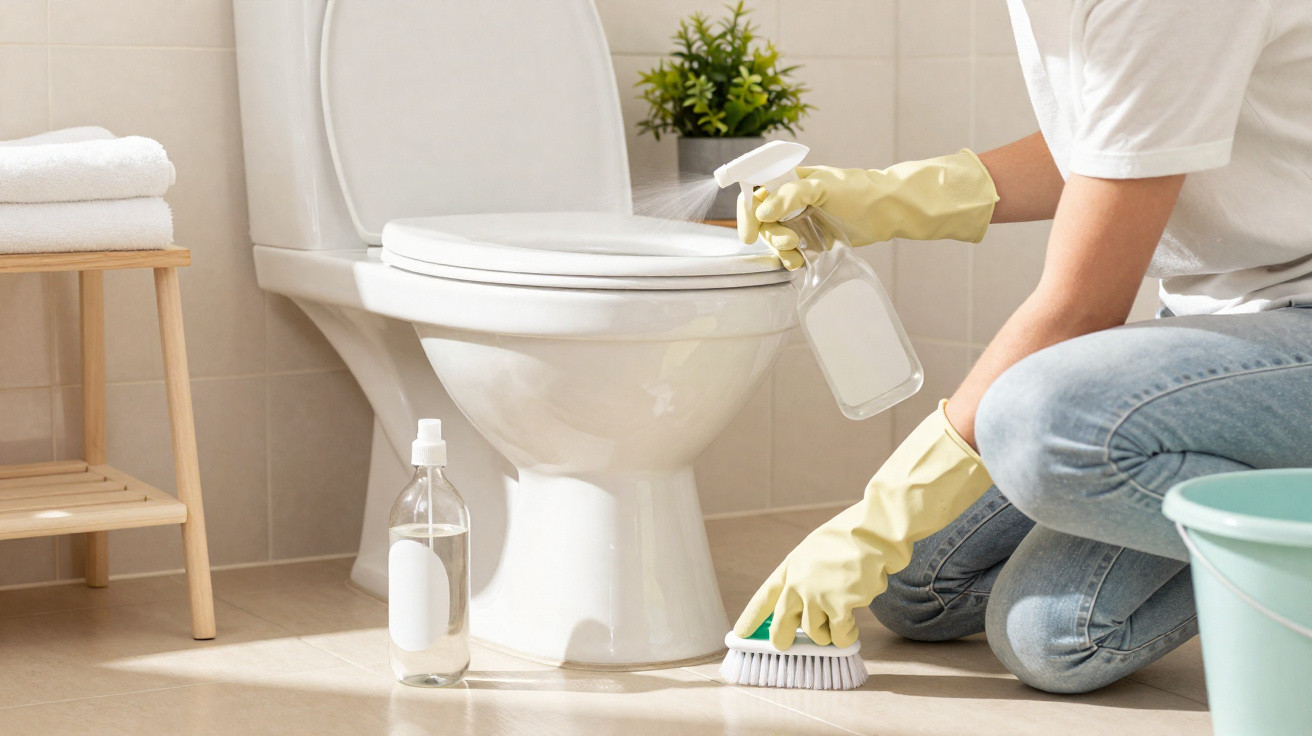
The most usual method is to pour distilled white vinegar into a spray bottle, making it easier to target particular spots. Spray the liquid around the toilet base, where it meets the floor, and on areas showing visible stains or a build-up of dirt.
- Fill a clean spray bottle with distilled white vinegar.
- Spray around the toilet, including nearby joins, edges and grout lines.
- Leave it to work for a few minutes before scrubbing.
- Scrub the area using a brush, sponge or cloth suitable for the surface.
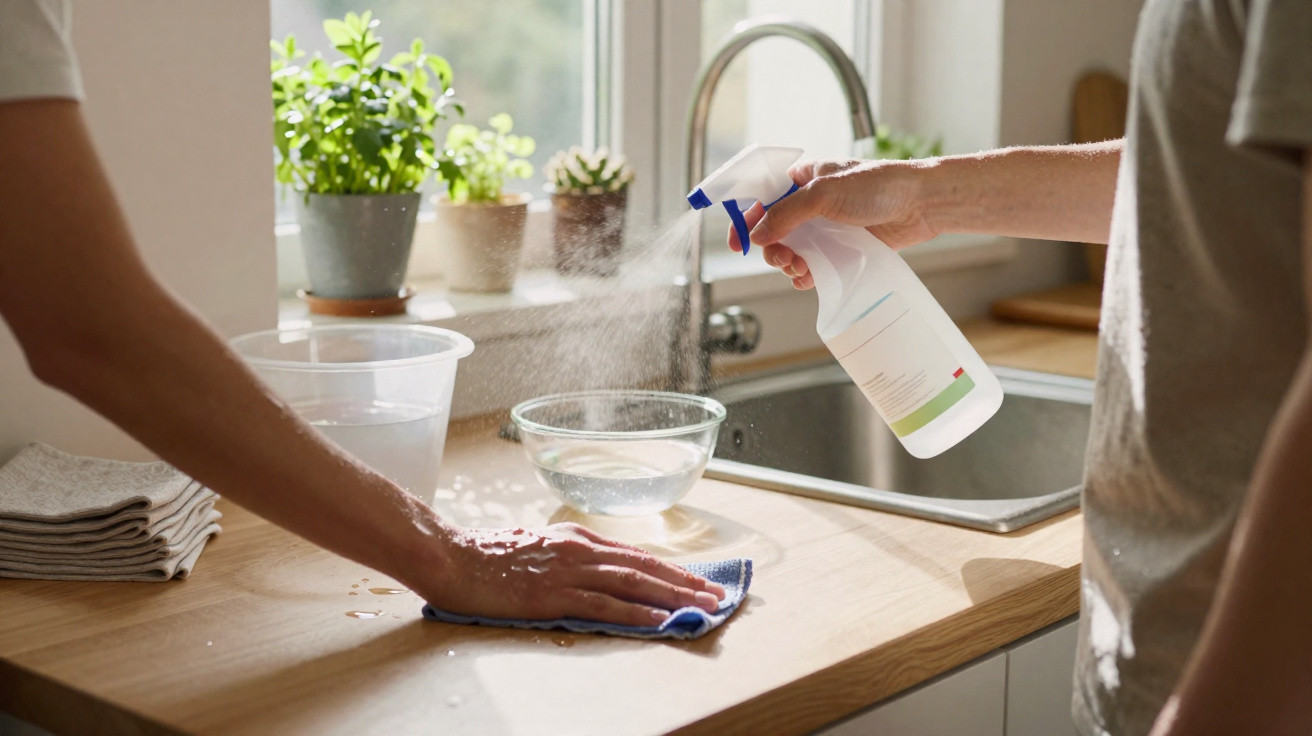
- Wipe away the excess with a damp cloth or absorbent paper to finish cleaning.
For more stubborn stains, vinegar is commonly combined with bicarbonate of soda. First, sprinkle the bicarbonate of soda over the chosen area, then spray on the vinegar. This creates foam that can help release older deposits, which are then removed by scrubbing and wiping with a damp cloth.
What precautions matter when using vinegar in the bathroom?
Despite its benefits, vinegar is acidic and may not suit every material. Natural marble and other sensitive stone surfaces can wear down if acidic products are used frequently.
For this reason, avoid leaving vinegar in contact with natural stone for prolonged periods, test it first on a small, inconspicuous area, and never mix it with bleach or chlorine-based products. When used sparingly, alongside good ventilation and a regular cleaning routine, vinegar can be an effective complementary option for keeping the toilet free from odours and reducing visible dirt around the sanitary ware.

Comments
No comments yet. Be the first to comment!
Leave a Comment