
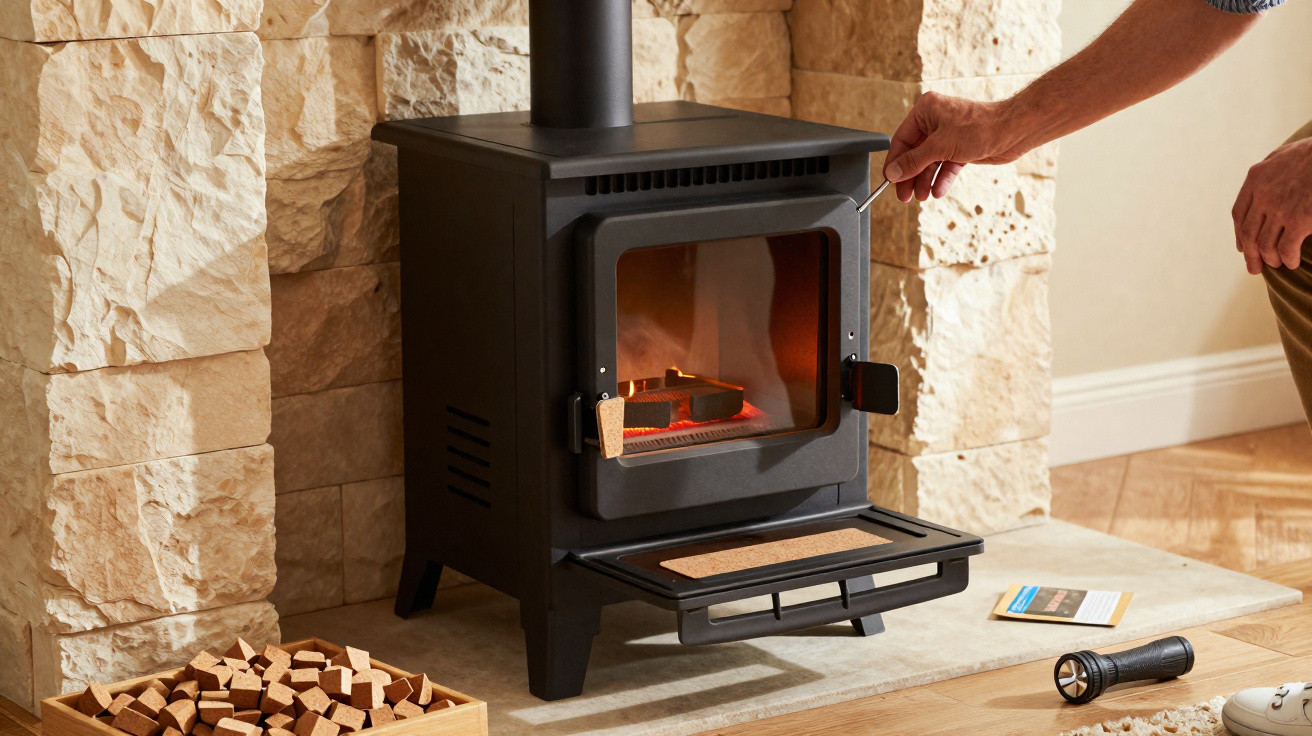
Winter arrived, the evenings stretched out, and the pellet stove in the sitting room gradually changed from a cosy ally into an unstoppable piece of kit. The fan’s constant whirr sliced straight through the TV. The clatter of metal had the children awake at 6 a.m. Even the dog started moving around the room, trying to get away from the vibration running through the floorboards.
At the start, blame went everywhere: the manufacturer, then the pellets, then the installer. One night, with the house humming like an ageing desktop computer, the owner did what many of us do in private - turned the TV down and stared at the stove, wondering whether he’d just paid a lot of money for a mistake.
That was the moment a heating engineer delivered a quiet surprise: the answer might be a tiny adjustment that hardly anyone mentions.
The moment a cosy pellet stove turns into background noise
A pellet stove doesn’t usually begin its life as a noisy nuisance. In the first winter it can feel almost flawless: a clean flame, steady warmth, and only a gentle hum. Then, year after year, a touch more vibration here, a faint rattle there - until you suddenly notice the “background” has become the home’s constant soundtrack. You find yourself speaking more loudly. The TV volume creeps up. You shut the sitting-room door “for now”.
Pellet-stove noise rarely arrives with a single dramatic bang. It builds slowly. The usual culprits are predictable: the extractor fan, the room fan, the pellets dropping, the casing panels. Yet many people miss the most basic, human part of the whole thing: how the stove actually breathes. A pellet stove that can’t draw and move air calmly will make sure you hear about it.
Most of us know the feeling of something once-comforting turning slightly hostile - a kettle that shrieks, a fridge that drones at night, a stove that suddenly sounds like an aircraft. With pellet stoves, that turning point is often the noise of air being driven through a pathway where it no longer flows smoothly.
In a small town in northern Italy, a technician called Marco began keeping notes. Every winter, the callouts sounded the same: “The stove is too noisy, I can’t stand the fan anymore.” When he arrived, he’d work through the standard checklist: ash accumulation, worn bearings, loose fasteners, poor-quality pellets. Then, almost automatically, he’d open a small menu tucked away in the control panel: the air settings.
He kept seeing the same thing. The units had been fitted “by the book”, but the air parameters were left at factory default. The fan was working harder than necessary. Combustion was running a little rich. The flame looked acceptable - but the noise was relentless. By carefully lowering fan speed and rebalancing the air intake, the sound level dropped noticeably, even without a meter.
In France, a consumer association asked pellet-stove owners about their biggest irritation. People rated comfort highly, and they also praised savings on heating costs. Noise, however, appeared again and again - often starting in the second or third winter. What stood out was that hardly anyone mentioned changing the control settings. They’d cleaned the glass, emptied the ash pan, swept the flue… but the stove’s “brain” stayed untouched, running at factory pace in a home that wasn’t the factory test environment.
Every machine is designed around averages: an average house, an average room size, an average altitude, an average flue length. Real life doesn’t respect averages. The same model fitted in a tight, well-insulated home with a short flue will not behave like it does in an old stone farmhouse with a tall chimney. And yet both are often left with identical air and fan presets, as though the manual could predict every sitting room.
From a technical standpoint, “noise” is often a symptom of airflow and combustion not being properly matched. Too much combustion air, and the flame roars while the fan has to spin at high speed. Too little, and pellets smoulder, smoke increases, and the extraction system strains to pull it away. Either way, what you hear is similar: turbulence, vibration, and that ongoing mid-frequency whine.
The overlooked adjustment is sitting right there: fine-tuning the air and fan parameters to suit the real home, not the hypothetical one. It’s the difference between a stove that heats like a jet engine and one that warms the room like a quiet heartbeat in the corner.
The insider tweak that turns down the noise without losing the heat
The change most owners never touch lives inside the control board. Behind the simple icons, many pellet stoves include menus with settings such as “combustion fan speed”, “airflow level”, or “pellet dose”. These values are often set once during installation and then ignored. Yet this is exactly where you can cut noise dramatically: reduce the combustion fan speed slightly and make sure it still matches the pellet feed.
In reality, the process is almost unexciting. Begin on the lowest heat setting. Let the stove run for at least 15–20 minutes. Then decrease the combustion air or fan speed by one small step. Keep an eye on the flame: it should remain bright and active, not sluggish, overly yellow, or smoky. Listen as well: you want a gentler rush of air and less of a metallic whistle. Make changes one step at a time, and don’t adjust several parameters together.
Seasoned technicians often refer to a “sweet spot”: the point where the flame stays clean, the glass doesn’t soot up, and the fan noise fades into a soft background murmur. That sweet spot is rarely identical to the factory default.
For many owners, the real obstacle isn’t the adjustment itself - it’s anxiety about touching anything at all. Manuals are full of warnings for good reason. Even so, many manufacturers now offer user-level access to a limited set of parameters designed to be safer to tweak. The common trap is rushing, expecting a dramatic improvement in two minutes.
Mistake number one is reducing the air too far, too quickly. At first the flame may look prettier - warmer, calmer - but a few hours later the glass darkens and the exhaust smell becomes stronger. That’s a clear signal you’ve overdone it. Mistake number two is adjusting only the pellet feed and forgetting the balance: every extra gram of fuel requires extra air, which often forces higher fan speed and brings the noise right back.
Let’s be honest: nobody does this every day. No one wants to study their flame like a laboratory experiment. So the practical approach is to set aside one evening - when the children are asleep and your phone is out of reach - and simply listen to the stove. Not doomscroll. Not multitask. Just listen the way you’d listen to an old car engine you want to keep running for years.
As one Italian installer told a client, half joking and half serious:
“Your pellet stove is like a singer. If you force it to shout all the time, of course it will sound harsh. Let it breathe, and it will sing in the background.”
And it isn’t only about the air settings. A handful of small, nearly invisible actions can magnify the benefits of this insider adjustment: a strip of felt between a vibrating side panel and the frame; rubber pads under the stove’s feet to reduce transmission through the floor; careful cleaning of fan blades, where dust and soot can throw things out of balance and create a buzz.
- Check whether your model provides user access to air/fan settings (without a service code).
- Adjust only one parameter at a time, and note down each change.
- Observe the flame and the glass over several hours, not just five minutes.
- Pair air tuning with simple vibration damping (pads, felt, tightened screws).
- At the first sign of soot, smoke, or an unusual smell, return to the previous settings.
Quiet isn’t the enemy of performance; it’s often the clearest sign the system is finally working with your home rather than against it.
Living again with a stove you don’t have to shout over
When the sound level falls, you start noticing odd little things. People drift closer to the stove again. Conversations feel calmer. The TV volume drops from 24 to 14. The flame becomes something you actually watch, rather than a light behind a machine that’s always buzzing. The room’s atmosphere becomes richer in a good way - more like a shared living space, less like a technical area.
One family in Belgium were close to switching their pellet stove off and returning to electric heaters “just for peace”. After a careful technician spent an hour rebalancing air and fuel, tuning the fan, and fitting soft feet under the base, the mother made an instinctive comment on the second evening: “I’d forgotten that heat could be quiet.” It’s a small sentence, but it says a lot about what people end up tolerating.
Household noise works in the background. It influences evenings, sleep, and stress without necessarily becoming a dinner-table conversation. A loud pellet stove doesn’t only bother the ears; it erodes that sense of refuge. Fine-tuning air settings and adding gentle vibration control won’t be a perfect cure for every stove, but it can restore a degree of control in a world full of devices that hum, whirr, and beep without permission.
There’s also something strangely personal about learning to listen to your stove again - not as a threat to your peace, not as an appliance on a timer, but as a small engine with its own rhythm that can be matched to yours. Some people will swap tips with neighbours. Others will ring the installer and ask, perhaps for the first time, “Can we talk about the air settings?” Many will keep scrolling and live with the drone.
The flame won’t care either way. But your evenings might.
| Key point | Detail | Benefit for the reader |
|---|---|---|
| Air and fan tuning | Adjusting combustion air and fan speed to suit the specific home and flue | Reduce perceived noise without sacrificing heat output |
| Listening session | Setting aside time to watch the flame and hear changes step by step | Find the “sweet spot” between a clean burn and quiet operation |
| Vibration control | Rubber pads, felt strips, tightened panels and clean fans | Cut rattles and resonance that make the stove feel aggressive |
FAQs:
- Why did my pellet stove get noisier after a few winters? Dust build-up, slightly worn fan bearings, loose panels and default air settings that no longer match your flue can all add layers of noise over time.
- Can I safely change air or fan settings myself? If your manual mentions user-accessible parameters, small adjustments are possible, but they should be done step by step, with notes, and never against the manufacturer’s recommendations.
- Will lowering the fan speed reduce heating performance? When done properly and balanced with pellet feed, fine-tuning often keeps the same comfort level while cutting turbulence and noise.
- How do I know if I’ve gone too far with adjustments? Blackening glass, a lazier flame, a stronger smell or visible smoke are clear red flags; in that case, go back to previous values or call a professional.
- Is noise always a sign something is wrong? Not always; some hum is normal, but a sudden increase or harsh, metallic tones can signal imbalance, poor tuning or a part that needs cleaning or replacement.






Comments
No comments yet. Be the first to comment!
Leave a Comment