
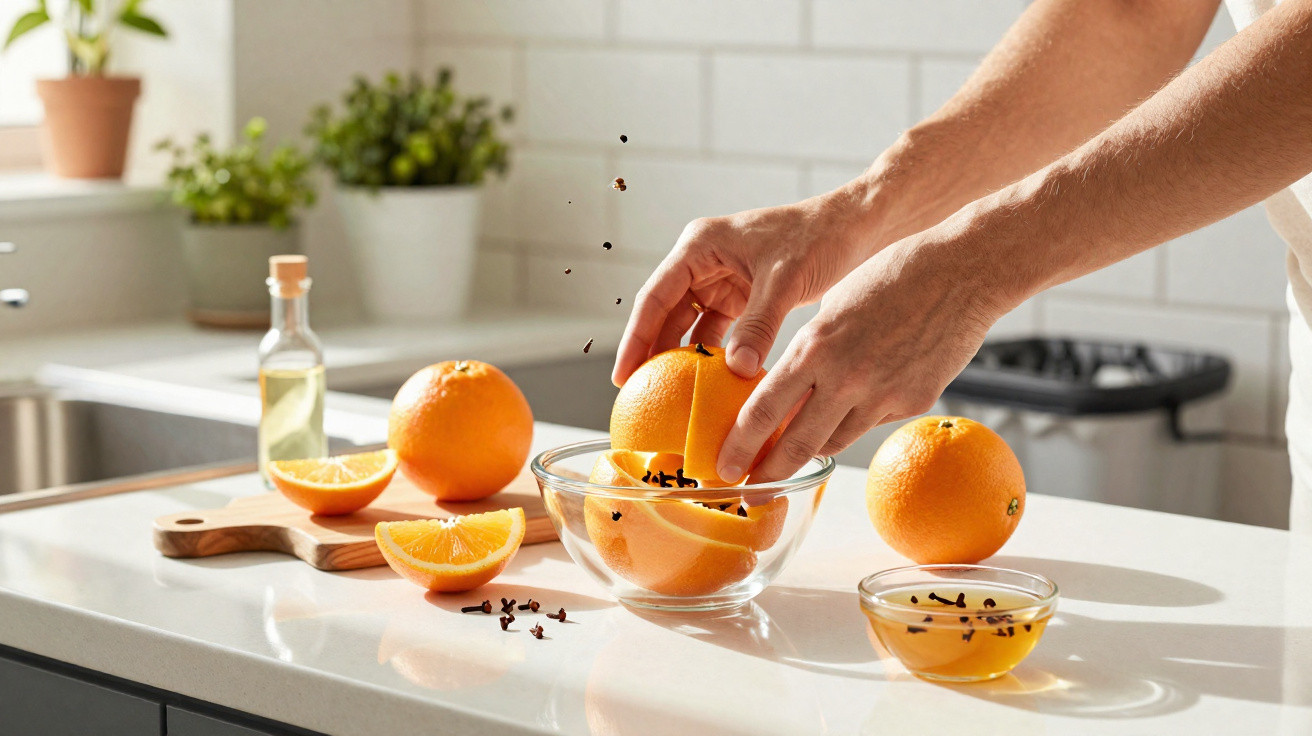
A simple scent from the store cupboard can put a stop to them.
Anyone arriving home in summer or during warm transitional spells will often find the kitchen in chaos: fruit flies circle the fruit, gather around the sink or crawl up the rubbish bag. Many people reach for insect spray, adding more chemicals to the air indoors. Yet one very specific, entirely harmless fragrance combination is enough to drive the pests away while making the room smell noticeably fresher.
Why fruit flies take over your kitchen so quickly
Fruit flies – technically vinegar flies – are drawn to anything fermenting or decaying. A kitchen offers ideal conditions for them. Within just a few days, a small group can turn into a genuine infestation.
The insects are particularly attracted by smells created during fermentation, including:
- overripe or rotting fruit in the fruit bowl
- unfinished wine or cider left open
- bottles and jars that still contain juice or beer
- warm rubbish that is not properly sealed
- damp food-waste or compost bins kept in the kitchen
- potting soil in houseplants that remains constantly wet
- drains and traps where food debris has collected
Their sensory organs react extremely strongly to ethanol and acetic acid – precisely the substances produced through fermentation and decomposition. A single female fly can lay up to 35 eggs a day. With a lifespan of two to three weeks, this can result in hundreds of offspring, soon visible throughout the room.
“Breaking the scent trail leading to ripe fruit and rubbish stops mass breeding directly at its source.”
The kitchen scent fruit flies cannot stand
One of the most effective countermeasures may already be in your spice rack: cloves. Their distinctive aroma comes mainly from a substance called eugenol. While people tend to find it warm and spicy, fruit flies find it highly disruptive.
Eugenol overwhelms the tiny insects’ smell receptors. As a result, they barely detect the subtle traces of ethanol and acetic acid, lose their bearings and abandon their search for food. That is exactly the desired effect in the kitchen: the flies should no longer be able to locate the appealing scent signals coming from the fruit bowl, sink and bin.
A citrus fruit and clove combination is especially potent. Lemon or orange acts as a moist base that releases fragrance gradually. Together, they create a kind of scented veil around the kitchen’s problem areas.
“The blend of citrus and cloves does more than mask fermentation smells – it also disrupts communication between the flies themselves.”
Step-by-step guide: fruit fly repellent scent in minutes
Citrus and clove solution for the fruit bowl, sink and bin
For everyday use in the kitchen, only a small step is needed:
- Cut a lemon or orange in half.
- Push 15 to 20 cloves into each fruit half.
- Stand the halves upright with the cut side facing upwards.
- Place one half in each of the following locations:
- directly beside the fruit bowl
- by the sink or on the edge of the basin
- next to or on top of the bin
- Replace them every 3 to 4 days, once the fruit starts to dry out.
For people, the fragrance generally remains a subtle background scent, but fruit flies perceive it much more intensely. After one or two days, it is often possible to see that the cloud of flies above the sink has thinned out and far fewer insects are gathering around the fruit bowl.
A stronger scent barrier with vinegar and cloves
If the kitchen is already heavily affected or the flies prove persistent, try a more powerful method:
- Pour 250 millilitres of white household vinegar into a small saucepan.
- Add 10 cloves.
- Simmer gently for around 15 minutes.
- Turn off the hob and leave the saucepan open in the kitchen.
The rising vapour spreads through the kitchen and forms a scented curtain over the usual attractants. Keep windows slightly open during use so that air can circulate. Many people report that a dense cloud of flies is noticeably reduced within one to two days.
Other scents that drive fruit flies from the kitchen
Cloves are not the only natural option. Several plants produce essential oils that small flies and gnats avoid, while people often find their scent pleasant.
Fragrant plant-based allies against fruit flies
- Eucalyptus leaves: Boil around 150 grams of leaves in 5 litres of water for 15 minutes, then allow the mixture to cool and strain it. Transfer the liquid to a spray bottle and lightly mist worktops, windowsills and areas around the sink.
- Lavender oil: Put a few drops on a small sponge or cotton pad and place it near windows, the fruit bowl or the bin.
- Peppermint oil: Its cool, fresh scent deters many insects. It is particularly suitable for the area around the drain.
- Lemongrass oil: Apply this intensely citrusy scent in small amounts to specific spots or use it in a diffuser – sparingly, so the fragrance does not become overpowering.
- Tea tree or geranium oil: Add individual drops to cloths or small sponges positioned close to entry points, such as tilted-open windows.
Important: always use essential oils carefully and keep them out of reach of children and pets. Some oils are not suitable for cats at all; in that case, it is better to rely on cloves and citrus while prioritising thorough cleaning.
Without cleanliness, no scent will help: remove the flies’ breeding ground
Scent barriers work far better when attractants are removed at the same time. Simply adding fragrance still leaves the population fed in the background.
| Problem area | What to do |
|---|---|
| Drains and traps | Put coffee grounds down the drain, leave them briefly, then rinse through with very hot water. For stronger odours, add bicarbonate of soda and pour vinegar over it. |
| Kitchen bin | Empty it fully and regularly, clean it thoroughly with hot water and soap or black soap, always keep the lid shut, and do not leave liquid in the liner. |
| Fruit bowl | Remove overripe fruit straight away, refrigerate leftovers or use them immediately. A piece of cork in the bowl can absorb some odours. |
| Houseplants | Avoid waterlogging, allow the compost to dry out between watering, and empty saucers. If the problem is severe, replace the top layer of compost. |
| Leftover drinks | Seal wine, juice and beer bottles immediately after use, and do not leave glasses standing around with remnants in them. |
One further consideration: certain fruits release especially strong ripening gases and odours, including bananas, kiwis, peaches, tomatoes, figs and pears. Do not leave these varieties uncovered beside more sensitive fruit; store them separately or keep some in the fridge.
How natural methods affect indoor air
Many people underestimate how heavily insect sprays can affect indoor air. Their active ingredients often linger in a room for a long time, particularly where windows are rarely opened. Choosing cloves, citrus fruit and plant extracts instead reduces the chemical burden in the home and is gentler on the airways.
These scents also help counter typical kitchen odours from frying, grease or fish rather than merely covering them up. The pairing of vinegar vapour and cloves can be particularly effective at neutralising stale air. Regular ventilation remains essential, however – ideally, open the windows wide several times a day, especially after cooking.
Everyday tips for using cloves in the kitchen
Once people have tried the clove method, they often make it a regular part of their kitchen routine. Here are a few practical suggestions:
- Before going away, put out one or two clove-studded lemons and empty the bin completely first.
- Begin on the first warm day of spring, before the first major wave of flies appears.
- Place lemon halves with cloves on the balcony or windowsill too, to let fewer flies into the home.
- When entertaining, incorporate cloves into attractive citrus decorations – they look like table ornaments while also acting as an insect barrier.
Those who use the method consistently usually find that the familiar “fruit fly summer” in the kitchen does not have to be inevitable. A few cloves, some citrus fruit and straightforward hygiene can significantly curb these pests – without spray mist or harsh chemicals.




Comments
Выбор протезов и материалов, из которых они будут изготавливаться, осуществляет врач, сочетая своё решение с мнением пациента https://adentalab.ru/
1 https://adentalab.ru/
Снятие слепков и подготовка https://adentalab.ru/
После первичного осмотра стоматолог снимает слепки с обеих челюстей пациента https://adentalab.ru/
В лаборатории по этим слепкам создаётся гипсовая модель челюстей пациента https://adentalab.ru/
Для изготовления зубных протезов используют различные материалы, например:
• Диоксид циркония — отличается прочностью, используется для изготовления коронок, которые в дальнейшем устанавливаются вместо жевательных зубов https://adentalab.ru/
2 https://adentalab.ru/
Изготовление гипсовой модели https://adentalab.ru/
На основе слепков изготавливаются гипсовые модели, на которых техник начинает работать над будущей конструкцией протеза https://adentalab.ru/
https://www.zazzle.es/mbr/238822233516528042
http://modost.ru/wp-content/pages/kakie_diski_ispolyzuyutsya_na_mersedes.html
Leave a Comment