
In brief
- 🔥 Through convection, radiators gently “roast” accumulated debris, releasing VOCs and causing mild pyrolysis. This creates the familiar musty, burnt smell when the heating is first switched on.
- 🫁 That stale smell indicates airborne PM2.5 and allergens, including dust mite debris and pet dander. These can aggravate asthma and sensitivities, particularly in damp UK properties.
- 🧹 Prevention is principally mechanical: remove dust before first heat using a vacuum, radiator brush and damp microfibre cloth. Clean the fins, panels and space behind the radiator, then continue with light regular cleaning.
- 🚫 Scented sprays aren’t a fix because they introduce additional VOCs. Ventilate sensibly instead, raise the heat gradually, and consider a quiet HEPA purifier for the first 48 hours of the heating season.
- 🧩 Useful considerations: radiator covers have Pros vs. Cons-they offer safety and visual benefits but can reduce output and collect dust. A Leeds case study found that a fast pre-season clean reduced odours from days to roughly an hour.
The first properly chilly spell of a British autumn arrives: you turn the valve, the pipes hum, and a faintly oily, musty scent spreads around the room. It is not “stale water” or an imagined leak. It is the radiator warming a summer’s accumulation of settled dust-skin cells, textile fibres, pet dander, candle soot and greasy cooking deposits. Once heated, these particles release compounds your nose interprets as “old house” or “burnt toast”. Cleaning radiators before turning them on stops that mixture from vaporising and moving around the room. Below is the science behind the odour, its implications for indoor air, and practical measures-tested in British homes-to keep the heating season clean, efficient and free from unpleasant smells.
How Radiators Roast Household Dust
Most radiators in the UK work as convectors. Hot water warms the metal, air rises through the fins, and the continual upward flow effectively draws fine household dust into the appliance. During months without heating, a grey, felt-like layer of debris collects among the fins and behind the panels. Once the heating returns, surfaces may reach 60–75°C. That is far from red-hot, yet sufficiently warm to release volatile organic compounds (VOCs) and begin slight pyrolysis, the heat-driven decomposition of organic material. Oxidised oils produce aldehydes, softened fibres give off plastic-like notes, and carbonised crumbs create a singed edge. This is not so much “flames” as a “slow roast”, but it has the same result: odours, particles and a plume of dust carried upwards by convection.
While reporting in London rental properties and northern terraced homes, caretakers said the “first-day smell” inevitably disappears. It returns every October, however, because the underlying cause remains: compressed fluff in the fins and behind the radiator. There is nothing mysterious about the remedy; physically remove the material before heat reaches it.
| Dust Component | On Hot Metal | Likely Odour/Risk |
|---|---|---|
| Skin flakes & pet dander | Dries out and lightly chars | Stale, “old room” smell; recirculated allergens |
| Cooking oils & soot | Oxidises and releases VOCs | Oily, acrid notes; irritation to eyes and throat |
| Synthetic fibres | Softens and can depolymerise | Plastic-like smell; microfibre fragments |
| Dust mite debris | Dries and becomes dispersed | Allergen exposure for sensitive occupants |
The Health Angle: What’s in That Stale Smell
The smell at the start of the season is more than an inconvenience: it hints at what is entering your lungs. Heated dust emits VOCs from fragranced cleaning products, aerosols and cooking deposits, while also stirring up PM2.5-particles fine enough to travel deep into the respiratory system. The amount may be limited for many people, but it can trigger a tight chest or itchy eyes in those with asthma, allergies or long-COVID sensitivities. If your throat catches when the heating clicks on, the radiator’s dust load-not the boiler-may be the culprit.
Allergens, including dust mite proteins, travel on airborne particles. In damp houses-common throughout Britain’s ageing housing stock-mites multiply over summer and leave microscopic waste that autumn convection readily circulates. Include nicotine residues and candle soot, and the chemical combination becomes broader still. This is not a medical diagnosis, but air-quality researchers regularly observe that cutting indoor dust levels reduces exposure to irritants. Encouragingly, expensive equipment is unnecessary to make a meaningful difference. A comprehensive clean before the first heating cycle, followed by weekly micro-dusting, helps keep exposure lower. For people who are especially sensitive, a quiet HEPA purifier in the living room can capture the initial spike during the first 48 hours of heating.
Prevention That Actually Works
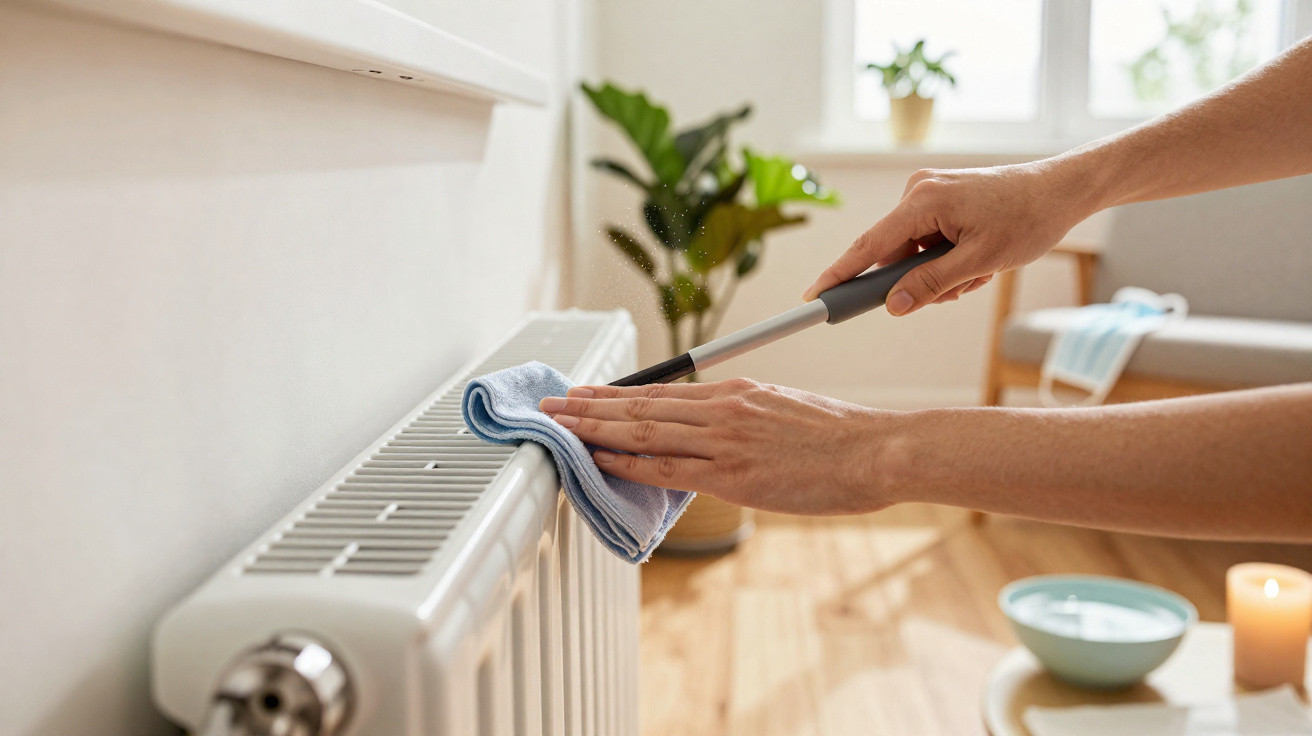
Before using a spray, focus on the physical issue. The surest way to stop radiator odours is to remove the fuel-dust-before it meets heat. With the heating switched off and the radiator cool, remove the top grille and side panels on panel convectors, then follow these steps:
- Vacuum with a crevice attachment and brush, working from top to bottom and front to back. Cover the fins and the gap beside the wall as well.
- Use a radiator brush: pass a long flexible brush through every fin channel to free packed lint.
- Give accessible metal a microfibre wipe using a lightly damp cloth-water with one drop of mild detergent-and dry it straight away to avoid rust.
- Clean behind the rad with a flat duster, or a microfibre cloth folded around a ruler, to sweep the rear cavity.
- Vacuum the skirting and floor carefully, as fallen dust will otherwise be blown back into the radiator.
Regularity is important. Carry out a deep clean before the first heating cycle, then give the radiator a quick clean every fortnight during periods of heavy use. Thinking about fitting a radiator cover? Here are the Pros vs. Cons:
- Pros: conceals dust, provides a child-safe edge and creates shelf space.
- Cons: may hold onto debris and lower heat output unless it is properly ventilated; it also makes cleaning more awkward.
Case study: In a Leeds flatshare, we tracked odours in a basic notes app. After a 20-minute pre-season clean, the “burnt” smell fell from lasting three days to just one short hour, while the living room heated more quickly because less fluff was obstructing convection.
Why Scented Sprays Aren’t a Solution
When the first smell appears, spraying the room can seem like the obvious response. Fragrance doesn’t fix a physics problem; it overlays it. Aerosols and plug-ins introduce further VOCs, including terpenes and solvents, which can react indoors and create secondary pollutants. The result may be a more intense smell alongside higher particle levels. Candles are no better: the soot they deposit during summer is precisely the residue that radiators roast in October. If you enjoy fragrance, use it after cleaning and use only a little.
Better, cleaner tactics:
- Ventilate smartly: open windows on opposite sides for 10 minutes after the first heating cycle to clear odours without sacrificing all the room’s warmth.
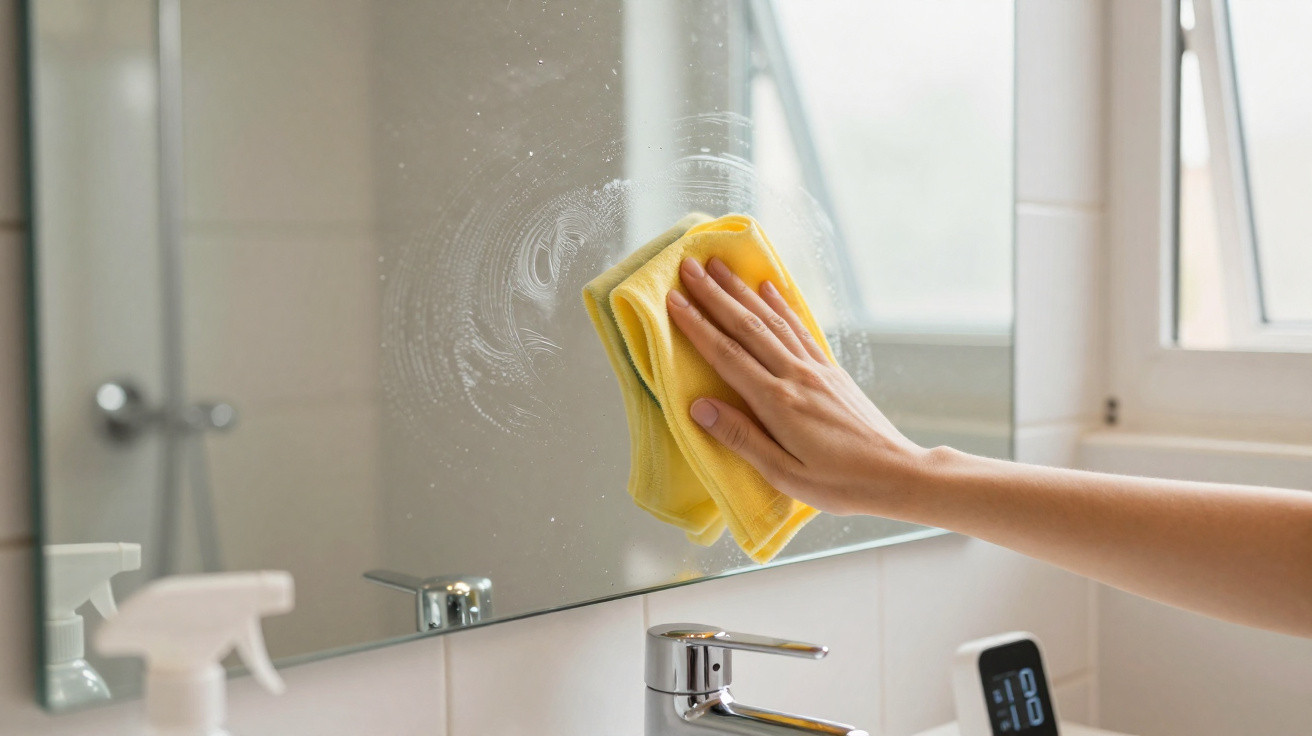
- Dry dusting is out: it merely sends particles airborne. Choose slightly damp microfibre cloths, wrung almost dry.
- Kitchen habits matter: run the extractor when frying, because sticky cooking aerosols settle on radiator fins throughout summer.
- Don’t overheat: setting radiators to maximum does not clean them faster and can worsen off-gassing. Increase the temperature gradually.
In homes with pets or substantial fabric use, placing a compact HEPA purifier near the radiator during the first week of heating can offer quiet, effective support without disguising the air with perfumed chemicals.
Radiator dust is an ordinary household issue, yet the result of heating that debris is not insignificant: it affects the odour, the air you breathe and potentially the efficiency of your heating. The answer is inexpensive, straightforward and fast-clear the dust before the first switch-on, ventilate sensibly and follow a light regular maintenance routine. A clean radiator warms rooms, not dust. As temperatures fall and Britain turns to the thermostat, how will you adjust your routine this week-five quiet minutes with a vacuum, or another season of “burnt autumn” in the lounge?



Comments
No comments yet. Be the first to comment!
Leave a Comment