
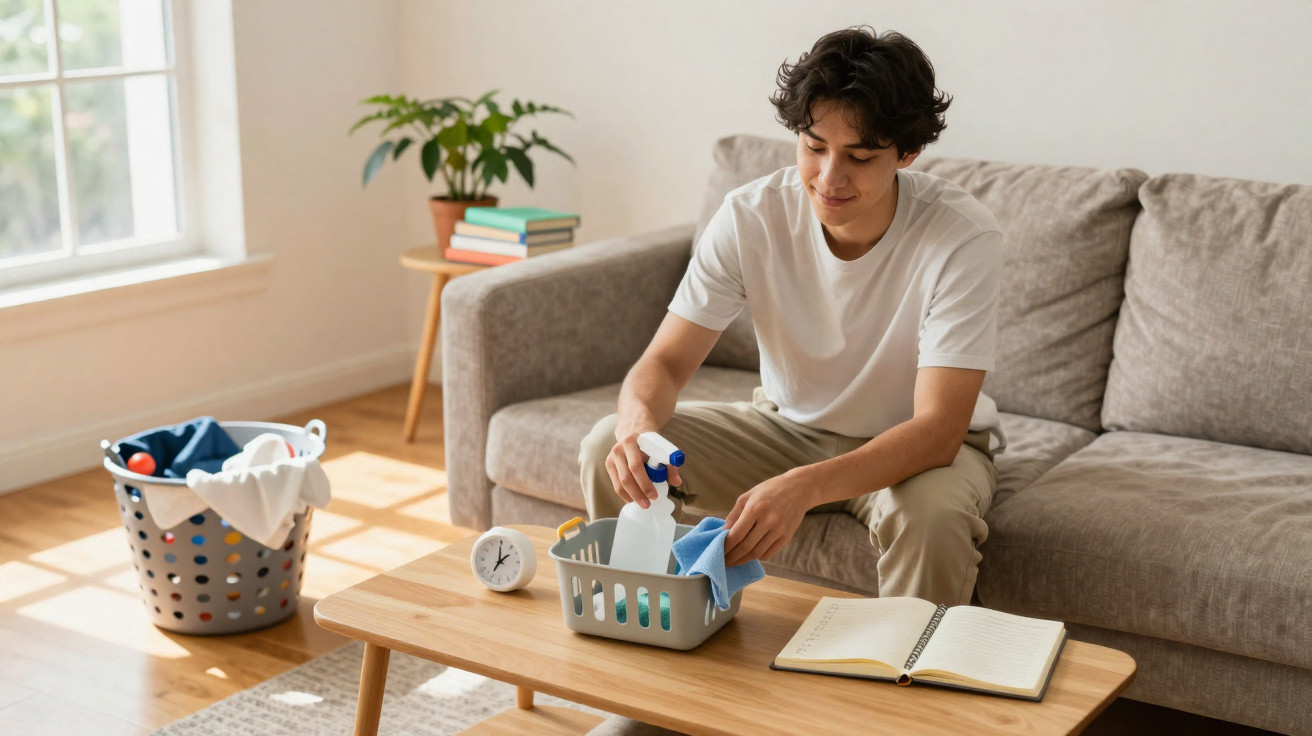
The laundry basket is full again, even though you could have sworn you dealt with it yesterday. Crumbs have gathered beneath the dining table, there is an unexplained sticky spot by the fridge, and the chair is buried under an “I’ll sort this later” pile that has not been used for sitting in months. Your home is not a catastrophe, but it never seems to feel completely… manageable.
You flick past cleaning clips featuring immaculate people drifting through their homes with coordinated spray bottles and soothing music, and simply watching leaves you worn out. You are not trying to create a showroom. You want a home that functions without making you feel like an unpaid full-time cleaner.
There is a subtle change in perspective that can transform the way you approach it.
The hidden cost of trying to keep a perfect home
What people seldom say aloud is that pursuing a spotless home can become a socially accepted way of punishing yourself. You may call yourself “tidy”, while mentally keeping track of every neglected corner you have not scrubbed.
As you move between rooms, you stop seeing evidence of a life being lived and start seeing jobs waiting to be done. The dishes murmur “lazy”, toys scattered across the floor yell “disorganised”, and the unfolded laundry reminds you that “you’re behind again”. Your home turns into a scorecard, and somehow you are always three points down.
This way of living drains more than physical energy. It gradually teaches your mind that nothing is ever truly finished.
Consider the familiar Sunday cleaning marathon. You get up determined to “reset the house”. Three hours afterwards, the floors gleam, the worktops are empty and the bed has crisp, hotel-style corners.
Then Tuesday evening arrives, bringing shoes at the door, school papers across the table and a damp towel left in the hallway. By Thursday, toothpaste has already formed constellations around the bathroom basin. That quiet frustration creeps in: “Didn’t I just clean this?”
This pattern is extremely common. A 2023 UK survey by cleaning brand Kärcher found that more than half of respondents feel guilty when their home is untidy, while a substantial number said that guilt prevents them from resting. That is the unseen price nobody shares on Instagram.
The issue is not that we cannot clean properly. It is the way we think about cleaning. We regard it as one large project to finish, rather than a gentle rhythm that helps daily life run smoothly.
When a home is viewed as a chain of “before and after” images, you are forever pursuing the “after” while resenting the “before”. Actual homes do not remain frozen in the “after” stage. They live and breathe.
A functional home is not one that appears flawless at 11:00 a.m. on a Tuesday. It is one where you can locate your keys, make dinner, unwind on the sofa and avoid feeling as though you have failed because a sock is sitting on the stairs.
The mindset shift: clean for function, not for approval
A useful way to change your outlook is to replace the question “Is this clean?” with “Is this working?” That small adjustment alters the way you assess every space.
Rather than taking on the entire kitchen, ask whether you can prepare food without first shifting ten items. Instead of fixating on toy storage, consider whether the children can find what they want and put it away again without a meltdown.
Cleaning for function makes flow the aim, rather than perfection. You no longer spend time polishing things nobody touches, and instead look after the areas that genuinely keep the day moving.
Imagine a parent of two returning home at 6:30 p.m. The house is not ready for a magazine shoot, but the worktops are fairly clear, only a few dishes sit in the sink and one hallway basket catches all the “random stuff”.
Each day, the children drop their bags in the same corner. Dinner is served at a table that may still carry a watercolour mark from the previous weekend, yet there is room for everyone’s plates. The laundry has not all been folded, but each person has clean underwear and a designated place to find it.
No catalogue would feature this home, but the evening still feels unexpectedly peaceful. That is the understated strength of a functional mindset: less upheaval and more energy for living.
From a psychological perspective, this approach eases what experts describe as “decision fatigue”. Every misplaced item creates a tiny choice: deal with it now or later, move it or leave it, store it or give it away. Trying to preserve visual perfection causes these micro-decisions to multiply.
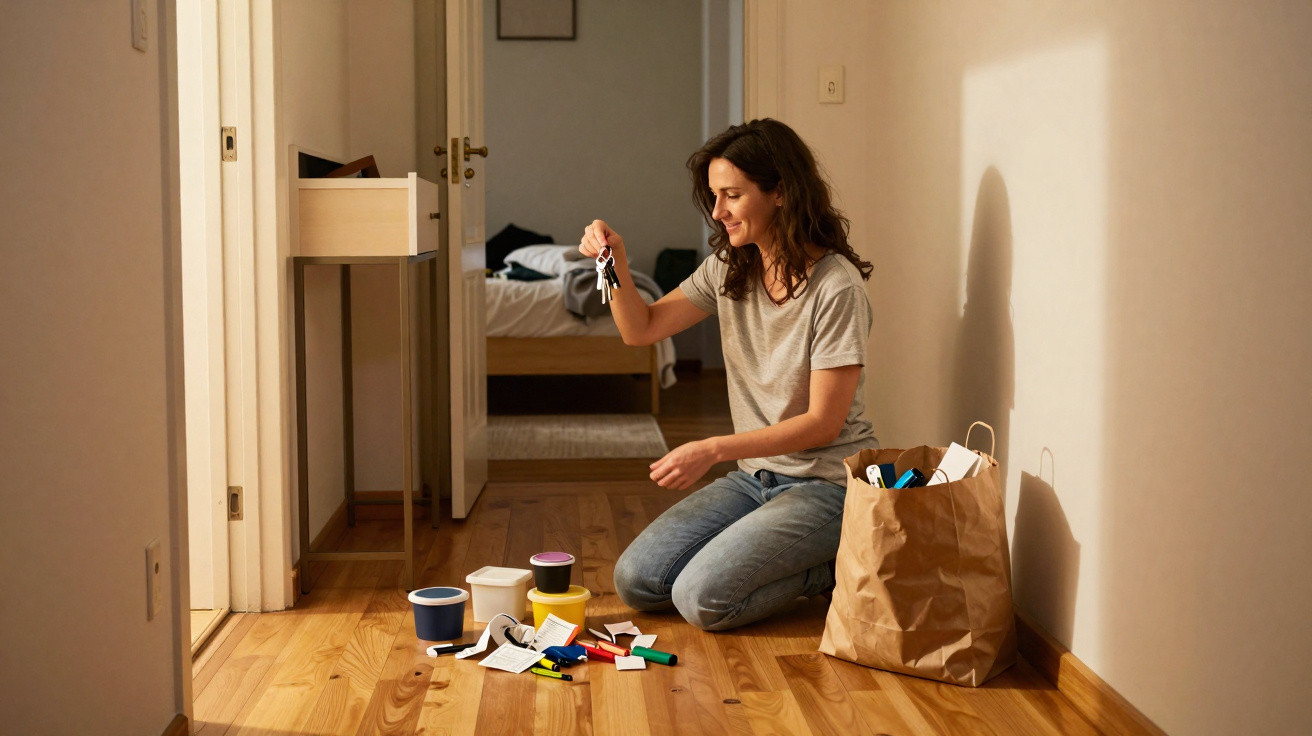
When function guides your cleaning, you create dependable rules rather than debating every sock. Keys belong in one bowl, post goes in one tray, and dirty dishes go straight into the sink or dishwasher instead of being left “somewhere near”. Your household starts operating through defaults rather than constant willpower.
Of course, nobody manages this perfectly every day. Yet putting only a few areas of your home into “autopilot” is enough to reduce the persistent mental noise that gradually exhausts you.
Practices that keep your home livable without draining you
Begin with a “bare minimum routine”, not an idealised one. Consider this: if you had time for only three tasks on a hectic day, which ones would genuinely keep the home functioning? For many households, the answer is dishes, surfaces and keeping laundry moving.
In practice, that might mean spending five minutes clearing and wiping the table after eating, five minutes resetting the sink before bed, and doing one small wash on most days, even if folding does not happen immediately. They are brief, unexciting and repeatable tasks. That is precisely why they work.
The magic isn’t in intensity, it’s in consistency. For mental load, a 10-minute daily foundation is more effective every time than a three-hour monthly blow-up.
The danger comes from deciding that you have “failed” the routine as soon as you miss a day. That is where burnout begins to take hold. You miss Wednesday, feel bad on Thursday, compensate excessively on Saturday, promise to “start fresh on Monday”, and the same cycle begins again.
Treat routines more like public transport instead. Missing one train does not mean cancelling the whole journey; you simply catch the next one. Did yesterday’s reset not happen? That is fine. Do a half-version today. Keep lowering the threshold until stepping over it is almost unavoidable.
Here is an empathetic truth: your home is allowed to show that it is occupied by a human being with a full, untidy life. You are not unpaid hotel staff. You are a person.
We’ve all been there, that moment when you stand in the middle of the living room, spin slowly, and don’t even know where to start. A gentle mindset whispers: “Anywhere is fine. One thing is enough.” Someone once told me, “Clean like you’re helping a friend, not judging a stranger.” That sentence alone can soften your whole approach.
Choose your non-negotiables
Identify 2–3 daily actions, such as clearing the sink, sweeping the floor quickly or doing one load of washing, that leave your home basically functional even on your hardest days.Use containers as boundaries
Rather than getting angry at clutter, give it “zones” with baskets, trays or boxes. When a container is full, that is the signal to sort, donate or throw things away, rather than waiting until you reach emotional breaking point.Match tasks to your actual energy
Keep bigger jobs, such as thoroughly cleaning the bathroom, for days when your energy is moderate. On low-energy days, choose micro-tasks instead: wipe one shelf, declutter one drawer or clear one surface.
From spotless fantasy to sustainable reality
When you release the idea of maintaining a permanently spotless home, you begin to notice other things. Rather than the dust along the skirting board, you see that a friend can visit on a Tuesday evening without triggering a three-hour panic clean. Rather than the toy on the sofa, you notice your child playing quietly while you can actually locate the remote control.
You start arranging your home around the way you live now, rather than the way you imagine living in an alternative universe. That could mean putting a shoe rack by the front door even if it “ruins the aesthetic”, or keeping a laundry basket in the living room because clothing migrates there anyway. Genuine functionality wins over curated lifestyle content every time.
This mindset can affect the whole household. Once cleaning no longer feels like a silent measure of your worth, the people you live with notice the shift. Jobs can be shared without becoming calculations of resentment. You can say, “I handle the dishes, can you handle the trash?” without preparing a TED Talk about mental load.
You may even begin openly discussing the standard you want: safe, clean-ish, comfortable, not pristine. Say it aloud. It becomes a shared aim rather than a private fixation.
The unexpected result is that, when pressure eases, people often contribute more. It is much easier to take part when the atmosphere is “let’s make this workable” instead of “don’t ruin my perfect system”.
A functional home does not require abandoning beauty or order. It means placing sanity ahead of spectacle. It means accepting that the bathroom mirror may be streaky on some days, while you still have enough time to read a chapter in bed. The floor may contain crumbs, but dinner can still feel like time together instead of a race to get everything “back under control”.
Keep one straightforward principle in mind: if your cleaning routine leaves you without the energy to live in your home, it is the method that is wrong, not you.
Perhaps the new standard is not “a perfect house”. Perhaps it is a home that quietly supports you.
| Key point | Detail | Value for the reader |
|---|---|---|
| Shift from perfection to function | Judge whether spaces work for everyday life instead of whether they look flawless | Lessens guilt and mental load, making cleaning more achievable and sustainable |
| Create a bare minimum routine | Two or three small, repeatable daily actions, including dishes, surfaces and keeping laundry moving | Keeps the home basically manageable without lengthy, exhausting marathons |
| Use simple systems and boundaries | Give possessions default homes, use containers and align tasks with real energy levels | Speeds up tidying, reduces decisions and helps prevent burnout over time |
FAQ:
How clean should my home realistically be day-to-day? Think “safe, mostly clear, and functional”, rather than spotless. You should be able to cook, sleep, shower and relax without major barriers, even when clutter is visible.
What if my standards are higher than my partner’s? Discuss it as a shared matter of comfort rather than morality. Set a baseline, such as clear worktops and clean dishes, then divide responsibilities so that no one carries the invisible mental load alone.
How do I stop feeling guilty when I rest instead of cleaning? Set your non-negotiables, complete them, and then remind yourself, “The rest is bonus.” Once the essentials are done, rest maintains you just as cleaning maintains the home.
Is it better to deep clean once a week or do a little every day? A light daily rhythm generally creates less stress. You can still have a weekly “focus task”, such as the bathroom or floors, but daily micro-routines stop things from spiralling.
What if my home is already overwhelming-where do I start? Pick one small area with the greatest effect on daily life: the sink, bed or entrance. Reset only that space for a week. When it feels secure, introduce one additional tiny habit.


Comments
No comments yet. Be the first to comment!
Leave a Comment