
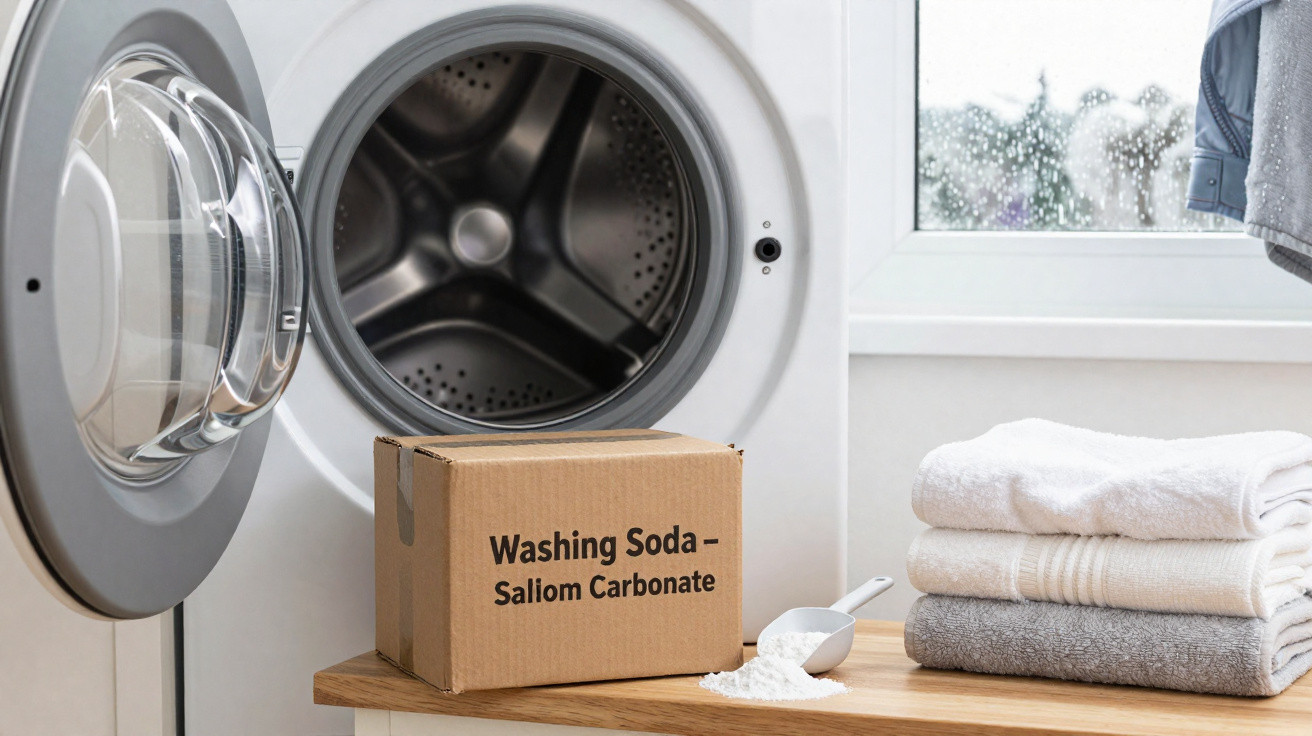
You clean the gasket, run a “tub clean” cycle and leave the door ajar after each wash. Yet, within two days, that odour returns like an irritating radio jingle. Most of us know the frustration of a washing machine, designed to clean, beginning to hint at mould. The straightforward answer may already be sitting on a pantry shelf.
One wet Thursday, I saw a neighbour pull out a grey T-shirt and wrinkle her nose as she smelled it. She had followed all the usual advice: high-efficiency detergent, a low-energy wash temperature and a quick spin to save time. A repair technician had already visited and issued several firm reminders about looking after the gasket. As he put his tools away, though, he offered an unusual suggestion: “Buy a box of the old stuff.” He was referring to a powder familiar to our grandparents, sold in packaging that seems unchanged since the era of hand-tinted postcards. Use a few tablespoons weekly, he said. It was not vinegar.
Washing soda: the overlooked laundry powder
You likely recognise baking soda, and you may already keep vinegar at home. The less celebrated option is washing soda, or sodium carbonate: an unscented, chalky, uncomplicated powder that removes residue and makes the machine’s interior too alkaline for mould to thrive. It costs very little, keeps for years in its carton and gets on with the job quietly.
Testing washing soda in the washing machine
On a Sunday, I tried it on the most revealing load in my home: gym towels. I put two tablespoons of washing soda directly into the drum alongside the towels, leaving out scented products. They emerged clean, but the greater change was that the metal drum no longer had the subtle damp-basement smell it had carried for weeks. By the following morning, the gasket still smelled of nothing. That is the aim: no odour whatsoever.
Why sodium carbonate tackles washing-machine odours
Washing soda works by raising the pH considerably. Mould and the bacteria behind “washer stink” favour a mildly acidic, damp setting supplied with detergent deposits, body soil and the slimy residue from fabric softener. Make that environment alkaline and their comfort zone is removed. Sodium carbonate also softens water by binding minerals, resulting in less soap scum, fewer films for microbes to attach to and more effective rinsing. Within the drum and drainage routes, it encourages oils towards saponification, helping to break down the sticky coatings that hold odours.




Comments
No comments yet. Be the first to comment!
Leave a Comment