
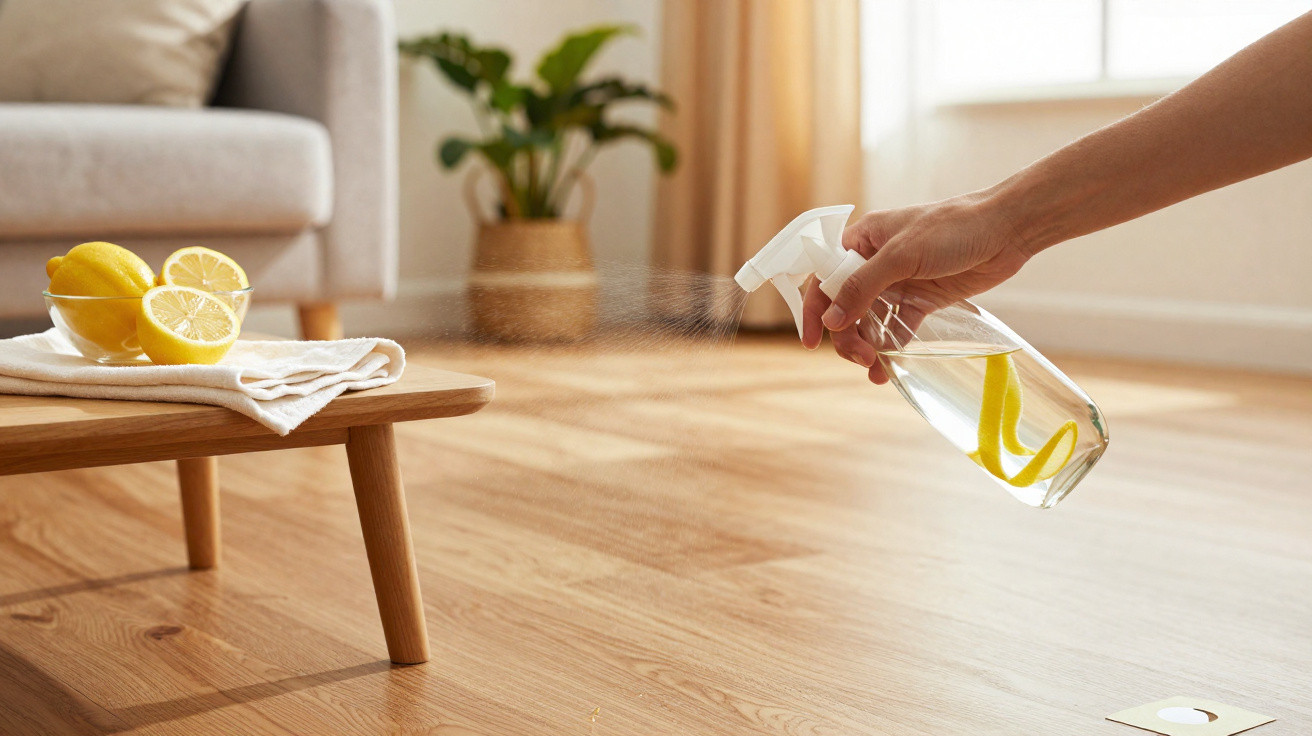
In a time dominated by high-tech gadgets and multi-surface gels, a low-key revival is taking a different route. Increasingly, people are returning to pared-back cleaning mixtures that smell of actual food rather than a laboratory, while bringing a shine to wood floors without leaving behind a severe chemical smell.
Why a simple kitchen spray is suddenly news
In both the US and UK, interest in “low-ingredient” cleaning products has risen consistently, driven by worries about indoor air quality, living costs and plastic waste. In that setting, one modest combination repeatedly appears on social media and home-care forums: white vinegar and lemon peel, mixed in a spray bottle for use on worn-looking, dull wood floors.
This unassuming mix promises three things at once: a fresher smell, a cleaner surface and a smaller environmental footprint.
Rather than being an entirely new viral craze, the approach draws strongly on longstanding household practices. Vinegar has been used by generations as a surface wash, and citrus peel was traditionally used to fragrance cupboards and larders. The modern variation combines the two as a dedicated floor spray, aiming to balance useful grease removal with gentler treatment of timber and hardwood finishes.
How the vinegar and lemon peel floor spray works
The main ingredients and their roles
- White distilled vinegar: Its acetic acid can break down light dirt, mineral residue and greasy shoeprints.
- Lemon peel: Contains fragrant oils which disguise vinegar’s pungent odour and create a fresher, “clean home” aroma.
- Water: Reduces the acidity, preventing finished wood from being exposed to an overly strong solution.
Advocates say the mixture provides sufficient cleaning ability for regular upkeep without the dense surfactants and artificial fragrances found in many shop-bought cleaners. Lemon peel contributes more than scent alone. As it infuses over a number of days, the rind releases oils that gently take the sharpness out of the vinegar and offer a little additional degreasing power.
Think less “all-purpose strip-down” and more “light, frequent tidy” for sealed, already-cared-for wood.
A common home-made recipe
People adjust the proportions at home, but a widely used version includes:
- 1 part white distilled vinegar
- 3 to 4 parts water, often lukewarm to support infusion
- Peel from 1–2 lemons, using only the yellow layer and as little white pith as possible
- Optional: a few drops of gentle plant-based washing-up liquid for extra grease-cutting ability
Typically, the peels are left to infuse in vinegar in a jar for several days before the mixture is diluted. After straining and adding water, it is transferred to a spray bottle. Application is intentionally minimal: lightly spray a microfibre mop or cloth, then work across the floor section by section, without creating wet areas that may enter the joins.
Where this spray shines – and where it doesn’t
Best uses on wood floors
Even experts who take a careful view of DIY cleaners recognise certain benefits when this spray is used appropriately:
- Routine refresh: Well suited to lifting light dusty marks, pet tracks and kitchen residue between more thorough cleans.
- Sealed finishes: More suitable for correctly sealed hardwood, engineered wood and laminate with undamaged protective coatings.
- Smell management: Can reduce lingering odours in busy living areas without relying on heavy fragrance.
For households with toddlers who crawl on the floor or pets that sleep beside the sofa, the prospect of fewer synthetic fumes is especially appealing. Some families say they experience fewer headaches or sore throats after replacing strongly scented cleaners with simpler solutions such as this one.
The attraction isn’t just nostalgia. It’s about controlling what lingers in the air, not only what glows on the surface.
Caution zones: when vinegar is not your friend
Wood and acid have an uneasy relationship. When it is too concentrated or used too frequently, an acidic cleaner may make finishes look dull or work its way into gaps. Specialists advise against using this spray in the following circumstances:
- Unsealed or waxed floors, where moisture may penetrate directly into the timber.
- Aged or damaged lacquer that is already cloudy or peeling away.
- Exotic hardwoods with delicate finishes for which the manufacturer gives specific recommendations.
The makers of many contemporary floor finishes continue to recommend pH-neutral cleaners. This does not mean a diluted vinegar solution will immediately ruin a living room, but it places the trend firmly in the “use with care” category rather than making it universal advice.
Comparing the spray with commercial cleaners
| Feature | Vinegar & lemon peel spray | Typical wood floor cleaner |
|---|---|---|
| Ingredients transparency | Very high, kitchen staples | Often partial, complex labels |
| Cost per use | Low, peels from existing fruit | Moderate to high, branded refills |
| Scent profile | Natural citrus, mild vinegar note | Strong, designed fragrance blends |
| Finish protection | Relies on dilution and restraint | Formulated around coating chemistry |
| Environmental impact | Minimal packaging, compostable peels | More plastics, surfactants, dyes |
Commercial cleaners can provide more reliable results and are frequently approved by manufacturers, but the home-made spray reflects broader changes in consumer habits. As household bills rise, shoppers are questioning whether every room truly requires its own separate bottle.
How to test the spray safely on your own floors
A gradual, cautious method
Before turning a hallway into a science experiment, professionals suggest several straightforward precautions:
- Patch test first: Test a very small concealed spot behind a door or beneath furniture.
- Watch for dulling: When the area has dried, inspect it in good light for streaks or cloudiness.
- Go weaker, not stronger: Where there is doubt, dilute the solution with more water instead of adding extra vinegar.
- Avoid soaking: Apply a light mist to the mop rather than leaving puddles on the boards.
If a finish already looks tired, no homemade spray will reverse years of wear. At that point, the solution is usually refinishing, not more cleaning.
Some flooring installers recommend keeping any acidic cleaner for occasional use, while dealing with everyday dust through dry mopping or vacuuming with a hard-floor setting. Under that approach, the vinegar and lemon mixture serves as an occasional freshener instead of a daily cleaner.
Beyond cleaning: why this trend connects right now
Renewed enthusiasm for cleaning methods based on cupboard ingredients is not happening in isolation. It overlaps with climate concerns, household budgets and a wider unease about homes smelling of artificial pine throughout the year. Social media has accelerated the movement, with before-and-after floor images becoming a quiet rejection of cupboards packed with brightly coloured bottles.
There is a psychological element too. Preparing a jar of lemon peel and vinegar feels more like cooking than shopping. People describe feeling calmer and more in control when they make something useful from leftovers instead of throwing them away. The hands that peel fruit at breakfast may later prepare the cleaning spray for the evening.
The floor becomes part of a loop: food, waste, reuse, then a cleaner home under your feet.
For households interested in doing more with less, the spray can provide a starting point for a wider “low-waste” routine: keeping orange peel for winter mixtures, using diluted vinegar on glass and reusing jars rather than purchasing more plastic. These actions do not solve structural environmental issues, but they can change everyday behaviour in a concrete way.
Practical side notes and risks people often forget
A number of practical details are often absent from polished cleaning videos, despite being relevant in real homes. Lemon peel has natural colouring, and leaving it directly on pale timber may cause faint staining, so the peels should remain in the jar rather than on the floor. A strong vinegar smell may affect people with asthma in rooms without ventilation; opening a window before mopping can help limit this. Spraying close to metal furniture legs could also promote slight corrosion over time, since acids and metal coatings are not a particularly good combination.
There is also the risk of habit creep. Because a mixture seems mild and home-made, users may be tempted to apply it more often. On sensitive finishes, that can have the opposite of the intended effect. A straightforward routine-such as one diluted-vinegar clean after several dry-mop or plain-water cleans-can temper that enthusiasm and lower the longer-term risk to coatings.
For anyone prepared to use white vinegar and lemon peel spray as a restrained, occasional aid rather than a miracle cure-all, it can offer a workable balance: cleaner wood floors with a fresher scent, less plastic stored in the cupboard and a more considered connection with the surfaces underfoot each day.

Comments
No comments yet. Be the first to comment!
Leave a Comment