
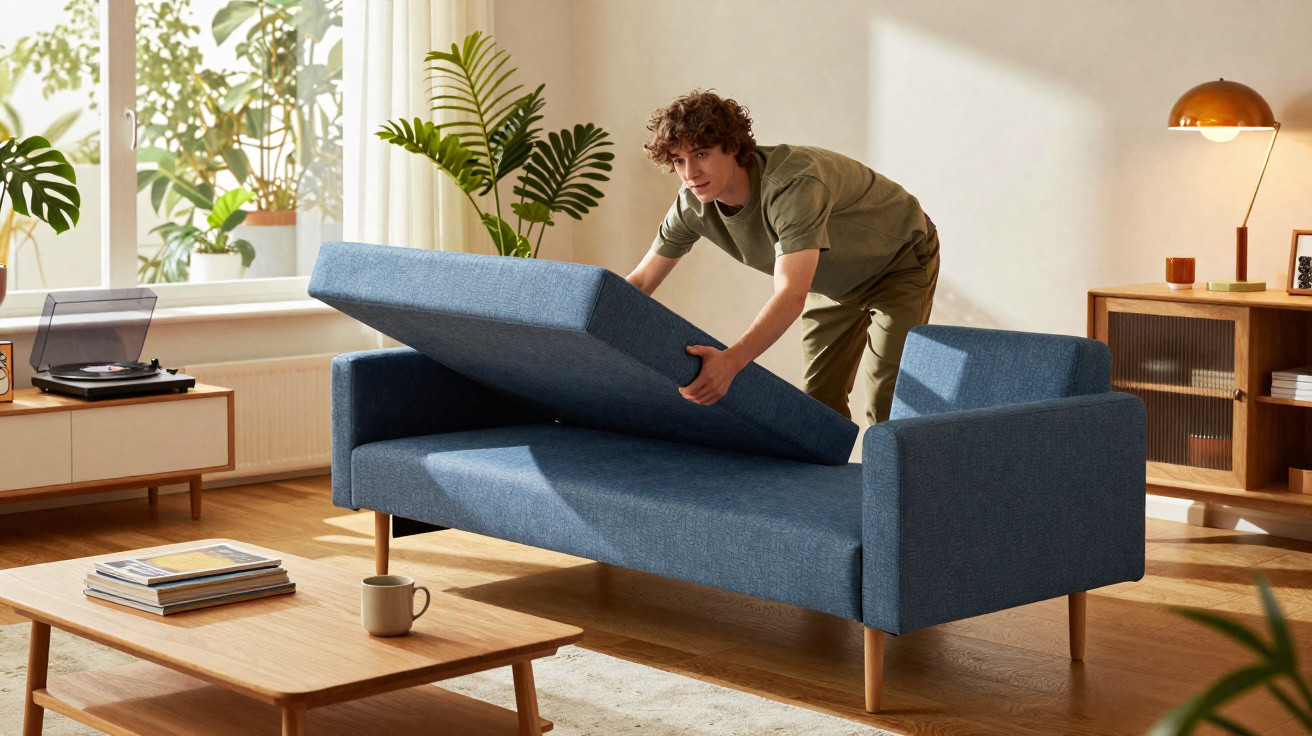
Soft contours, rich blue upholstery and a low-profile shape are making a subtle return to living rooms this season, bringing a recognisable twist with them.
With the weather cooling and nights drawing in, people are increasingly looking for living areas that feel informal, spacious and simple to reconfigure. In response, IKEA has revisited its archives to revive a 1970s piece that design enthusiasts have followed for years. The launch is a striking return that speaks directly to the current appetite for modular furniture with a nostalgic edge.
IKEA’s 70s return: why the VÅRKUMLA chair-bed matters today
At the centre of the revival is VÅRKUMLA, a low, substantial chair-bed first created by Gillis Lundgren in 1973 as TAJT. It has been brought back through IKEA’s Nytillverkad collection, a limited range that reworks archival designs using contemporary materials, colours and comfort expectations.
VÅRKUMLA sits at the crossroads of three big trends: compact living, modular layouts and a renewed appetite for 70s design.
Across social media and design forums, the model is already attracting interest from collectors and younger tenants seeking more personality than a conventional sofa bed can offer. VÅRKUMLA meets that demand as a hybrid design: part armchair, part occasional bed and part focal point.
A 1970s reference in denim-style fabric
The cover is the immediate standout feature, finished in a dark blue Vansta denim-look textile. It recalls the era in which jeans shifted from practical workwear to an everyday staple, now bringing that relaxed aesthetic into the home.
Visually, the shade works much like a neutral navy while offering more character than grey. It works particularly well with:
- warm timber finishes, including oak, walnut and teak
- terracotta or rust-coloured cushions
- cream carpets and off-white walls
- brass or black steel metallic details
Its dense blend of cotton and recycled polyester has a soft but lightly structured feel, more like well-made jeans than a delicate loose cover. This tactile finish connects closely with the 70s atmosphere many people seek: relaxed, touchable and imperfectly polished.
Why this reissue appeals to vintage enthusiasts
For people interested in design, this is more than another product launch. IKEA’s archive furniture documents the development of democratic design, from flat-pack trials to inventive answers for smaller homes. TAJT, VÅRKUMLA’s original form, captured that approach through straightforward cushions, a steel frame and adaptable functionality.
Having VÅRKUMLA back in stores gives access to a piece of IKEA design history without the hunt for a worn second-hand model.
Collectors frequently search resale sites for comparable 1970s modular pieces, often facing inconsistent prices and worn-out foam. Through Nytillverkad, IKEA effectively makes the retro appearance more accessible while adding modern foam, recycled materials and a lengthy guarantee. That can make it feel less like a speculative purchase and more like a deliberate choice with nostalgic appeal.
More than a sofa: adaptable comfort for everyday homes
VÅRKUMLA is particularly notable for the way it fulfils several functions in limited spaces. Rather than relying on a bulky sofa that takes over the room, it offers a lightweight, low-level piece that can be moved around as needs change.
How it changes from chair to bed
The design is made up of two principal cushions that unfold into a single mattress measuring around 220 cm long. When arranged as a seat, it occupies approximately 91 × 90 cm. Opened into a bed, it measures 220 × 91 cm.
| Configuration | Dimensions (approx.) | Main use |
|---|---|---|
| Seat | 91 × 90 cm | Lounge chair, reading corner |
| Bed | 220 × 91 cm | Single guest bed |
Only a few simple movements are needed for the conversion. There is no concealed metal mechanism or weighty backrest to manoeuvre. For students and tenants who regularly alter their layouts, this practicality can matter just as much as its appearance.
Suitable uses for VÅRKUMLA
The format is aimed at homes needing seating that can also provide occasional sleeping space. Common arrangements include:
- a studio flat, where one item serves as a daytime sofa and guest bed
- a teenager’s bedroom needing another place for friends to sleep
- a home office that can become a spare room
- a television area where lounging close to the floor feels easier than sitting on a firm sofa
VÅRKUMLA suits people who want freedom to reconfigure a room without investing in oversized furniture.
The single-bed size is better suited to occasional guests than everyday sleeping. Its length is suitable for adults, although its width is closer to that of a spacious single mattress than a small double. Those expecting regular overnight visitors may prefer to place two modules together.
Materials, longevity and the 10-year guarantee
Under its informal denim-style exterior, the build reflects IKEA’s recent focus on sturdier, clearly specified materials. The frame is steel, while the high-density foam contains a substantial proportion of recycled content. Full-grain cow leather is used at key pressure points, where it should age more effectively than synthetic materials.
Care requirements are uncomplicated: vacuum it regularly and wipe it now and again using a damp cloth. The cover is not machine washable, which could be a concern for households with pets or young children. In day-to-day use, many owners may choose to cover it with a light throw or protective blanket.
Its 10-year guarantee reinforces the claim of lasting use. At a price of about 279 euros in continental Europe, that period suggests a move away from throwaway furniture and towards slower, more intentional buying decisions.
Who this retro chair-bed is designed for
Although the reissue has broad appeal, it is especially suited to certain types of buyer.
- City tenants who move frequently and do not want large corner sofas
- Young professionals furnishing a first “adult” living room within a careful budget
- Vintage lovers seeking a 70s look without repairing a delicate original
- Hosts requiring an extra bed a few times each year rather than every week
In larger homes, VÅRKUMLA may be used as additional seating, perhaps in a window-side reading area, games room or informal space outside a bedroom. In compact properties, it can become the main seating element arranged around a low table.
Benefits and drawbacks to consider before buying
Its advantages are easy to identify:
- a distinctive 70s-influenced look that feels modern rather than costume-like
- a fairly accessible cost for a branded piece based on an archive design
- straightforward conversion from a seat into a single bed
- a low height that preserves sightlines in smaller rooms
- styling that works with both minimalist and maximalist interiors
There are also limitations worth noting:
- sleeping space for one person, making it more appropriate for guests than for a couple’s daily use
- a fixed, non-machine-washable cover that requires more careful everyday use
- a strong denim shade that may not suit very formal or extremely minimal settings
70s style, 2020s requirements: using it at home
VÅRKUMLA sits naturally within the broader return of 70s interiors, alongside corduroy, rounded lamps and low coffee tables. To prevent the room from feeling overly themed, interior stylists generally offset obvious vintage elements with quieter contemporary furniture.
Simple ways to combine it include:
- matching the blue denim-style seat with a neutral wool rug and an oak shelf with clean lines
- introducing one or two patterned cushions in mustard, burnt orange or chocolate brown
- choosing a simple rice-paper lamp or mushroom-shaped lamp to soften the area
- keeping technology unobtrusive with a compact speaker instead of a large sound system
The goal is a relaxed, layered room where the retro note feels natural, not theatrical.
In particularly small rooms, the low silhouette also alters how the space is perceived. Sightlines can travel above the furniture, helping the room appear less cramped. In a 25 m² flat, that effect may be as important as storage provision or seating numbers when planning the layout.
Beyond VÅRKUMLA: what it reveals about furniture trends
The revival of this chair-bed points to a wider change in mainstream furniture. Large retailers are now revisiting their own design history, much as fashion brands bring back archived trainers and bags. For shoppers, this has two practical effects.
Firstly, the design language becomes more recognisable. Forms once seen as niche, such as low modules and monobloc cushions, are now appearing in mass-market shops. This makes it simpler to blend second-hand finds with new furniture without creating visual clashes.
Secondly, modular furniture is moving beyond specialist retailers and into the everyday market. Designs that work as a seat, lounger and bed respond directly to uncertain housing circumstances, including house shares, regular moves and rooms with multiple purposes. Rather than purchasing separate guest beds, armchairs and daybeds, people can choose one piece that changes with their lives.
For those refreshing a small living room, VÅRKUMLA provides a useful example. A layout using two of these modules, a low table and a narrow shelving unit can be compared with a more conventional sofa-and-armchair arrangement. Beyond visual appeal, this exercise can reveal different ways of using the room: more floor-level seating, more informal get-togethers and easier rearrangement for yoga, gaming or working from home.

Comments
No comments yet. Be the first to comment!
Leave a Comment