
From humid commutes to oily fingerprints after lunch, glasses endure plenty every day. It is easy to reach for the closest cloth, washing-up liquid or even alcohol and quickly rub the lenses. That approach may seem quick, practical and safe. However, these shortcuts can gradually damage costly coatings and cause lasting marks that no cloth can remove.
Why detergent and alcohol are a problem for lenses
Household cleaning routines often make their way into glasses care. If detergent removes grease from plates, it may seem logical to use it on lenses. Equally, if alcohol cleans a phone screen, why not use it on your glasses?
The problem lies in the chemical make-up of modern lenses and their coatings. Most prescription lenses and sunglasses are now more than simple plastic. They often include several layers: anti-reflective coating, UV filters, blue-light filters, anti-scratch protection, and sometimes tint or photochromic treatment.
Strong surfactants and alcohol-based products can slowly attack these coatings, leaving lenses cloudy, stained or pitted.
Kitchen detergents are designed to break down fats and bind to grime, and they frequently contain added fragrance and colour. These additives may remain on the lens and disrupt anti-reflective layers. Alcohol, especially isopropyl alcohol or high-strength ethanol, may dry out and gradually weaken coatings, resulting in a blotchy appearance that polishing cannot correct.
Initially, the damage can appear as a light mistiness or small rainbow marks visible only in certain light. After repeated exposure, lenses may become permanently dull, even when the lens material itself remains undamaged.
The safest daily method: water and gentle cleanser
Fortunately, cleaning glasses safely is straightforward, inexpensive and fast. There is no need for secret mixtures or viral cleaning tricks.
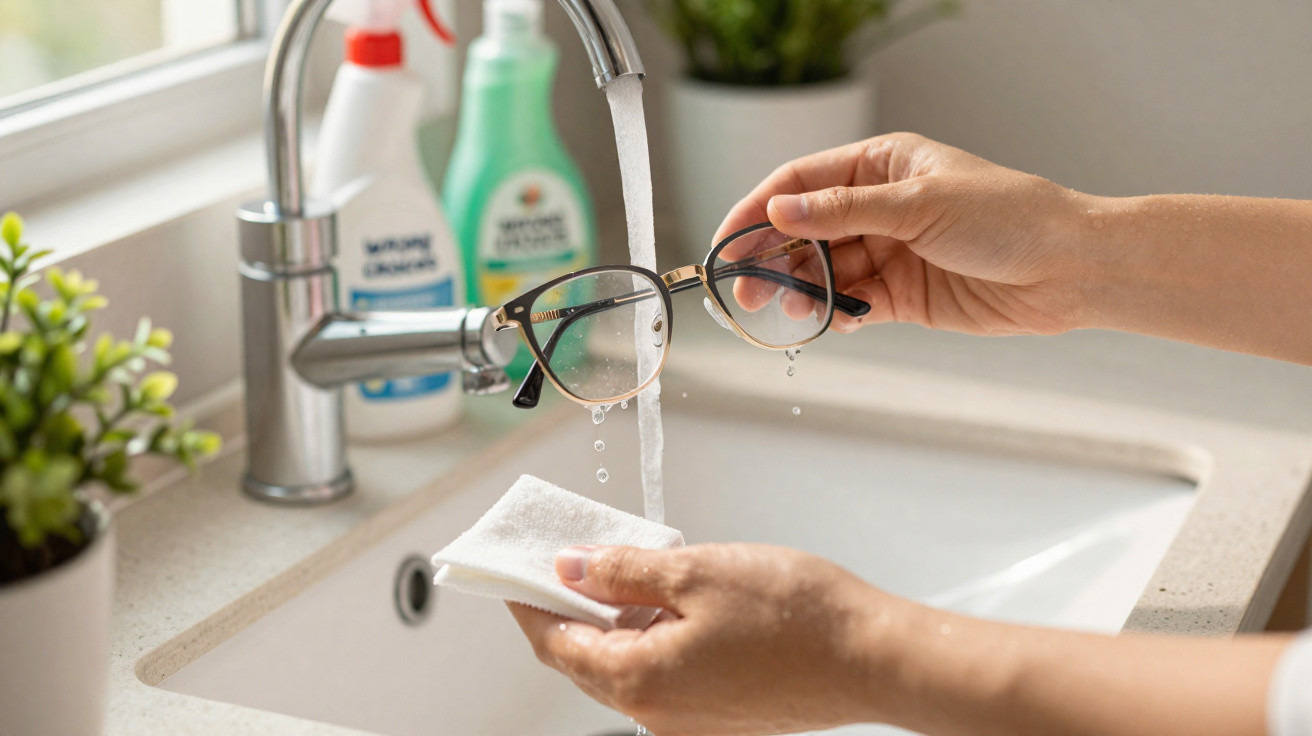
The recommended method is running water at room temperature, plus a very mild, neutral cleanser or a product specifically made for glasses.
Step-by-step cleaning routine
- Start by washing your hands to remove natural oils, hand cream and dirt.
- Hold the glasses under a light flow of cool or lukewarm water.
- Put a very small amount of neutral, fragrance-free soap on your fingertips, or use a dedicated lens cleaner.
- Gently work over both sides of each lens, as well as the frame and nose pads.
- Rinse well until every trace of soap has gone.
- Shake away the remaining water.
- Use minimal pressure to dry the glasses with a clean, soft microfibre cloth made for lenses.
Water at room temperature is important. Hot water may distort certain plastic frames and can affect some coatings, particularly photochromic or heavily treated lenses.
Why the drying cloth matters more than you think
Over months and years, the cloth you use can either protect or harm your lenses. T-shirts, tissues and kitchen roll may feel soft in your hand, yet they can retain dust and fine fibres that behave like sandpaper when rubbed over a lens.
Every “harmless” wipe with a paper towel or shirt can create micro-scratches that slowly build into a constant fog over your vision.
Microfibre is woven to capture particles away from the lens surface, helping to limit friction and scratching. These fabrics are intended to be soft and lint-free.
Best and worst materials for drying lenses
| Material | Use on lenses? | Reason |
|---|---|---|
| Microfibre cloth (for glasses) | Recommended | Soft, low friction, traps dust away from lens |
| Cotton T-shirt | Not advised | Holds dust and grit, can scratch coatings |
| Paper towel / tissue | Avoid | Paper fibres are abrasive and leave lint |
| Tea towel | Risky | Often rough and contaminated with kitchen grease |
| Lens wipes (alcohol-free) | Sometimes | Useful when outdoors, if specifically approved for lenses |
Microfibre cloths require maintenance too. Clean them regularly without fabric softener, as this can leave behind a film. Allow them to air-dry completely before returning them to a case or pocket.
Never clean dusty lenses while they are dry
A further common practice is breathing on a lens and rubbing it when dust or grit appears. This seemingly easy solution can cause more harm than expected.
Dry cleaning dusty lenses turns every speck of dirt into a tiny grinding tool pressed directly onto the surface.
If sand has landed on your glasses at the beach, or they have picked up fine dust on a building site, do not touch the lenses until you can rinse them with water or apply a proper spray cleaner. Even a light breeze can carry abrasive particles onto your glasses.
When outdoors without access to a tap, an approved lens-cleaning spray and microfibre cloth are the safer choice. Apply plenty of spray so particles can float and slide off, rather than being pulled across the lens surface.
What to avoid when cleaning your glasses
Certain methods may seem helpful at the time but can result in costly lens replacement later. Specialists generally recommend avoiding:
- Kitchen detergent containing fragrance, colour or added agents.
- Alcohol gels, hand sanitiser and disinfectant sprays.
- Glass cleaners made for windows or mirrors.
- Vinegar, lemon juice and homemade acidic mixtures.
- Bicarbonate of soda, toothpaste or any “mild abrasive.”
- Very hot tap water or hot water straight from a kettle.
Although these products can remove grease quickly, they may wear away coatings, distort plastics and stain tints. Many have never been tested on sensitive optical surfaces.
How proper cleaning protects your vision and your wallet
Effective cleaning is about more than appearance. Cloudy or scratched lenses alter how light reaches the eyes. This can worsen glare, eye strain and fatigue, especially when driving at night or using screens.
Keeping lenses clear and intact extends their usable life and delays the cost of new prescriptions or replacement lenses.
Anti-reflective coatings are especially susceptible to damage. Once compromised, they may scatter light rather than manage it, causing halos around headlights and an ongoing hazy effect. People may assume their eyesight has deteriorated when the issue is actually on the lens surface.
Everyday scenarios: what to do in the moment
At the office
Your glasses are marked after a video call and the only nearby option is a box of tissues. Instead of rubbing them, keep a small bottle of lens spray in your desk drawer along with a folded microfibre cloth. One quick spray followed by a light wipe can remove digital smudges without scratching the lenses.
At the gym
During exercise, sweat and fingerprints can accumulate. Do not wipe the lenses with your sports top or towel, as both can pick up floor dust and fibres from gym equipment. Once you reach the changing-room sink, rinse the glasses and then dry them using a cloth kept in your bag.
Key terms worth knowing
Opticians often mention “anti-reflective” or “hard” coatings, but many people do not fully understand what is applied to their lenses.
- Anti-reflective coating: A fine layer that limits reflections and glare, particularly from screens or headlights. It is sensitive to harsh chemicals.
- Hard coat: A protective layer that improves the scratch resistance of plastic lenses, although it does not make them scratch-proof.
- Photochromic treatment: Lenses that become darker in sunlight and clear again indoors. Their performance can be affected by heat and strong chemicals.
Understanding these terms makes it easier to choose cleaning products. Select cleaners clearly marked as safe for coated lenses and photochromic treatments.
Balancing hygiene and lens safety
Since the pandemic, many people have begun spraying harsh disinfectants on everything, including their glasses. Alcohol and powerful cleaners can kill germs, but they also reduce the lifespan of lens coatings. A balanced routine means washing hands often while cleaning glasses with water and a mild cleanser.
For healthcare professionals and people working in high-risk settings, some manufacturers provide lens-safe disinfecting solutions tested on coated surfaces. An optician can advise on these specialist products, offering reassurance about hygiene without compromising lens clarity.


Comments
No comments yet. Be the first to comment!
Leave a Comment