
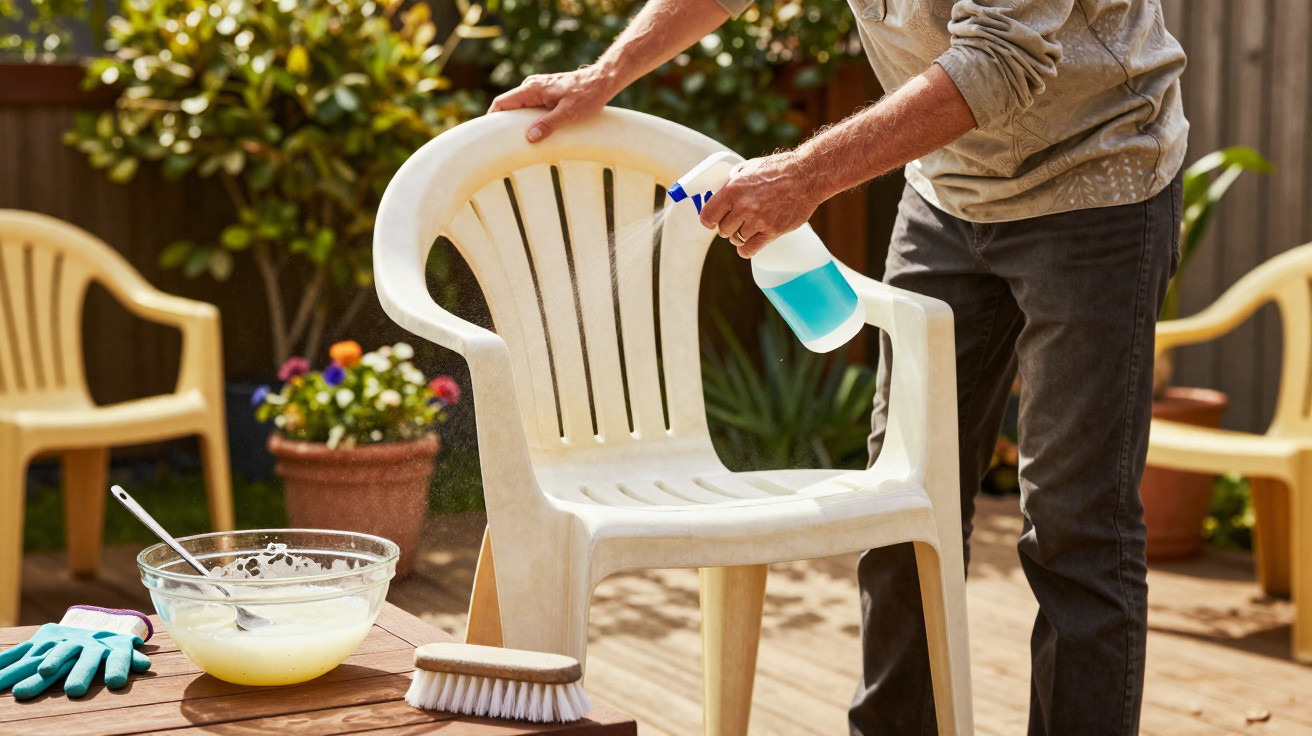
The good news is that a simple mixture and a little method can restore a great deal. Knowing the right approach saves money, conserves resources and soon makes sitting outside enjoyable again.
Why plastic in the garden turns yellow so quickly
UV radiation breaks down the outermost layer of plastic. This leaves the surface rougher and more porous, while also creating a static charge. Dust, pollen and soot then cling to it more readily. Moisture can leave a grey film behind. White PVC furniture develops noticeable yellowing, while coloured items fade if the material itself does not contain UV protection.
Other materials weather in different ways: steel may rust, wood turns grey and needs oiling and sanding, while polyrattan suffers in prolonged rain. Plastic remains the easiest option to maintain, provided there are no cracks or breaks.
“UV breaks up the smooth surface chains in plastic. That is why old plastic feels rough and grips dirt like Velcro.”
The home-made cleaning mix: combine, spray and restore shine
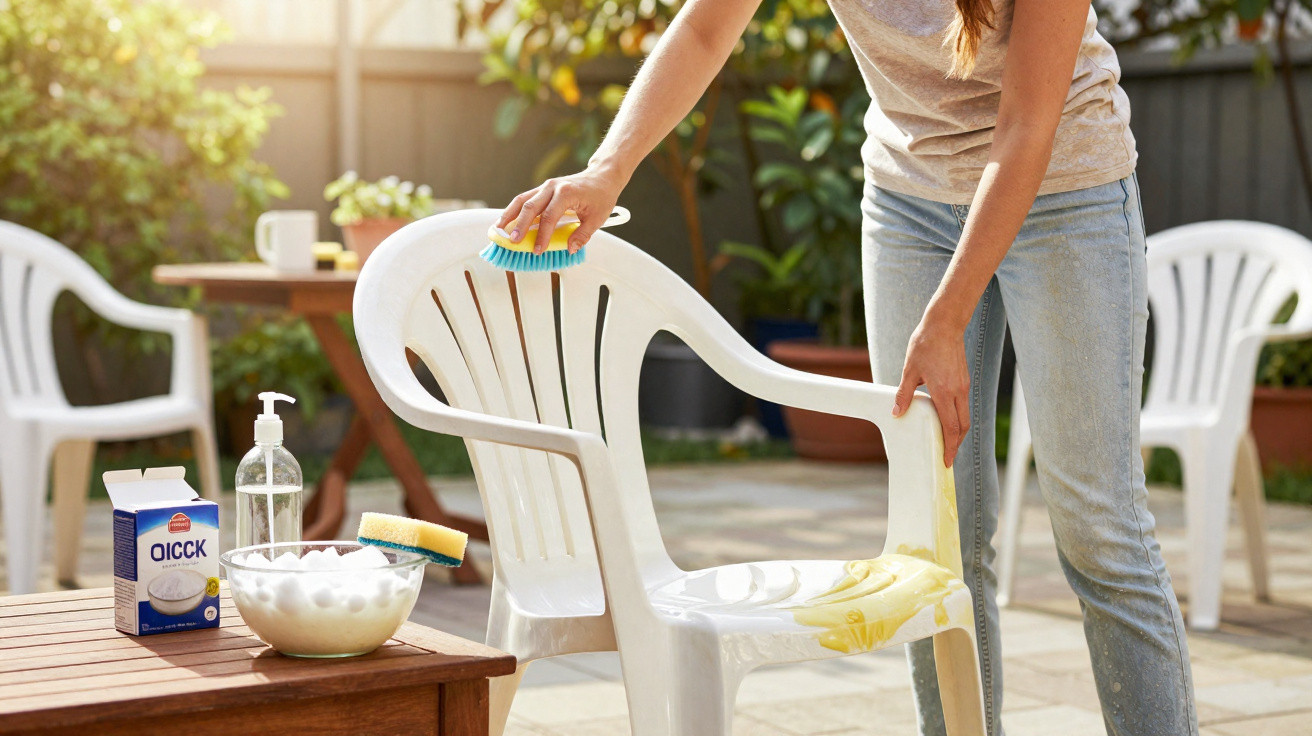
Remove general grime first, then brighten the affected areas specifically to bring back the sheen. Always begin with warm soapy water, so that the active mixture can reach the discolouration directly afterwards.
| Ingredient | Quantity | Effect |
|---|---|---|
| Warm water | 500 ml | Loosens dirt and provides gentle dilution |
| White household vinegar (5–8%) | 1 tbsp | Removes limescale film and neutralises odours |
| Bicarbonate of soda/baking soda | 2 tbsp | A mild abrasive that lifts grease |
| A squirt of washing-up liquid | as needed | Emulsifies greasy residues |
- Brush or sweep away loose debris first.
- Pre-clean with warm soapy water and a soft cloth, then rinse.
- Prepare the mixture in an open spray bottle: add water first, then bicarbonate of soda, followed by vinegar and finally washing-up liquid.
- Spray the surfaces generously and work in circles with a soft sponge.
- Leave for 5–10 minutes, but do not allow it to dry out.
- Rinse thoroughly with clean water and dry using a microfibre cloth.
“For white furniture, a cleaning paste made from cleaning stone (clay mineral + soap + glycerine) is highly effective against grey film. Test it first on an inconspicuous spot when using it on coloured items.”
Tips for particularly stubborn marks
Sunscreen, resin and nicotine stains penetrate more deeply. Proceed as follows:
- Use a melamine sponge, which is mildly abrasive, with water only and work gently.
- Apply 3% hydrogen peroxide sparingly to white surfaces, leave it in the light for 15 minutes, then rinse.
- For sunscreen residue, put 70% isopropanol on a cloth, wipe briefly and rinse with water immediately.
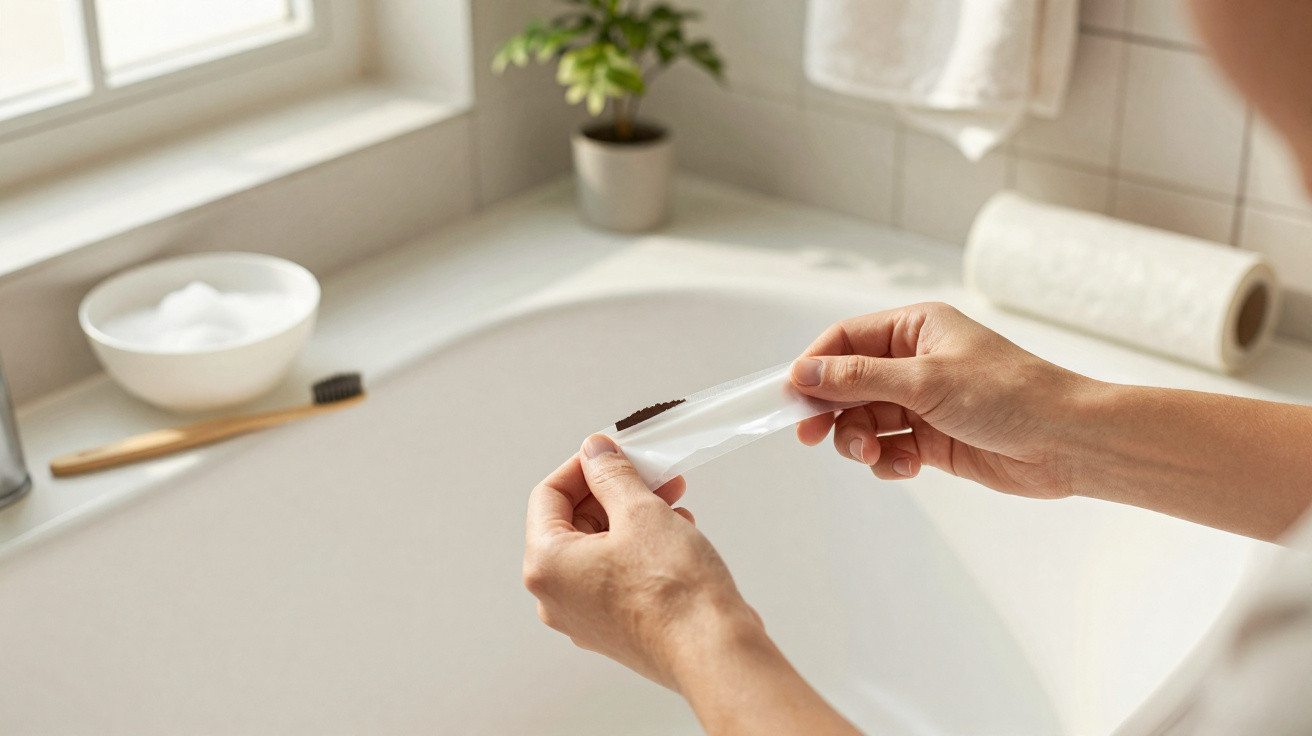
- Use a soft toothbrush to treat discoloured texture in raised patterns and grooves.
“Never mix vinegar with chlorine-based cleaners. This produces toxic chlorine gas – keep your distance and only follow up with water.”
Repair, paint or dispose of plastic garden furniture safely
Inspect every seat before cleaning it. Hairline cracks in load-bearing areas present a fall risk, so these items should be taken out of use. Minor scratches or a chalky appearance, however, can be evened out.
- Lightly sand dull surfaces with 120-grit, then 240-grit paper, and remove the dust.
- Apply a thin coat of plastic adhesion promoter and allow it to flash off as directed.
- Use exterior plastic paint in 2–3 thin coats. Leave it to cure for 24 hours.
- Avoid fats and oils: they make plastic more prone to staining and can leave it greasy, with a plasticiser-like feel.
Protect rather than constantly scrub
Prevention saves hours of work. When buying your next set, choose UV-stabilised furniture or items coloured throughout the material. During high summer, place chairs in light shade where possible. Establish a straightforward care routine:
- Wipe over briefly with warm washing-up water every 4–6 weeks.
- Rinse once with clean water after the pollen season and heavy rain.
- Store furniture somewhere dry in winter, or place it beneath a breathable cover.
- Check the feet or gliders to prevent scratches on patio slabs.
How the cleaning mix works
Vinegar dissolves limescale and mineral films that create a frosted-glass appearance. Bicarbonate of soda acts as an extremely fine abrasive and neutralises acids. Washing-up liquid breaks down greasy layers from sunscreen and barbecue particles. Together, they clean both mechanically and chemically while remaining gentle on the surface.
“Use vinegar essence only when diluted: 1 part essence to 4–5 parts water. Add bicarbonate of soda slowly, as the mixture will foam up.”
Comparing garden furniture materials
| Material | Typical ageing | Care advice |
|---|---|---|
| Plastic (PP/PVC) | Turns yellow and becomes dull | Home-made mixture + UV protection, cover |
| Metal (steel/aluminium) | Rust/felt-like corrosion beneath paint | Sand rusty areas and apply anti-rust paint |
| Wood (teak/pine) | Turns grey and cracks in dry conditions | Cleaner + oil, maintain regularly |
| Polyrattan | Fibres break down under UV exposure | Brush gently and store in shade |
Two further useful additions
A UV-protection spray for plastics leaves a transparent filter after cleaning. It slows fading and makes dirt less likely to adhere. Apply it thinly and renew it every year.
Broken caps and plugs can be replaced inexpensively with universal sets. They stop water entering hollow sections and causing stains from the inside.
Disposal and recycling
Dispose of chairs that pose an accident risk through bulky household waste collection or at a household waste recycling centre. Many local authorities accept clean, single-material plastic furniture separately. Remove screws and metal components beforehand. Painted or severely damaged items do not belong in the mixed recycling bin.
A practical spring-cleaning example
- Saturday: Pre-clean and use the home-made mixture; use cleaning stone on white furniture only.
- Sunday: Inspect again, treat isolated marks and apply UV-protection spray.
- Monday: Store in a dry place or cover it, then take a dated photo for next year. This lets you see how well the care routine is working.
Comments
No comments yet. Be the first to comment!
Leave a Comment