
The sink was already brimming when the pasta water sent it spilling over the edge.
Greasy foam, food scraps, and that sluggish, maddening rotation which never quite turns into a whirlpool. You clutch the worktop and watch the water climb, repeating the familiar thought of anyone with a packed schedule: “Not today, please, not today.”
You prod at it with a fork. You turn on the tap to check, then immediately wish you had not. The water simply looks back, shiny and stubborn. Call a plumber for this? At 8 p.m. on a Tuesday?
Then a neighbour sends a message: “Put 4 tablespoons into the clogged drain. This cleans the pipes and the water drains away in no time.” No drain snake, no aggressive gel, no £50 bill. Only four spoonfuls of something already in your cupboard. It sounds like a gimmick. Or a quiet little miracle.
Why four tablespoons can be your secret weapon
A blocked drain creates its own peculiar silence. The kitchen comes to a halt. The bathroom feels as though it has paused. All at once, you realise just how much your routine relies on water vanishing down the plughole without any drama.
At that standstill, one modest but exact action can make a difference: four tablespoons. Not “some cleaner” or “a little of this and that”, but a defined, almost ceremonial amount. It restores a degree of control when irritation could otherwise take over.
Those spoonfuls are not magical. They simply put common household ingredients to work in a focused, concentrated way. Rather than pouring a whole bottle of corrosive liquid into your plumbing, you use enough active substance to work at the blockage where it matters. A small amount, with a significant result.
A friend in London insists this precise routine stopped her needing plumbers for minor blockages. Her kitchen sink would clog whenever she made anything oily. First it drained slowly, then water began sitting in the basin, followed by a faint sour odour that no candle could disguise.
One night, her father, a former maintenance technician, visited. He brought no equipment. Instead, he headed straight for the cupboard: four tablespoons of bicarbonate of soda down the drain, followed by four tablespoons of vinegar. There was a gentle fizz, like a miniature storm inside the pipes. Twenty minutes later, he poured in a kettle of boiling water. The sink drained as though it had never been blocked.
Afterwards, she did the same once a month. Serious blockages no longer cropped up. The smell disappeared. She retained the plumber’s number, but it went from her favourites to the neglected bottom of her contacts list.
There is straightforward chemistry behind it. Bicarbonate of soda is a mild alkali, helping to loosen greasy deposits and neutralise odours that cling to pipe walls. Vinegar is acidic. Combined, the two fizz and expand, getting into tight areas and lifting grime, soap residue and organic debris.
Four tablespoons strike a useful balance. Use too little and the effect will be limited; use too much and the mixture may bubble back out of the drain instead of working further inside the pipework. At the proper quantity, it reaches the first section of plumbing, where everyday blockages tend to form, acting rather like a mild scrub from within.
It is not a universal answer for hard obstructions or pipes affected by tree roots. Instead, it is an initial approach for familiar household blockages caused by hair, soap, food and fat: the gradual build-up created while we get on with life without considering what goes down the drain.
How to use the “4 tablespoons” method step by step
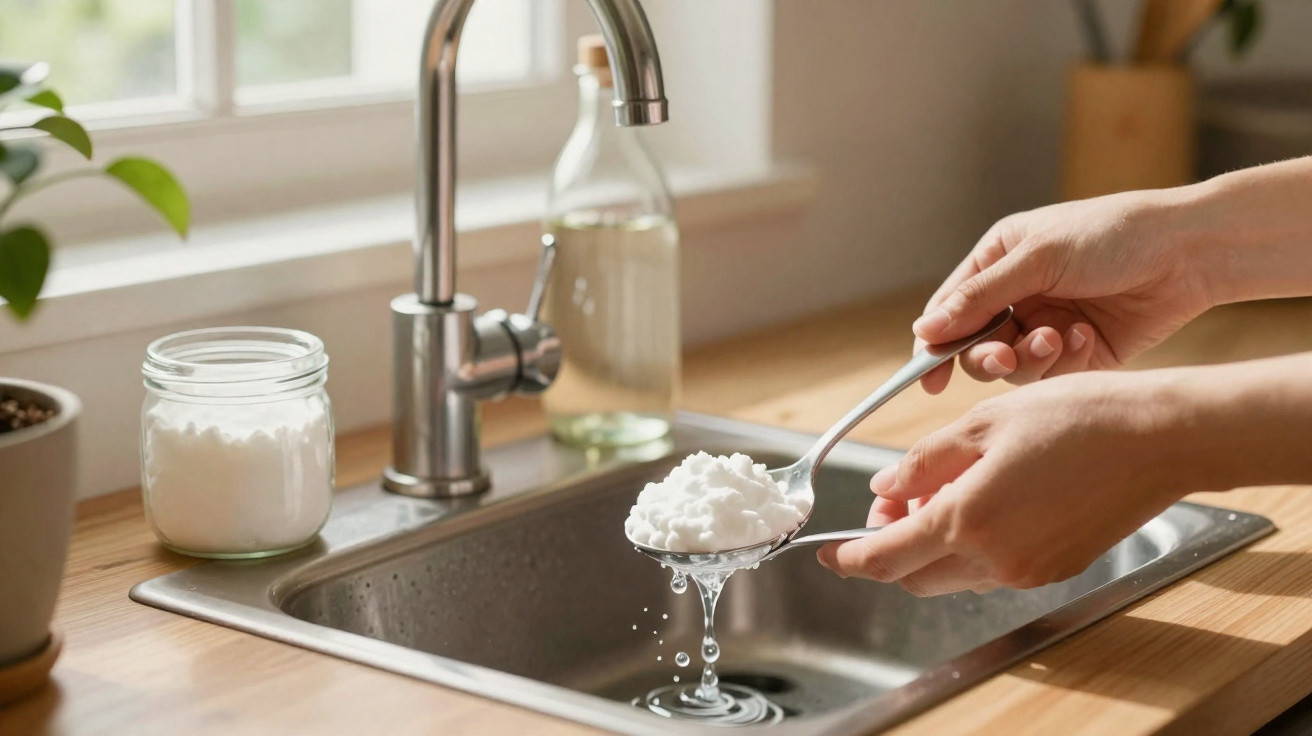
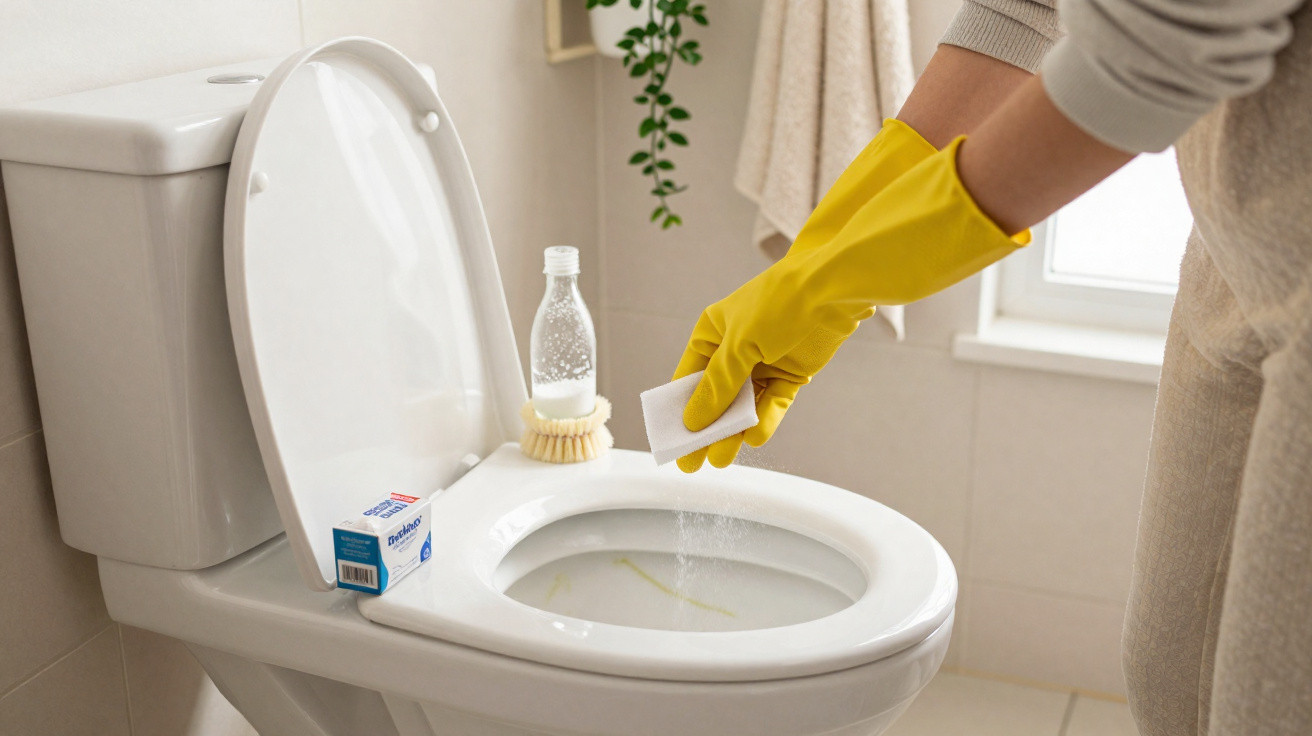
Begin with an empty, still sink or shower tray. Clear away anything you can see, including hair caught around the plug, food pieces or coffee grounds. Take a tablespoon and your bicarbonate of soda, then tip exactly four level tablespoons into the drain, allowing the powder to drop as far down as possible.
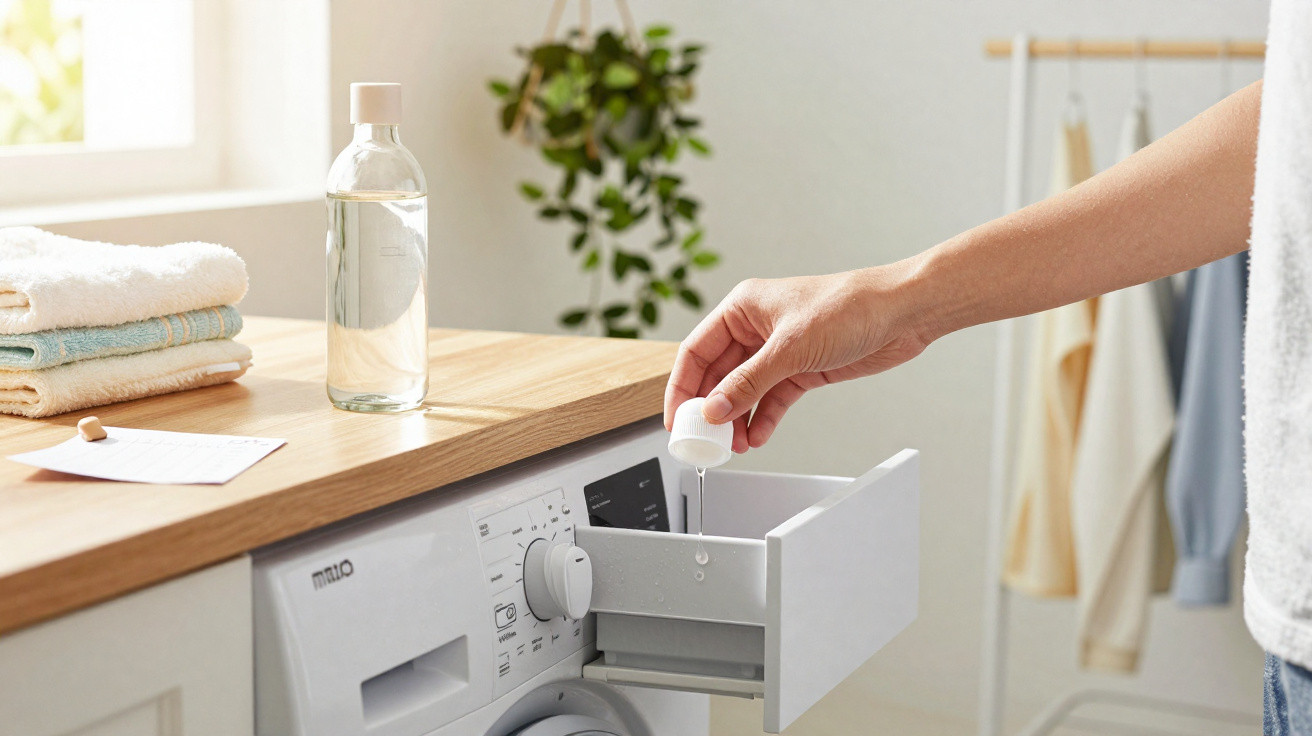
Then pick up the white vinegar. Pour in four tablespoons slowly, directly over the bicarbonate of soda. You should hear a quiet hiss and see foam rise before settling. That indicates the reaction is moving through the pipework. Leave it for 15–20 minutes. Do not add water or rinse it away; simply wait.
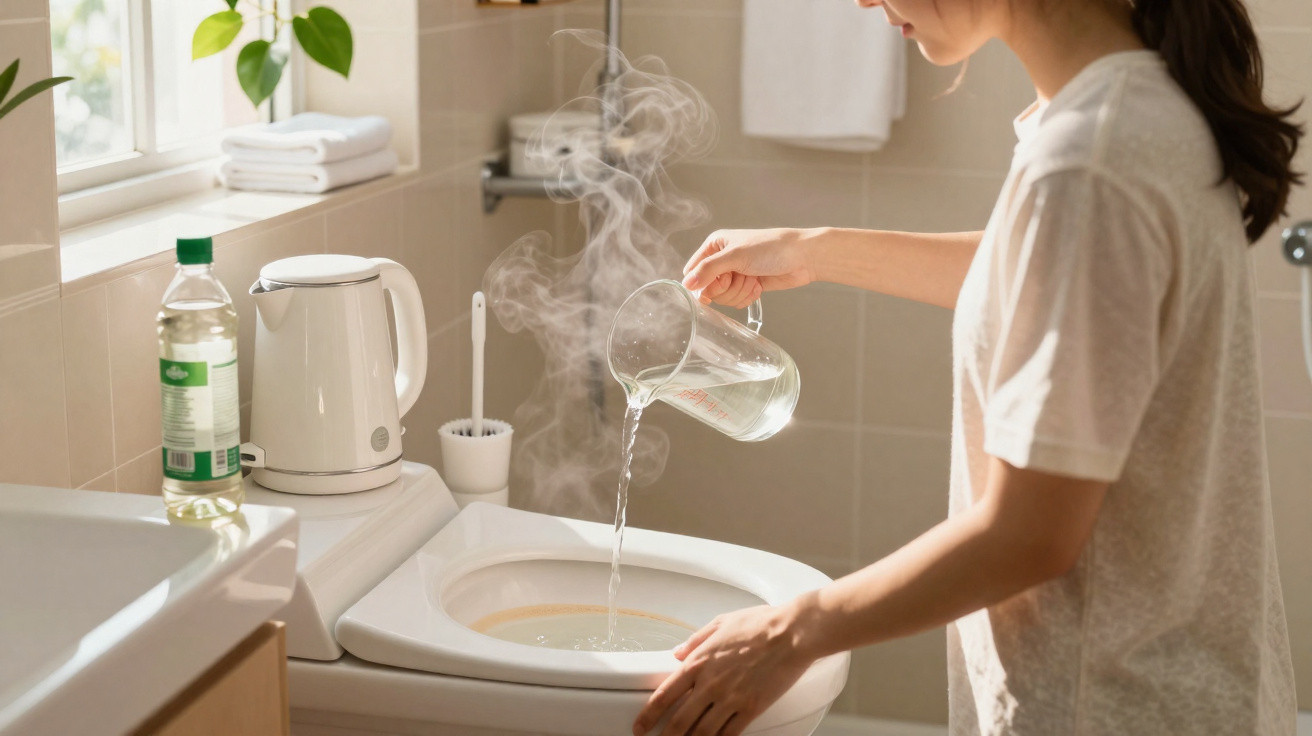
Complete the process with a jug or kettle of very hot water. Do not use a hesitant dribble: give it a proper flush. The heat carries away loosened residue and melts any fat still attached to the pipes. After this final stage, many people are struck by how quickly the water begins flowing again.
Some people become impatient and use three times as much, believing it will act three times faster. In practice, the excess often bubbles back towards the surface and merely wastes ingredients. Four tablespoons already produce ample foam and generally reach the first bend in household pipes effectively.
Others miss out the waiting period, adding hot water immediately after the vinegar. That gives the reaction hardly any time to work. It is rather like removing a cake from the oven after five minutes and asking why it remains uncooked. The waiting time is an essential part of the process, not an optional extra.
During a difficult week, you may pour in the mixture and completely forget about it until the following morning. That is not a problem. The real mistake is leaving things untouched for months, then hoping for an instant fix at the first sight of standing water. On a human level, we all tend to act only when the problem is already shouting.
“The smartest way to avoid calling me in an emergency,” a plumber once told me half-laughing, “is to treat your pipes like teeth. Small cleanings often, instead of waiting for the root canal.”
This small “four tablespoon” routine can easily become part of monthly upkeep, particularly for kitchen sinks and showers. Here is a brief reminder to save or pass on:
- Put 4 tbsp of bicarbonate of soda down the drain (kitchen or bathroom) once a month
- Add 4 tbsp of white vinegar straight afterwards, then let it fizz for 15–20 minutes
- Finish with very hot water to flush it all away
Does everybody keep up with this regularly? Let us be honest: nobody really does it every day. Still, adding it to a Sunday cleaning routine now and then could save you those anxious evenings with a plastic plunger and no alternative plan.
Rethinking how we care for what disappears down the drain
There is something unexpectedly satisfying about clearing a blockage with a spoon rather than a bottle that smells of chemicals. It can leave you feeling more capable at home and less reliant on “emergency solutions” or last-minute products promising miracles on their labels.
This simple action also alters the way you think about what you wash away. Cooking fat, hair after a shower and morning coffee grounds all end up somewhere. Pipes do not make them disappear; they only conceal them temporarily. Those four tablespoons are a way of saying: I know you are there, and I am handling you before you become a bigger problem.
More broadly, it is about noticing issues while they are still quiet signals: a faint gurgle, water hesitating for half a second before draining, or the first trace of an odour. None of these is dramatic, but responding early is less about being heroic and more about the calm, shared knowledge passed between kitchens.
| Key point | Detail | Benefit for the reader |
|---|---|---|
| Simple routine | 4 tbsp bicarbonate of soda + 4 tbsp vinegar + hot water | An easy solution to remember and use |
| Prevention | Once a month in sinks and showers prone to blockages | Reduces the likelihood of major blockages and odours |
| Limitations | Does not replace a plumber for severe obstructions | Helps you know when to act yourself or seek assistance |
FAQ:
- Can I use this method on any type of drain? It is most effective for ordinary kitchen and bathroom drains with mild to moderate blockages. For very old, damaged or outdoor drains, it is safer to consult a professional first.
- How often should I use the 4-tablespoon trick? Monthly use in regularly used sinks or showers is generally sufficient. If you cook frequently with oil or have long hair, using it twice monthly may help maintain good flow.
- Will this replace commercial drain cleaners completely? Not in every case. It works well as a first defence and preventive measure, but particularly stubborn or deep blockages may still require mechanical tools or professional assistance.
- Can I use more than 4 tablespoons for a tough clog? You may increase the amount slightly, but very large quantities will not necessarily be more effective. If a second attempt makes no difference, forcing the issue will not help, and calling a plumber is the safer choice.
- Is it safe for all plumbing materials? Bicarbonate of soda and vinegar are usually mild enough for most modern household pipes. If your plumbing is very old, delicate or known to have problems, seek specific advice before using any method repeatedly.



Comments
No comments yet. Be the first to comment!
Leave a Comment