
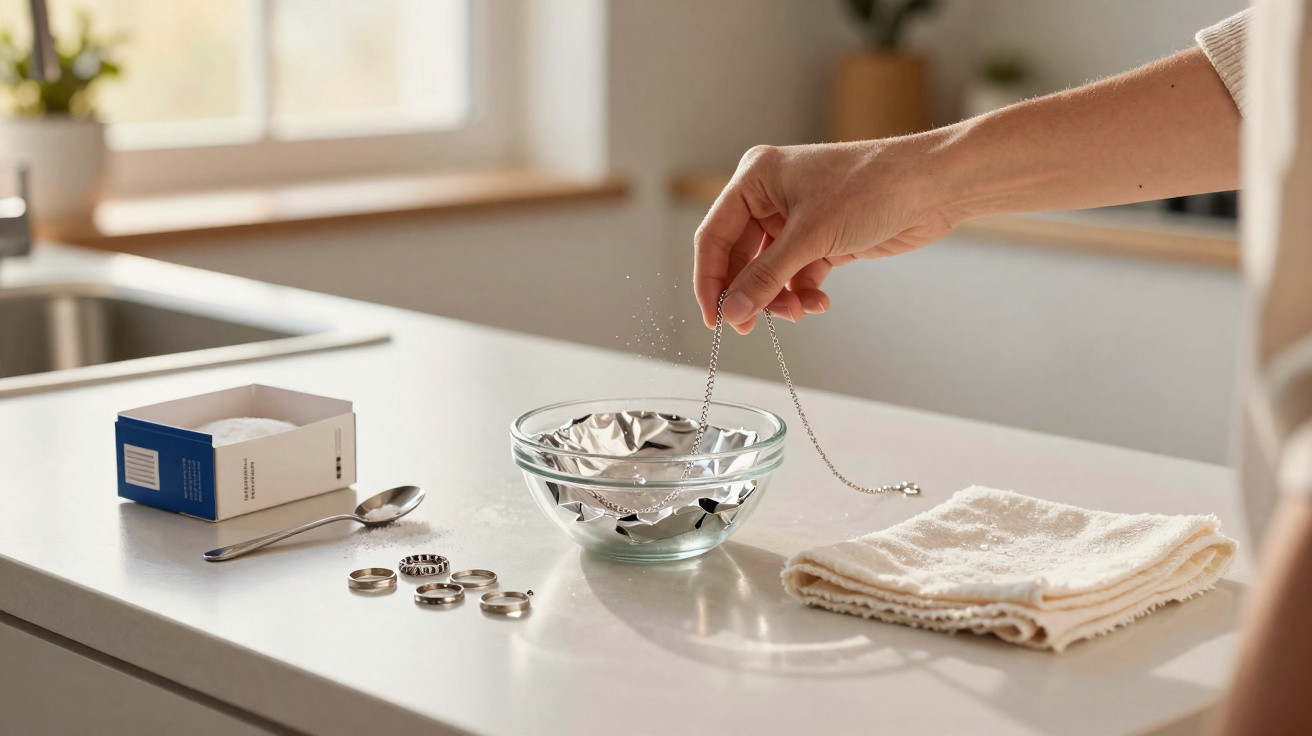
Jewellery such as rings and chains quickly collects soap residue, natural skin oils and city dirt. If it is not cleaned, this layer can leave surfaces looking dull and obscure fine details. Careful cleaning brings back the light, helps safeguard settings and makes everyday jewellery look wearable once more.
Why this home jewellery cleaning method is popular again
Every UK summer, searches for jewellery cleaning rise as warm weather, sunscreen and perspiration accelerate tarnishing. Silver becomes darker when it reacts with sulphur in the air, while gold develops a coating that softens its lustre. Many people are looking for an effective approach that does not scratch their jewellery or require specialist equipment.
One simple setup - hot water, bicarbonate of soda and aluminium foil - can shift tarnish on many plain metals without rubbing.
This method is widely favoured for two reasons: it costs very little and it does not rely on abrasion. Rather than removing the upper metal layer through polishing, it deals with the chemical build-up responsible for the lack of shine.
The jewellery cleaning method many jewellers quietly recommend for plain metals
What you need
- A heatproof bowl completely lined with aluminium foil
- Very hot water, just below boiling point
- 2–3 teaspoons of bicarbonate of soda
- A soft microfibre cloth
- Tongs or a spoon for removing items safely
Step-by-step method
- Fully line the bowl with foil, with the dull side facing upwards, so that the jewellery can touch the aluminium.
- Add enough hot water to cover the jewellery you want to clean.
- Mix in the bicarbonate of soda until it starts to fizz gently.
- Put the jewellery onto the foil, making sure there is metal-to-metal contact. Leave it for 5–15 minutes.
- Carefully remove the pieces, rinse them beneath cool running water, then pat them dry using a soft cloth.
The fizz does the heavy lifting, not your fingers - so you avoid micro-scratches that polishing cloths can cause.
Results you can expect
Tarnished sterling silver will often change quickly from grey to bright. You may notice a slight egg-like smell, which is sulphur leaving the metal. Gold that has appeared dull can regain its warm shine, while stainless steel loses the film that can make it seem worn out. Detailed chains and engraved recesses benefit particularly well, as the reaction can reach spaces a cloth cannot.
Key precautions
- Do not use this method on oxidised silver or silver with a deliberately blackened finish, as the bath will remove the intended dark detailing.
- Avoid using it for pearls, opals, emeralds, amber, coral, turquoise, or any soft or porous stones.
- Take care with glued settings and costume jewellery, since heat and soaking may weaken adhesives.
- Rhodium-plated white gold should not remain in hot solutions for long; choose a mild soap soak instead.
- If you do not know exactly what a piece is made from, test an inconspicuous area first or clean the chain rather than the pendant.
Why bicarbonate of soda and aluminium foil work
Bicarbonate of soda increases the water's pH and helps ions move through the solution. Aluminium is more reactive than silver, while silver tarnish is largely silver sulphide. When silver is in contact with aluminium in hot alkaline water, the sulphur moves onto the foil and the silver returns to its brighter metallic state. There is no abrasive grit, scrubbing or loss of metal.
| Metal | Good candidate? | Notes |
|---|---|---|
| Sterling silver | Yes | Excellent for heavy tarnish; avoid oxidised finishes. |
| Gold (9–22ct) | Sometimes | Mainly removes film, not deep grime; use mild soap for daily care. |
| Stainless steel | Yes | Safe and effective; rinse well to avoid residue. |
| Platinum | Sometimes | Usually safe; dirt often needs a soft brush and soap instead. |
| White gold (rhodium-plated) | Caution | Short dips only; frequent use may thin plating over time. |
Gentle choices for everyday jewellery care
Most jewellery does not need the aluminium foil treatment every week. For regular maintenance, use a lighter touch. Warm water with a drop of mild washing-up liquid will remove oils and urban grime. Soak the jewellery for five minutes, move it gently through the water, then use a baby-soft toothbrush with a light hand. Rinse thoroughly and dry it completely. This simple routine helps maintain shine and limits how often tarnish develops.
Quick options to keep near the sink
- Spray bottle: mix warm water with one very small drop of soap. Spray, wipe and dry.
- Paste cleaner for plain silver: combine bicarbonate of soda with a little water, apply it with a very soft brush, then rinse thoroughly.
- Anti-tarnish strips: keep silver in zip bags or a lined box with a strip to slow oxidisation.
- Microfibre cloth: wipe rings and chains each day after applying lotions or SPF.
When professional jewellery cleaning is the better choice
Loose gemstones, bent claws and gritty hinges need a jeweller's bench rather than a home solution. Jewellers can steam-clean items, secure settings and re-rhodium white gold to restore its crisp appearance. Ultrasonic baths can clean beneath stones, but they pose risks to soft gemstones and any jewellery containing glue. If you have a home ultrasonic cleaner, check its stone guidance closely and use short cycles.
Signs that expert help is needed
- A gemstone rattles when you gently tap the piece near your ear.
- Opals, emeralds or vintage glass appear cloudy, cracked or crazed.
- Black dirt remains trapped beneath claws after cleaning with soap.
- White gold has a yellowish cast, suggesting that the rhodium may need renewing.
Care, storage and a straightforward schedule
Your body chemistry, local air quality and storage conditions all have an effect. Silver tarnishes more quickly in bathrooms and near rubber bands, which release sulphur. Store jewellery dry, separately and away from direct heat. Adding a small silica gel sachet to the jewellery box can help. In most homes, a suitable routine is a quick soap clean each month, a foil bath for silver every season, and an annual jeweller's inspection of prongs and clasps.
Extra advice to reduce cost and worry
For valuable jewellery, consider insurance and valuation before sending it anywhere. Take photographs before and after cleaning to monitor its condition. When purchasing new jewellery, save details of its metal, plating and stones on your phone so that you can clean it more confidently later. If you prefer the deep, inky appearance of oxidised silver, preserve it by cleaning only the chain and keeping the pendant out of chemical baths.
For readers interested in the technical side, the foil bath is a neat redox exchange. Aluminium oxidises and silver reduces. You are not polishing metal away; instead, sulphur is transferred off the surface. This is why fine detailing remains sharp and why the technique performs so well on filigree and chains. Used correctly, it is quick, inexpensive and gentle on the jewellery you wear most often.
Comments
No comments yet. Be the first to comment!
Leave a Comment