
In a bustling kitchen, modest routines usually prove more useful than flashy gadgets in the long run.
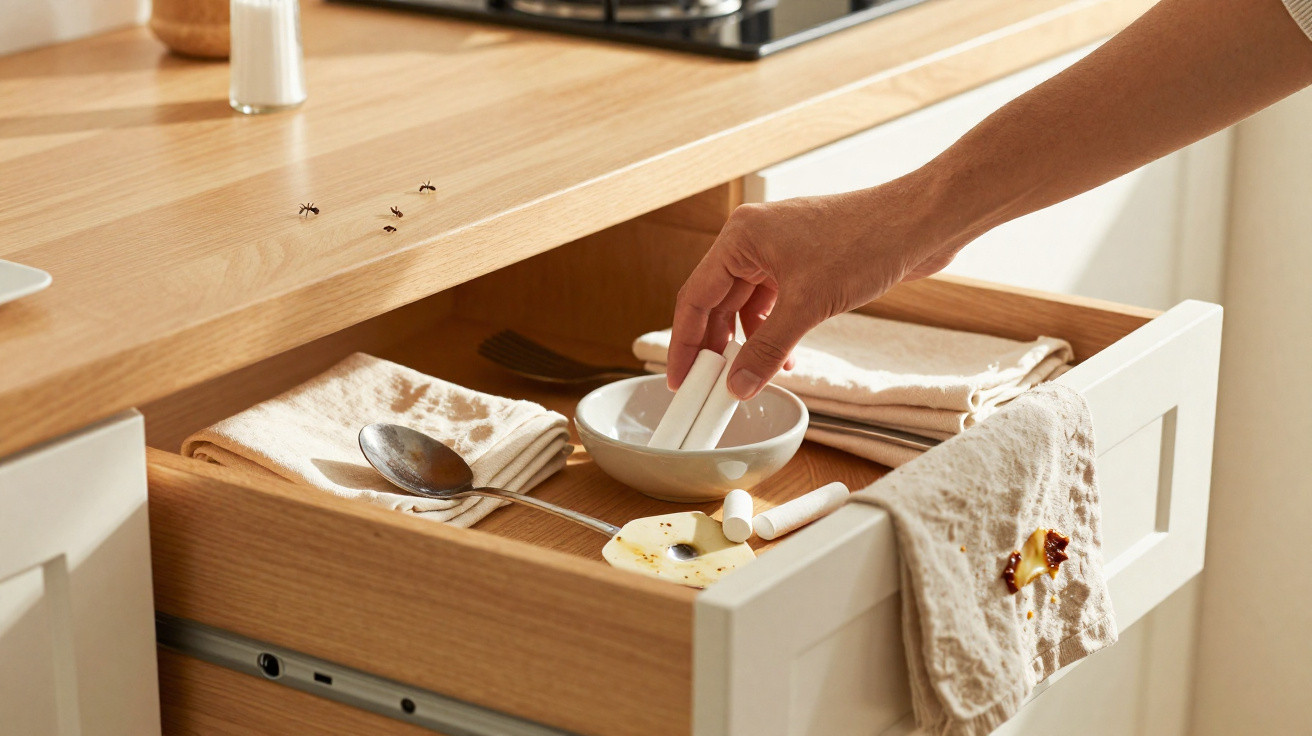
Kitchen drawers create their own microclimate. Steam, cooking oil and smells can drift inside and become sealed behind the drawer front. A small, chalk-white moisture buffer can help stabilise the air, keeping everyday utensils and supplies fresher for longer.
What white chalk actually does in a drawer
White chalk containing calcium carbonate has a porous structure. It draws moisture from the air and can take in certain compounds that cause odours. There is no need for complicated chemistry: it is simply a dry mineral full of tiny pores that steadily attracts water vapour.
This is particularly relevant in a UK kitchen. A single pan simmering on the hob can quickly raise relative humidity, and that moisture remains in a shut drawer. Salt hardens into clumps, spice-jar lids become sticky, stainless steel loses its shine and silver tarnishes more quickly. Adding a few chalk sticks makes the air less prone to sharp swings, reducing the effect on your kitchen items.
Think of chalk as a passive dehumidifier for small spaces: cheap, silent, always on, and just effective enough to prevent day‑to‑day niggles.
Chalk is not intended to rival an electric dehumidifier, nor does it have to. In the limited space of a cutlery drawer, two or three sticks placed in a breathable sachet can produce a noticeable improvement. When you open the drawer, you may find fewer tacky lids and less stale-smelling air.
How to use it day to day
Choose plain white chalk labelled as 100% calcium carbonate. Steer clear of scented or coloured versions, along with products containing waxy binders. Plenty of school “chalks” are made from gypsum or blended with polymers. Blackboard or artists’ chalk clearly marked as calcium carbonate is the safer choice.
- Put 2–3 sticks into a cotton or muslin sachet, then tie it securely.
- Use one sachet in each main drawer, including cutlery, spices and the “bits and bobs” drawer.
- Do not keep it beside loose food such as flour or rice. Chalk should sit near jars and utensils, never in food.
- Recharge it by drying it for two hours on a sunny windowsill or for 30 minutes in a low oven (80–90°C).
- Change the chalk when it begins crumbling readily or appears exhausted. In most homes, each sachet lasts one to three months.
Set it and forget it. Check once a month, dry it out, carry on. The habit takes seconds and pays back every day you cook.
Grease stains: the fast chalk trick
Spilled fresh oil on a tea towel or T-shirt? Work chalk into the stain, treating both sides where you can. Its powder draws oil from the fibres, which makes the washing cycle much more effective. Brush or shake away the excess, then wash on a warm cycle. It is not magic; it is absorption.
Cutlery and silverware: slower tarnish, less faff
Silver becomes darker when moisture and sulphur compounds reach its surface. By reducing humidity, you slow this process. Chalk supports this by making the drawer microclimate drier. You will still need to polish silver occasionally, but less frequently. Stainless-steel cutlery also holds on to its sheen longer when the drawer air is not damp.
Where chalk beats gadgets (and where it doesn’t)
Silica gel and activated charcoal absorb more moisture per gram, but they cost more and are commonly packaged in plastic. Chalk is preferable for its low price, easy availability and simplicity. It is sufficient for one drawer. For a damp kitchen cupboard or utility room, use silica gel instead or move up to an electric dehumidifier.
Ventilation remains important. Following a substantial cooking session, open a window slightly or use the extractor fan, then leave drawers open for ten minutes. Chalk can then complete the task by absorbing some of the remaining moisture.
| Spot | Set-up | Benefit | Refresh rate |
|---|---|---|---|
| Cutlery drawer | 2–3 sticks in a cotton sachet at the back | Fewer dull spoons, less “drawer smell” | Dry monthly; replace every 2–3 months |
| Spice drawer | 1–2 sticks, away from loose seasonings | Lids open cleanly, fewer clumps in salt | Dry every 3–4 weeks |
| Odds-and-ends drawer | 2 sticks near back corner | Fewer lingering odours from mixed items | As needed after heavy cooking |
Safety, hygiene and a quick reality check
Keep dust from the chalk to a minimum by using a sachet to contain any fragments. Never put it somewhere where particles could fall onto uncovered food. If you have asthma or sensitivity to dust, deal with the chalk outdoors or above the sink, and wash your hands afterwards.
In homes with young children or pets, handle chalk as you would any other household product: keep it out of reach, and remember that it is neither a toy nor a snack. For an option with no loose dust, use sealed rechargeable desiccant packs. They are more expensive, but can be oven-dried and reused for years.
Chalk won’t fix a leak, cure mould or replace ventilation. It will reduce the daily annoyances caused by routine humidity and odours inside confined spaces.
Ant trails, odours and other side benefits
Drawing a chalk line across an access point may disrupt ant trails by interfering with the scent markers ants follow. This is only a short-term barrier, rather than a pest-control solution. Clean the area, seal entry points and apply targeted treatments if the issue continues.
Chalk may also lessen low-level odours in cupboards and drawers by absorbing some volatile compounds. If smells are strong, combine it with basic cleaning: wash surfaces using hot, soapy water, dry them thoroughly and only then add the sachet. Clean surfaces come first; absorbents follow.
Make it measurable: a tiny home experiment
For proof at home, place an inexpensive hygrometer in a drawer for one week without chalk and record the daily high after cooking. Next, add a chalk sachet and repeat the test. You should notice lower humidity peaks and a quicker return to normal. It is a modest change, but one that builds up over months of use.
Buying guide for the right stick
Look for white chalk that is uncoated and unscented. The packaging should confirm that it contains calcium carbonate. Avoid brightly coloured school chalk and waxed tailor’s chalk. Artists’ suppliers and stationery sections often state the ingredients clearly. When uncertain, purchase a small pack and try it: suitable chalk scratches into powder easily and feels dry rather than slippery.
Common questions
- How many sticks per drawer? Use two or three in standard cutlery drawers and one in spice drawers. Large pan drawers may require four.
- How long does it last? Expect one to three months, based on how frequently you cook and how effectively you ventilate.
- Can I recharge it? Yes. A sunny spot or a low oven releases the absorbed moisture. Allow it to cool before returning it to the sachet.
- Will it mark anything? No, provided it stays inside a sachet. Uncontained sticks may release dust, so keep them enclosed.
- What if my kitchen is very damp? Put chalk in drawers alongside extraction and a room dehumidifier. Address the source of the moisture before anything else.
Extra tips for a calmer kitchen climate
Combine chalk with other helpful habits: cover pans with lids, switch on the extractor from the start of cooking and open a window briefly afterwards. Dry washing outdoors or in a well-ventilated room rather than beside the hob. A more stable indoor environment also helps protect wooden utensils and chopping boards.
In terms of cost, chalk is difficult to improve upon. One small box can serve a flat for months. If you work from home and now cook lunch more often, its value increases further. You get less clumping, fewer sticky jars and brighter cutlery: a discreet improvement well suited to the British preference for inexpensive, low-maintenance solutions.


Comments
No comments yet. Be the first to comment!
Leave a Comment