
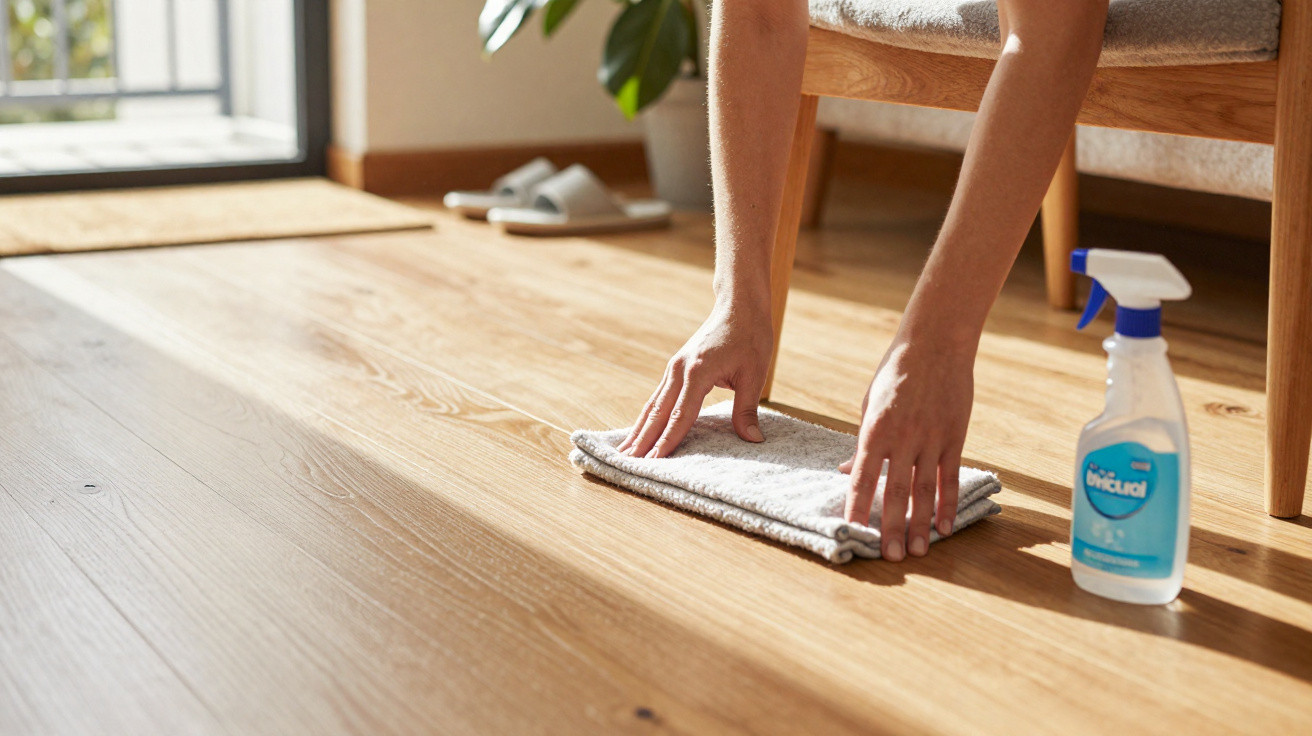
It is often a Tuesday, a frantic morning, or a friend absent-mindedly pulling a chair back. Later, a shaft of window light reveals the mark on your wooden floor, and your heart sinks slightly. You think about what it cost. About how immaculate it appeared on the first day. Then you begin asking yourself how long this particular love affair can truly endure.
Wooden floors do not age in the same way as tiles or vinyl. They react to the seasons, your routines and every grain of grit caught beneath a shoe. Some call this “character”. Others call it “my deposit” or “my renovation budget”. Both views are fair.
The enduring, straightforward question is this: how can you keep wooden floors looking good for years without treating your home like a museum?
Why wooden floors wear out faster than you think
Spend an entire day at home paying attention to your floor. Not the television or your phone: the floor. You will notice the same routes being used repeatedly, from kitchen to sofa, sofa to hallway and hallway to bathroom. These unseen traffic lanes are the first places where the finish loses its lustre, the timber turns dull and the fibres gradually begin to open.
One footstep causes no harm by itself. Across months, however, all those footsteps act like sandpaper. Fine dust, crumbs and salt from winter pavements cling to shoe soles before silently rubbing into the surface. A floor does not complain; it simply loses shine, one journey at a time.
In a London flat I visited, the owner insisted the floor had “suddenly” become patchy by the balcony door. A closer look revealed a pattern that could be followed like a map: from the entrance, where shoes were never fully wiped, directly across the room towards the balcony. The same route, twice daily, for three years. Nothing dramatic, simply repetition.
Statistics about wear on domestic flooring rarely attract attention, but trade bodies consistently report the same finding: heavily used areas may lose up to 40% of their protective finish within three to five years when left unprotected. It is not because households are irresponsible. It is because everyday life takes place where people walk most.
Floors beside kitchens face another form of punishment. Alongside foot traffic, there are fallen utensils, bar stools scraped across the surface and small oil splashes that collect dust before becoming sticky grey marks. Homeowners may not spot the change immediately. Then they shift a rug or bin one day, and the difference is severe.
Wood is relentlessly honest. It reflects both what you do to it and what you neglect to do. Leave puddles by the back door after walking the dog in rain, and board edges start to swell. Put down a plant pot with a barely visible crack in its saucer, and a ring develops like a coffee mark in a much-loved book. The harsh truth is that water, grit and friction are the three main enemies, working together without fuss.
The surface finish – whether oil, lacquer or wax – is the only barrier you have. When it wears away in the busiest spots, exposed timber absorbs the impact. Scratches then become deeper, stains penetrate more quickly and even cleaning can seem underwhelming. Caring for wooden floors involves more than cleaning them. It means extending the life of the finish, allowing you to refurbish on your terms rather than when damage leaves no choice.
Everyday moves that secretly add years to your wooden floors
The most effective maintenance routine is not especially impressive to watch. It begins with the unglamorous task of dry cleaning. Using a soft-bristled broom or microfibre dust mop on most days removes grit before it can behave like sandpaper. It takes two minutes and requires little effort, yet the annual effect is considerable even when each individual clean feels insignificant.
A weekly vacuum using a hard-floor attachment – never a beater bar that attacks the grain – goes further. It clears the gaps, beneath the skirting boards and along edges where dust tends to gather. Follow this with a barely damp mop and a wood-safe cleaner, rather than sloshing a bucket of soapy water over the boards. Wood does not want a bath; it would rather have a quick shower.
Let us be honest: hardly anyone manages this every day. Real life includes missed weeks and hectic evenings. The goal is not flawless upkeep, but long-term consistency. If your floor is free from abrasive dust and standing water most of the time, the results will be visible.
One rainy afternoon in Manchester, a couple I spoke with rolled back the heavy rug in their living room. Near the coffee table, where everyone passed and the vacuum was used most regularly, the oak appeared slightly worn but still presentable. Beneath the rug, its tone was richer, darker and almost new. The contrast was remarkable.
They had owned the floor for eight years without undertaking major work. There had been no sanding or refinishing, only a routine of weekly vacuuming, wiping spills by hand immediately and preventing wet shoes from crossing the hallway. There were no miracle products or elaborate systems, just modest repeatable actions that never feature in glossy advertising.
Trade surveys support accounts such as theirs. Homeowners who pair straightforward dry cleaning with prompt spill management and furniture protection often postpone complete re-sanding by five to seven years compared with households that “just mop when it looks bad”. This is not merely theoretical: it can mean hundreds, or sometimes thousands, of pounds staying in your pocket, alongside fewer days spent living amid building work.
Rugs, runners and door mats offer more than decoration. They act as control points. A good entrance mat can capture up to 80% of incoming dirt and grit before it reaches the boards. A hallway runner distributes the wear pattern, allowing the finish to fade more evenly instead of creating a pale, tatty strip down the centre.
The principle is almost absurdly straightforward. Keep grit away. Do not let water linger. Distribute wear. When these three things happen most of the time, the finish is no longer fighting a battle it cannot win. The floor begins to mature like a well-worn leather jacket rather than cheap laminate in a poorly maintained rental.
The small habits that matter more than miracle products
The fastest improvement you can make in one afternoon is to lift every chair, table and sofa you can, then fit felt pads beneath the legs. Choose substantial pads rather than transparent dots that fall off after a week. Every couple of months, make a quiet circuit of the room and replace any pads that are clogged with grit or worn through.
Flooring installers tell the same story repeatedly: severe furniture scratches are preventable. Pads may be dull and far from Instagrammable, but they protect floors. The same applies to keeping pets’ claws trimmed and replacing high heels with kinder footwear on evenings at home. A small shift in behaviour can avoid dozens of gouges that no “miracle polish” can remove.
Mopping also deserves a change of approach. A bucket of hot, soapy water may feel like “proper cleaning”, but for timber it is closer to gradual sabotage. Use a flat microfibre mop that has been thoroughly wrung out, not one that drips. Clean in sections, and if water remains standing on the surface, you have used too much. Strong detergents, steam mops and vinegar may leave tiles gleaming, but over time they strip and dull wooden finishes.
Many people privately blame themselves when their floor begins looking worn. They believe they “failed at maintenance” or should have understood more. The truth is tougher yet more forgiving: much of the poor guidance comes from polished bottles and unclear labels claiming that everything is “safe for all floors”.
Furniture polish and general multi-surface sprays can leave greasy layers that hold on to dust. Cleaners containing bleach may make lacquer cloudy. Steam mops force moisture and heat into joints that are invisible to the eye. You are not negligent; you are navigating shelves of products that rarely explain how finishes truly behave.
Rather than chasing perfection, set a few practical boundaries. Clean gently and regularly instead of harshly once a month. Deal with spills in minutes rather than hours. Do not drag heavy furniture, even “just for a second”. Keep a small kit to hand: a quality broom, a vacuum attachment for hard floors, wood-specific cleaner, a microfibre mop and spare felt pads. That modest shelf in a cupboard is your complete defence system.
“Floors don’t fail on one bad day,” a veteran floor sander told me. “They fail in a thousand tiny, fixable moments.”
To put that advice into action, it is useful to have a simple mental checklist that needs no real thought. Nothing elaborate, and nothing requiring an app or calendar alert. Just several short reminders that could easily go on the fridge.
- Stop grit at the entrance: use quality mats indoors and outside.
- Dry clean often: a broom or vacuum is better than continual wet mopping.
- Shield pressure points: use felt pads, rugs on busy routes and runners in hallways.
- Tackle water promptly: wipe spills quickly and place trays beneath plants and pet bowls.
- Refresh rather than panic: when sections begin to look dull, consider a light recoat before complete sanding.
A floor that grows old with you, not against you
There is an unusual intimacy to sharing a home with wooden floors. You notice which boards creak before anyone else does. You know where late-afternoon summer light falls and exposes every fleck of dust. You can hear the subtle contrast between bare feet and boots stamping in from rain.
On a calm evening, once the house is finally quiet, the floor can reveal a great deal about your life. There are gentle dents beneath the highchair, a faint scuff by the front door from moving in that wardrobe, and a slightly darker area where the dog likes to sleep. These are not defects so much as a diary written through grain and finish.
We have all had the moment when we think we should have protected something sooner: a plant, a relationship or a floor. The welcome surprise is that wooden floors often forgive you when you begin giving them a little more care today, rather than wishing for an imaginary perfect past. You can still alter your routines, replace the harsh cleaner with a gentler one and finally put down the runner you have been meaning to buy.
The next time you find yourself studying a dull area and asking whether you have “ruined” it, try another question instead: what can I alter in how I walk, clean and live on this surface from now on? There is quiet strength in those small, unseen choices, made in socks on a Tuesday night.
| Key point | Detail | Benefit for the reader |
|---|---|---|
| Reduce grit and dust | Mats at entrances, with regular sweeping and vacuuming | Reduces micro-scratches and preserves the finish for longer |
| Control water | Use a lightly damp mop and wipe up liquids quickly | Prevents warping, staining and swollen edges |
| Protect vulnerable areas | Felt pads beneath furniture, plus rugs and runners in high-traffic areas | Reduces localised wear and delays costly refurbishment |
FAQ:
- How often should I mop my wooden floors? Most households do well with a light, damp mop once a week, plus quick spot-cleaning for spills. Focus more on regular dry cleaning than on frequent wet mopping.
- Can I use a steam mop on wooden flooring? No. Steam forces heat and moisture into the joints and finish, which can cause warping, peeling and clouding over time.
- What’s the best way to deal with scratches? Fine surface scratches often improve with a gentle clean and a compatible maintenance oil or polish. Deep gouges may need professional sanding or targeted repair sticks matched to the wood colour.
- Do I really need special wood floor cleaner? Yes, a pH-balanced cleaner made for wooden floors protects the finish far better than generic or harsh products like bleach, ammonia or vinegar mixes.
- How long can a wooden floor last with good care? The wood itself can last several decades, even a lifetime. With consistent habits and occasional refinishing, many owners easily get 20–30 years or more from the same floor.

Comments
No comments yet. Be the first to comment!
Leave a Comment