
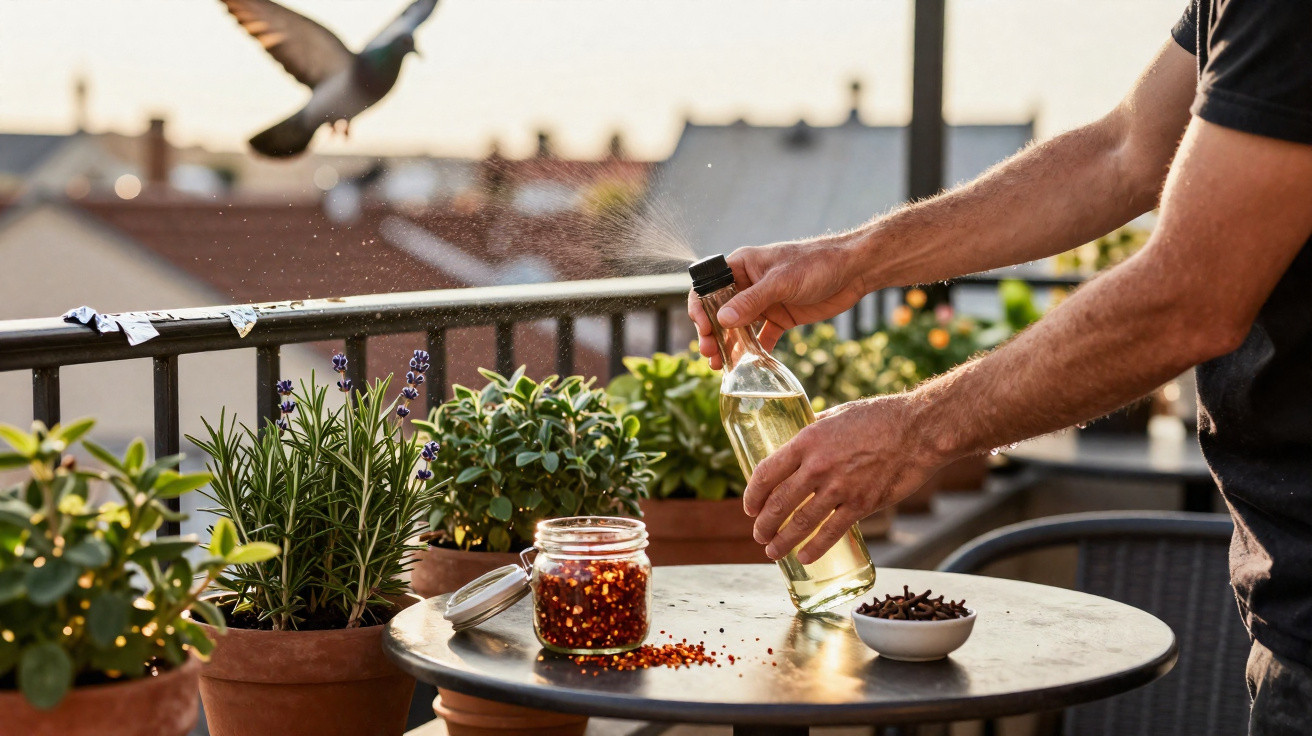
Your balcony should be a peaceful place, free from gadgets, hassle and guilt.
Urban pigeons are quick learners and even quicker to return. Pairing a straightforward scent signal with good housekeeping can change that pattern and keep your railing clear.
A natural playbook that actually works
The vinegar spray that makes your railing off-limits
Pigeons tend to avoid sharp, acidic odours. Combine equal measures of white vinegar and water in a spray bottle, then lightly mist the rails, ledges and precise places where they perch. Create a fine, even coating instead of leaving drips. Apply it again after rain or high winds. Test a small hidden area first on delicate stone, painted timber or polished metal, as it could leave marks. Keeping the bottle by the door makes the task easy to build into your routine.
Core move: 1:1 white vinegar and water, misted on landing spots twice a week and after rain, cuts repeat visits fast.
Spices and kitchen aromatics give you some quiet time
Intense smells, including cinnamon, black pepper and crushed garlic, can put pigeons off. Place a spoonful in small cloth sachets and suspend them around areas where the birds line up to land. Alternatively, scatter a light trail of spice over level window sills. Switch the ingredients around to keep the scent unfamiliar. Renew sachets once their aroma weakens or they become wet. Do not use excessive pepper in windy conditions, and ensure powders stay away from pet bowls.
Plants that look attractive and quietly say “not here”
Pots filled with rosemary, bay or scented geranium can form a gentle fragrant barrier. Arrange containers along guardrails and beside regular perching points. This approach takes weeks rather than hours to develop an effect. Water plants regularly and prune them to encourage thick growth. You get more greenery while redirecting pigeon activity elsewhere. On exposed balconies, opt for weightier pots so they do not blow over.
Reflections and movement that disrupt approach paths
Changing flashes of light interfere with a bird’s intended landing route. Suspend several reflective strips, a few old CDs or thin foil ribbons from a slack line. Allow the pieces to move at varying heights, placing them exactly where pigeons usually try to land. Keep the gaps uneven and alter their positions every few days. When visitors arrive, the line can be removed in moments.
| Method | Best for | How it works | Refresh |
|---|---|---|---|
| Vinegar mist | Rails and sill edges | Sharp scent deters landings | 2× weekly and after rain |
| Spice sachets | Corners and gaps | Lingering aroma irritates birds | Weekly rotation |
| Scented plants | Long borders | Subtle, continuous barrier | Seasonal pruning |
| Reflective ribbons | Approach paths | Glare and movement interrupt flight | Shift positions often |
Habits that change the game
Steady habits outperform gadgets. Pigeons rely on routines, but you can alter theirs. Reapply the vinegar after wet weather, shift spice sachets by roughly a hand’s width each week, and relocate ribbons so the unexpected movement continues. Even a minor adjustment can redraw their mental map.
More than anything, food encourages repeat visits. Sweep up crumbs after eating outdoors, seal rubbish bags securely and rinse dishes before piling them up. If pets eat outside, bring their bowls indoors afterwards. Clear away any standing water that gathers beneath planters. Removing these rewards gives pigeons less reason to return.
No food, no habit: remove edible cues and you slash repeat landings without touching a single bird.
- Mondays: spray vinegar over the railings and top step.
- Wednesdays: rotate two spice sachets and shake away old powder.
- Fridays: move reflective strips to different heights and angles.
- After rain: quickly remist the main landing bar.
Why pigeons like our buildings more than we think
Modern city pigeons are descended from rock doves. For centuries, people bred them for meat, message carrying and sport. When private dovecotes became less common, many birds resumed a free-living existence in urban areas. Building ledges resemble cliffs, while bridges stand in for sea stacks. Our discarded food supports their flocks. They make nests in sheltered recesses and produce several broods each year. This cycle prospers in densely populated neighbourhoods with mild winters.
The outcome is recognisable: limited predators, plentiful food scraps and countless sheltered spaces. Gentle deterrents help restore balance without disrupting this urban history. You guide birds away from your balcony while the city carries on around them.
How to make results last through the seasons
Spring marks the start of nesting, and pigeon activity increases. Refresh deterrents more frequently during blustery spells, and position plant pots close to the principal rail. During summer warmth, scents fade sooner, so spray in the evening when the air is more still. Autumn brings stronger gusts, making it important to secure reflective lines and inspect the knots. Bird traffic reduces in winter, but consistency still counts. A light weekly mist maintains a clear “no-landing” signal.
Pigeons become accustomed to a setup that remains unchanged. Vary both the materials and their arrangement: use rosemary for one month and bay the next, or shift shiny objects from the left-hand end of the rail to the right. Small changes renew avoidance more effectively than simply making scents stronger.
Rules, ethics and safety
Many towns and cities have rules covering poison, trapping and nest removal. Humane options prevent fines while also protecting children and pets. Avoid adhesive gels near small birds and pollinators. Do not obstruct shared fire escapes or emergency access with pots or lines. Should a nest appear, consult local guidance and the breeding timetable before doing anything, and use licensed assistance where legislation requires it.
For renters, shared spaces and tricky corners
Rental balconies without drilling
Choose solutions that can be taken down in seconds. Attach ribbons with removable hooks, hang sachets from planter handles, and rely on sprays and pots so that no marks are left behind.
Shared rooftops and terraces
Arrange a straightforward rota with neighbours. One person can handle spraying, while another changes the reflectors. A consistent shared effort stops birds simply moving along to the next railing.
After a deep clean
Wear gloves and a mask when sanitising droppings, then restore your deterrents that same day. Start with vinegar, follow with aromatics and finish with reflectors. A strong reset helps prevent a swift return.
Extra notes that stretch your results
Timing can make a difference. Spray shortly before the time when birds normally circle your block. Observe their flight path for a week and identify the two places they inspect most often. On the same day, treat those zones with both scent and reflected light. That combined signal changes their route sooner than either tactic used by itself.
You may also introduce a mild behavioural prompt. Spend a brief period outdoors at the usual peak landing times, perhaps reading a book or drinking coffee. Quiet human presence encourages flocks to adjust the timing of their passes. Combine this with the scent routine, and the pattern can disappear within days.

Comments
No comments yet. Be the first to comment!
Leave a Comment