
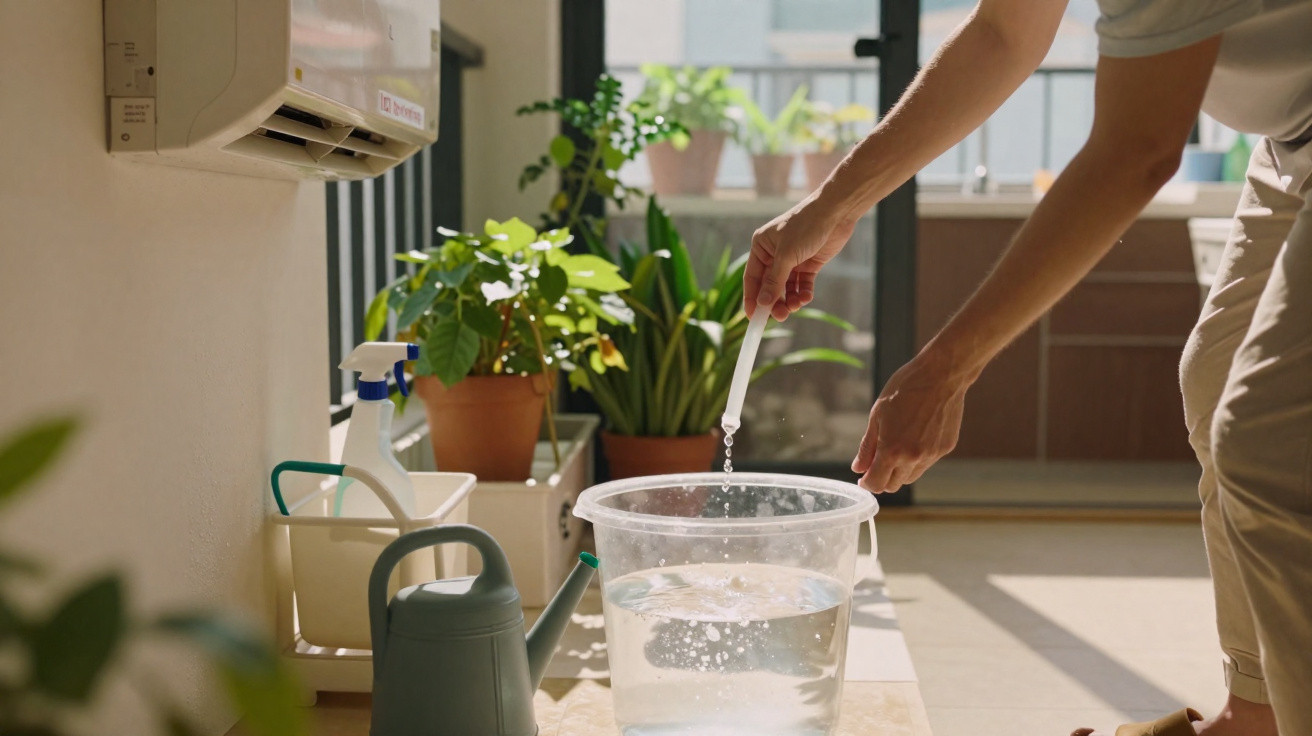
The water that drips from an air conditioner is produced when moisture in the surrounding air condenses, and it can be reused for certain household chores. Even if it looks clear and contains very few minerals, it runs through the unit’s drip tray and pipework and may pick up dust, micro-organisms and residues. For that reason, it must never be drunk or used to prepare food.
Where does the water that comes out of an air conditioner come from?
When the unit is cooling, warm, humid air meets the cold coil. Some of the water vapour turns into droplets, runs into the condensate tray, and is then carried out of the appliance through a drain hose.
Because this water comes from humidity in the air, it usually has a low concentration of mineral salts. However, that does not make it distilled or safe to drink: the liquid touches internal parts that can build up dust, rust, cleaning products and biofilms.
Which household tasks can this water be reused for?
Any reuse should be limited to tasks that do not involve drinking, food, or direct contact with the body. If you collect it in a clean container and use it soon afterwards, drain water can replace some treated mains water for activities such as:
- Washing floors on balconies, in garages, and in outdoor areas;
- Removing dust from gates, railings and garden furniture;
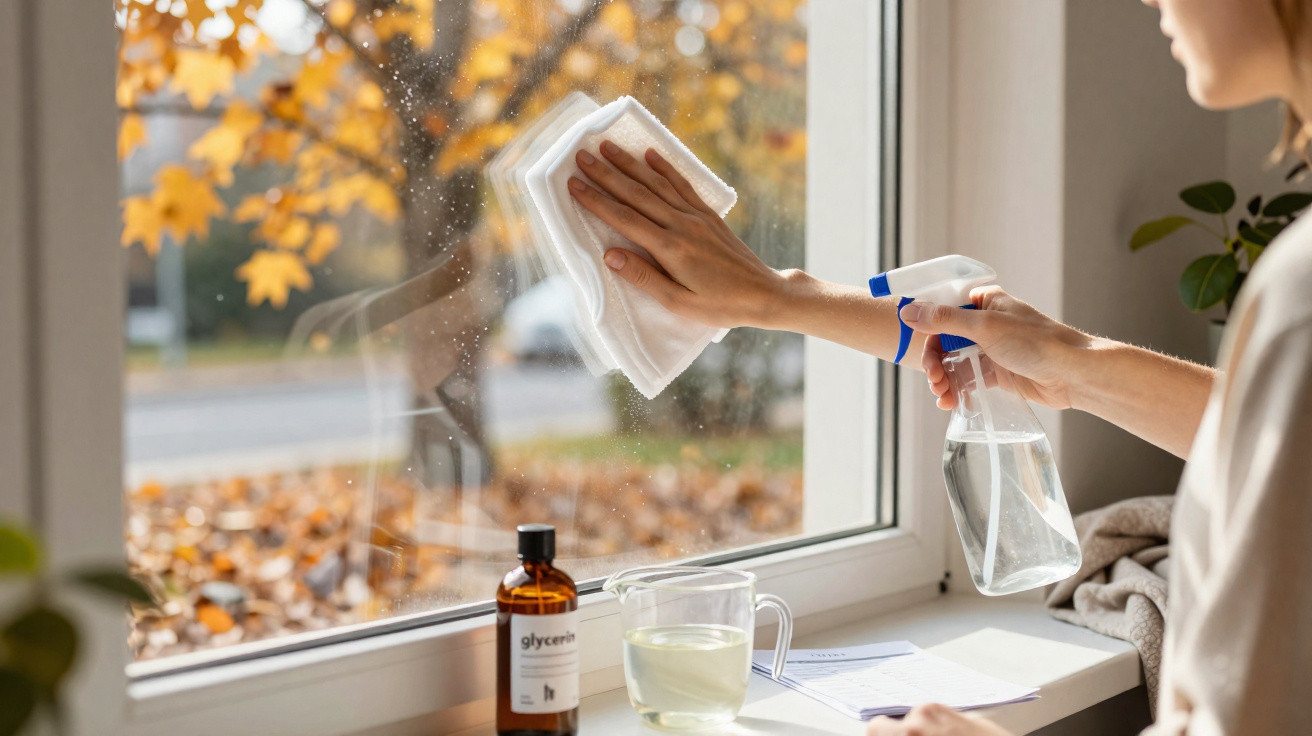
- Cleaning windows and mirrors with a suitable cloth;
- Doing the initial rinse of a car’s bodywork;
- Manually topping up the toilet cistern for flushing;
- Washing tools and items that do not come into contact with food.
Can you use water from the unit to water plants?
It can be used occasionally for ornamental plants, as long as you alternate it with tap water or rainwater. Since it contains very few minerals, it does not provide the nutrients plants need to grow and should not become the only source of irrigation.
Avoid using it on vegetables, culinary herbs and fruits that will be eaten, because the liquid may carry impurities from inside the equipment. You should also dispose of it if there is an unpleasant smell, any change in colour, or visible particles.
Which uses should be avoided for safety?
A transparent appearance does not prove microbiological quality. Condensation water has not undergone the treatment required for consumption, and it may sit in internal sections before reaching your container:
- Do not drink it or give it to animals;
- Do not use it for cooking or washing food;
- Do not apply it to skin, hair or wounds;
- Do not put it in aquariums, swimming pools or pet water bowls;
- Do not use it in humidifiers or respiratory devices;
- Do not store it for long periods in open containers;
- Do not reuse it if there is sludge, odour or discolouration.
How can you collect and store the water without creating another problem?
The hose should direct the liquid into a clean, stable container, ideally with a lid. Use the water within a short time, because keeping it stored for longer can lead to smells, microbial growth and mosquito breeding. The container should also be washed regularly.
Cleaning the filter, condensate tray and drain reduces the build-up of dirt, but it does not turn the liquid into drinking water. Reusing air conditioner water is safe when it remains restricted to cleaning and other non-food uses, helping you save treated water without compromising household hygiene.

Comments
No comments yet. Be the first to comment!
Leave a Comment