
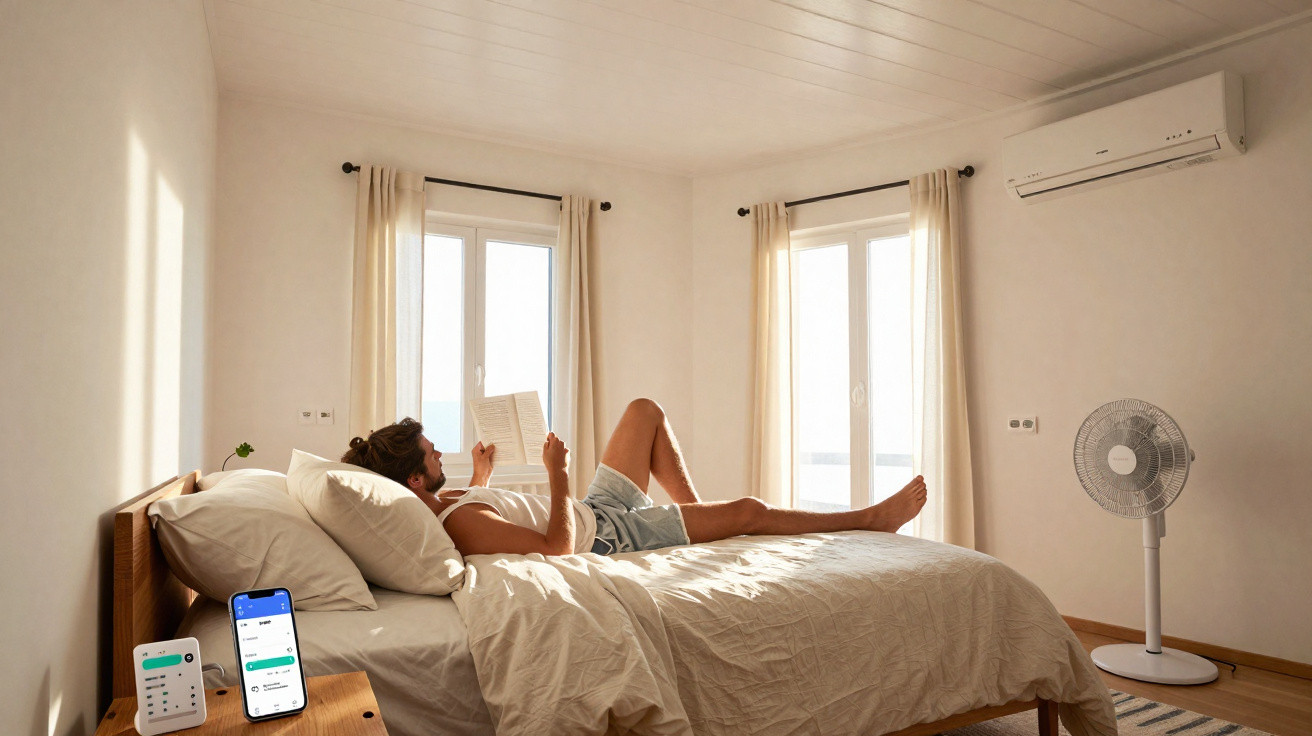
A relatively unfamiliar technology is steadily appearing on UK shopping lists.
Many households are looking for comfort without droning motors, parched throats or unpredictable energy costs. Once largely limited to high-end developments, a ceiling-mounted solution is beginning to enter the mainstream because it operates quietly and provides consistent comfort.
How a radiant ceiling works
A radiant ceiling manages indoor temperature by making the ceiling a broad, low-temperature surface. It uses either electric heating elements or pipes carrying moderately heated or cooled water. Rather than forcing air around the room, it transfers heat through radiation and mild convection. This keeps rooms pleasantly cool in summer and evenly warm during winter.
With no fan inside the room unit, the environment remains peaceful. There are no draughts or air currents that dry your eyes. Temperatures are generally more consistent throughout the space, including by windows and in corners.
No whirring blades, no dry airflow, just steady, room‑wide comfort that you barely notice operating.
Draught-free cooling and radiator-free heating
Fans circulate warm air and make your skin feel cooler, but they do not reduce the room's actual temperature. Standard air conditioning supplies chilled air, although it may be loud and frequently dries the air. A radiant ceiling instead alters the thermal balance of the room. During summer, ceiling surfaces are cooler than your skin, allowing your body to release heat naturally. In winter, those same surfaces emit soft warmth, eliminating the need for radiators on the walls.
Comfort and health: peaceful nights and gentler air
A quiet environment is particularly important overnight. As it produces neither fan noise nor intermittent bursts of air, a radiant ceiling is well suited to bedrooms. People commonly say they wake with fewer dry throats because no cold airflow is aimed towards their face.
The lack of substantial air movement can also benefit people affected by dust. Reduced turbulence means fewer particles are stirred up from shelving and carpets. For those with hay fever or asthma, this may lead to more comfortable evenings, particularly when windows are left on the vent setting.
The system lowers thermal stress at night, which supports deeper sleep and fewer wake‑ups during warm spells.
Energy use and costs: positioned between fans and AC
In terms of running costs, a radiant ceiling will usually sit between a basic fan and full air conditioning. Fans consume very little electricity, but cannot lower room temperatures. Air conditioning cools rapidly, but uses more energy and may feel severe. By distributing comfort consistently and preventing excessive cooling, radiant ceilings can reduce energy demand.
| Aspect | Fan | Air conditioning | Radiant ceiling |
|---|---|---|---|
| Upfront cost | £20–£80 | £1,200–£3,500 per room | £2,000–£6,000 per room equivalent |
| Running cost | Very low | High in heatwaves | Moderate, often lower than AC |
| Noise | Audible motor/airflow | Compressor and fan noise | Near silent |
| Comfort profile | Perceptual breeze only | Fast cooling, drafts possible | Even, draught-free comfort |
| Heating option | No | Some reversibles heat | Yes, same panels |
| Air quality impact | Stirs dust | Can dry the air | Low turbulence |
| Maintenance | Minimal | Filters and servicing | Low, if hydronic loop is sound |
Hydronic radiant ceilings work particularly well with heat pumps. For cooling, water generally circulates at around 16–20°C. When heating, the temperature increases to 28–35°C. These moderate temperatures are well matched to efficient heat-pump performance and prevent the sharp demand peaks that can increase bills.
More intelligent control and lower peaks
These systems perform most effectively through modest, continuous adjustments. Choose a moderate target temperature and allow the ceiling to operate steadily. Use daytime shading and, where safe, ventilate through windows overnight. This approach provides even comfort with fewer energy surges.
Small set‑point nudges deliver outsized savings when the system runs quietly in the background, hour after hour.
Installation and maintenance: hidden and unobtrusive
Once fitted, the system is concealed behind ceiling panels or plasterboard. There are no wall-mounted units, radiators on the floor or surfaces needing dusting. Installation must be undertaken professionally. Fitters install electric mats or hydronic panels, then connect thermostats for each zone. For most homes, this work is carried out during a renovation or ceiling refurbishment.
Upkeep is limited. Electric panels require straightforward inspections, while hydronic systems depend on regular heat-pump servicing and, on rare occasions, pressure topping-up. There are no in-room filters to replace or condensate trays beside the bed.
- Most suitable for insulated rooms where humidity is controlled.
- Effective in compact flats without space for wall-mounted units.
- Combines well with low-g glazing and solar shading.
- Enables multi-room zoning for more precise comfort.
New builds and retrofits: where radiant ceilings excel
Integration is straightforward in new homes. From the outset, designers can specify panel coverage, controls and pipework, without reducing headroom. In retrofit projects, installers commonly create a slim suspended ceiling or place modular panels in chosen areas, including living rooms and bedrooms. Smaller properties can benefit most because walls remain free and furniture arrangements stay flexible.
Choosing between a fan, AC and a radiant ceiling
For an instant, inexpensive answer to a brief heatwave, a fan remains the best option. It is affordable, portable and easy to use. Air conditioning is still the strongest option for homes that become severely overheated and require fast cooling, although it can be noisy and expensive to operate.
A radiant ceiling is intended for people seeking calm comfort throughout the year. It provides gentle cooling in summer and balanced heating in winter. Its priority is comfort you experience, rather than airflow you can hear. Although initial costs exceed those of a fan, they can often be lower than a whole-home AC installation once several rooms are considered.
What to consider before buying
First assess insulation and solar gain. Limit sunlight using blinds or external shading, seal gaps, and then size the radiant area to suit. Ensure the installer has a humidity-management plan. While cooling, panel temperatures must remain above the room's dew point to prevent condensation. A suitable controller tracks humidity and air temperature, automatically restricting the water temperature.
Ceiling coverage and height are also important. A larger radiant surface can operate at gentler temperatures and provide a more uniform feel. In principal rooms, typical systems cover 60–80% of the ceiling. Bedrooms generally need less output than living areas. Discuss zoning so bedrooms can be cooler overnight while living rooms are warmer in the evening.
A simple practical cost comparison
Consider a well-insulated, two-bedroom flat measuring 70 m². The following compares usual summer use during a hot month:
- Two 45 W fans used for eight hours each day: approximately 22 kWh per month. Comfort is improved, but the room temperature remains unchanged.
- Two split AC units using an average of 600 W each for four hours per day: about 144 kWh per month. Cooling is rapid, with noticeable noise.
- A hydronic radiant ceiling with a heat pump providing comparable comfort: often 25–40% less electricity than AC over the same period, as it operates with gentle set points and avoids over-cooling.
Results depend on climate, occupancy, shading and glazing. However, the broad pattern applies to most occupied flats: gradual, low-intensity cooling performs better than forceful, intermittent cooling for both comfort and energy use.
Key terms that make the technology easier to understand
Dew point: the temperature at which moisture forms condensation. During cooling, panels must remain above this temperature. A humidity sensor can assist.
Set point: the temperature you want to achieve. In summer, reduce it by 1–2°C overnight; in winter, raise it modestly to reduce peaks.
Radiant asymmetry: where one surface is considerably warmer or cooler than surrounding surfaces. Proper panel sizing minimises this effect and helps the room feel evenly balanced.
Where subsidies and combinations can help
Radiant ceilings can be combined effectively with heat pumps, smart tariffs and photovoltaic panels. Operating a heat pump with mild water temperatures suits time-of-use tariffs and self-generated solar electricity. During renovation, combining ceiling panels with improved insulation and airtightness produces greater benefits than any one of these measures alone.
If you are planning a broader refurbishment, ask installers about phased installation. Start with bedrooms to improve summer sleep, then move to living spaces. This distributes the expense while bringing early comfort improvements. Adding shading and adjusting windows can make a greater reduction in indoor heat without using additional electricity.





Comments
No comments yet. Be the first to comment!
Leave a Comment