
It is a Tuesday evening, the sort that already seems to have gone on far too long.
At last, you load the dishwasher, press start and walk away with a small sense of achievement. Later, you open the door expecting gleaming glasses and spotless plates… only to find a cloudy film, pasta still stuck on and strange gritty residue on the bowls. You run through the steps: the right programme, enough detergent, racks only half full. So what went wrong?
In plenty of homes, the explanation lies in the pipework rather than the appliance. The water reaching the dishwasher first is often cold or merely lukewarm. Those vital opening minutes can determine whether dishes emerge sparkling or a little unpleasant. The difference begins before you ever press “Start”.
One small routine can make all the difference.
Why the first rush of water can make or ruin a dishwasher wash
When a dishwasher starts, it is easy to picture hot jets immediately stripping away grease. In reality, it is less impressive. In many kitchens, the first water entering the appliance has been sitting in the pipes and cooling down. That means the cycle can begin with an inconvenient fact: the dishwasher is attempting to wash with water too cool to melt butter, never mind yesterday’s lasagne.
During this opening stage, detergent needs heat to dissolve fully and become active. Without enough warmth, powder clumps, pods may not open correctly and gel simply spreads around. The appliance still completes its programme, but it is already at a disadvantage from minute one. You may not notice it, but your plates will.
On a quiet suburban road near Manchester, a technician called Liam began to spot the same trend. He heard one complaint repeatedly: “My dishwasher is new, but it doesn’t clean like it should.” He would check the water at the kitchen tap. For the first 20 seconds, it was cool; after 30–40 seconds, it climbed sharply to 55–60 °C. He would then run an empty cycle and monitor the readings.
In homes where people ran the hot tap first, the inlet water was already near the ideal temperature. Detergent dissolved better, greasy deposits were reduced and there were fewer return visits for supposedly “faulty” machines. In a small survey involving 20 clients, Liam found that people who adopted this one habit reported around 30% fewer repeat washes over a month. There was no miracle product or intensive clean involved-just a few seconds of hot water from the tap before pressing a button.
The reasoning is straightforward, and almost frustratingly clear once you notice it. Dishwashers are built to work most effectively when water reaches a suitable temperature quickly. Although many models can raise the temperature themselves, doing so takes both time and energy. Starting with cold water means the earliest part of the programme is spent heating up rather than cleaning.
Those initial sprays influence whether baked-on egg starts to loosen or remains firmly attached. With hot water from the outset, food softens quickly, detergents break down fats and enzymes can begin working immediately. With lukewarm water, the whole process slows. You still hear that reassuring hum from the kitchen, but inside it is rather like asking someone to wash a greasy pan with cold water and weary hands.
The easy hot-water ritual for better dishwasher results
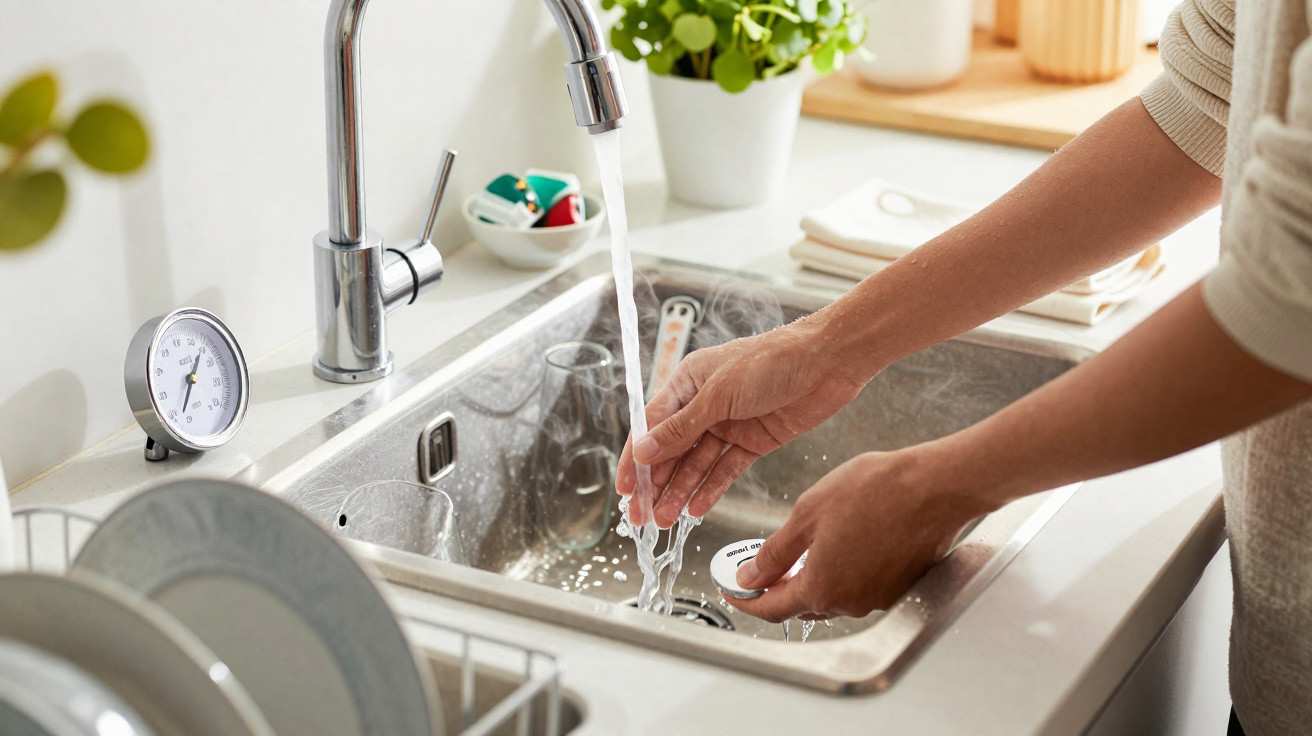
The approach is almost ridiculously easy: before starting the dishwasher, run the kitchen hot tap until the water is properly hot. Not vaguely warm-hot enough that you would not want to hold your fingers beneath it for long. While that heated water is still in the pipes, turn off the tap and start the dishwasher straight away.
This brief flush clears the cooled water sitting in the pipe between the heater and sink, and therefore the dishwasher supply too. When the dishwasher opens its valve for its first fill, it can draw water that is already at temperature. The programme therefore begins at full strength instead of gradually warming up like a sluggish boiler on a winter morning.
To be honest, it can feel like yet another task to remember on a day that is already packed. You may be managing children’s homework, late emails, leftovers and that odd pan which never seems to get properly clean. Running the hot tap beforehand can sound like one of those “perfect home” tips found more on Pinterest boards than in ordinary life.
Let’s be honest: hardly anyone actually does this every day. Even so, when people try it only a few evenings each week, they tend to see results sooner than expected. There is less cloudy film on glasses, tomato sauce marks that do not require another wash, and fewer uncomfortable “uh… this plate’s still dirty” moments when friends visit. It is a minor change, yet it is oddly satisfying-rather like finally working out why your phone battery was draining so quickly.
Inside a dishwasher, the process is partly physics and partly chemistry. Hot water lowers surface tension, allowing it to get beneath dried food more readily. Grease that clings on at 30 °C softens and lifts away at 50–60 °C. Detergent makers formulate their products on the assumption that the first contact with dishes will happen at a fairly high temperature. Running hot water first simply gives the dishwasher the conditions it was designed to use.
There is an energy consideration too. If the incoming water is already heated, the dishwasher’s internal heater has less to do. This may reduce effective wash times and help avoid those underwhelming “eco” programmes that can seem slightly too mild. Oddly enough, spending an extra 20–30 seconds at the sink can make the overall wash more efficient, both in cleaning performance and in reducing the need to wash items again.
Creating a smart-start dishwasher routine in your kitchen
The easiest way to make this habit stick is to link it with something you already do. For instance, before pressing the dishwasher start button, go to the sink, turn on the hot tap and quickly clear the worktop while it warms up. Once it is hot, switch it off and go directly back to the appliance. It is one simple sequence.
Every property is different, so the required time will differ too. In a small flat with short pipe runs, 10–15 seconds may be enough. In an older house with lengthy pipes from the boiler, it could take 30–45 seconds. Test it once with your hand and, if you want to be precise, an inexpensive kitchen thermometer. After that, it becomes instinctive rather than scientific: you will recognise the point at which the water changes from lukewarm to genuinely hot.
A few frequent mistakes can lead people to believe the method “doesn’t work”. One is waiting too long to start the dishwasher after running the tap. Leave it for long enough and the water in the pipe cools again, putting you back at square one. Another is selecting very short or quick programmes and expecting exceptional results from heavily soiled dishes. The hot-water boost helps, but it cannot turn a 30-minute programme into an industrial deep clean.
Then there is the pre-rinsing habit. Many people scrub plates under running water until they look nearly clean. This can waste water and may also confuse modern sensors, which need some food residue to determine how hard the dishwasher should work. A better middle ground is to scrape plates, perhaps give heavy sauce a quick splash, and then allow the hot water and detergent to work inside the machine, where they are far more effective.
Experts who work with dishwashers daily are remarkably united on the value of that first flow of hot water.
“Most of the time, the machine isn’t the problem,” says one veteran repair tech. “It’s the water going in and the way people use it. Give the dishwasher hot water from the start and half the ‘bad cleaning’ calls disappear.”
- Run the hot tap until the water is genuinely hot, rather than merely lukewarm.
- Start the dishwasher immediately after switching off the tap.
- Use the correct amount of detergent for your water hardness.
- Select a programme that suits how soiled the dishes actually are.
- Avoid heavy pre-rinsing; scraping is generally sufficient.
Rethinking “lazy cleaning” with smart appliances
There is a quiet satisfaction in opening the dishwasher to find every glass crystal clear and each fork shining. It makes the kitchen seem under control, even if life is not. Running the hot water first becomes a small daily trade-off between effort and reward: a few additional seconds in exchange for noticeably improved results.
We often discuss smart homes and connected appliances, but many of the most useful improvements still come from modest adjustments like this. There is no app or subscription involved, only a better connection between your plumbing and your dishwasher. It can also make you view other household habits differently: what else might work better if it were set up correctly from the first second?
On a hectic evening, the contrast can feel almost symbolic. You can either struggle with streaked glasses and gritty bowls, or give the system what it quietly required all along: heat at the right time. The tip travels by word of mouth, from neighbour to neighbour and message to message. Try it once, pay attention to the following load, and see whether your dishwasher has been underperforming-or simply not receiving enough heat.
| Key point | Detail | Benefit for the reader |
|---|---|---|
| Heat the water first | Run the hot tap until the water is truly hot before starting the dishwasher | Ensures water reaches an effective temperature from the outset to dissolve grease and detergent |
| Start at the right time | Start the dishwasher immediately after turning off the tap | Prevents water in the pipes from cooling and reducing washing performance |
| Pre-rinse less | Limit yourself to scraping plates instead of almost fully washing them by hand | Saves water and allows the sensors and detergent to work as intended |
FAQ:
- Do I still need this if I have a modern, high-end dishwasher? Yes. Even premium models perform better when the incoming water is already hot, particularly during the first minutes of the programme.
- Won’t running the tap first waste water and energy? You use slightly more water at the sink, but may save by avoiding repeat washes and allowing the dishwasher to heat water more efficiently.
- How hot should the water be for best cleaning? Most detergents work best when the water entering the appliance reaches around 50–60 °C during the wash phase.
- Is this still useful if my dishwasher heats its own water? Yes, because it reduces the time and energy the machine needs to raise the temperature from cold to hot.
- What if my tap never gets really hot? This may indicate an issue with the water-heater setting, the distance from the boiler or a mixing valve-something worth investigating if your dishwasher consistently performs poorly.



Comments
No comments yet. Be the first to comment!
Leave a Comment