
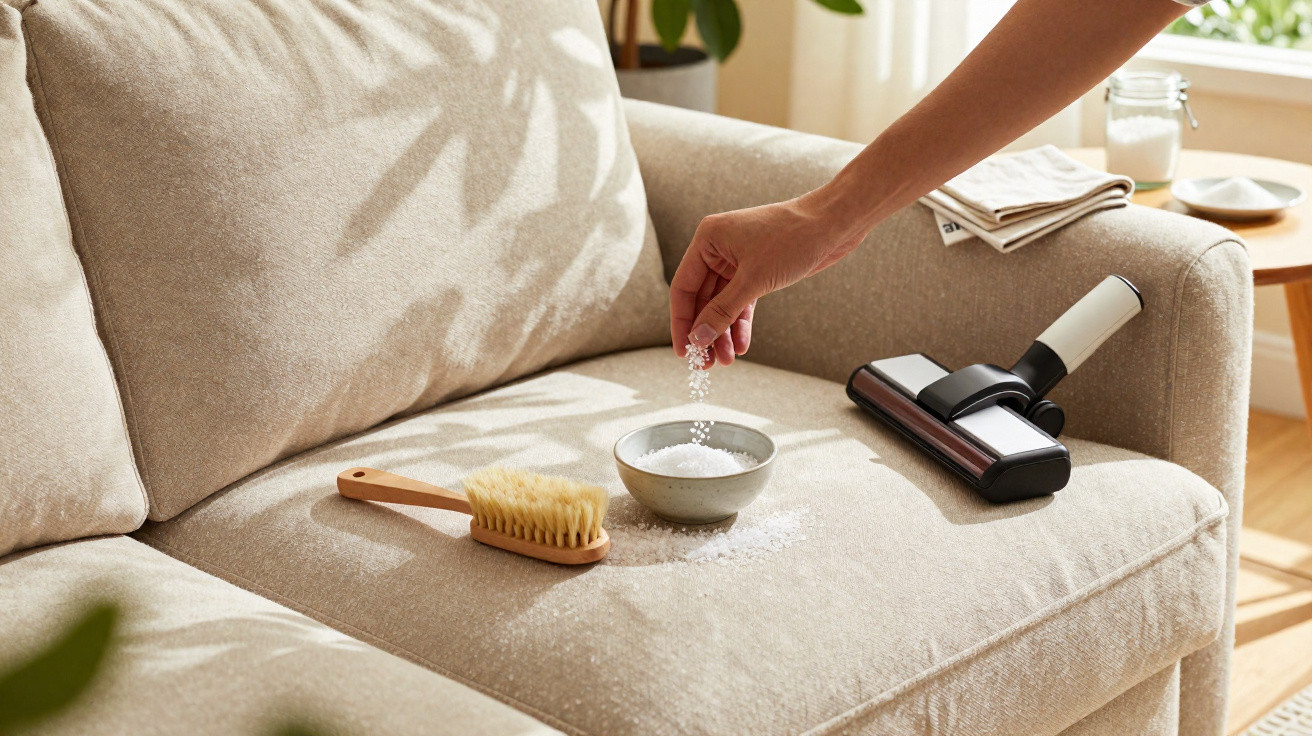
Between streaming binges, children’s snacks and the dog’s preferred place to sleep, the sofa gradually becomes the most heavily used surface in the home. It collects dust, dampness and odours well before there is time for a thorough clean.
The concealed health issue in your living room
European public-health bodies caution that a single square metre of upholstered fabric may contain millions of dust mites. These microscopic organisms live on shed skin cells, while the warm, mildly humid filling of a sofa provides near-ideal conditions.
For anyone with asthma, eczema or seasonal allergies, accumulated mites, pet dander and fine dust may provoke symptoms even if the room appears clean. Food, perspiration and smoke odours also settle into the fibres, gradually affecting the air quality in the living room.
Regular sofa care is less about interior design and more about keeping the air you breathe at home reasonably clean.
Studies have associated indoor soft furnishings with a constant low-level presence of airborne allergens. Each time somebody sits down or rearranges a cushion, minute particles are released and carried around the room. Leaving long intervals between cleaning also allows bacteria and mould spores to establish themselves in the fabric’s deeper layers.
The everyday household ingredient that refreshes fabric
Rather than immediately buying costly sprays, many cleaning specialists now recommend an unremarkable kitchen-cupboard essential: standard table salt. Although sodium chloride has chiefly been researched as a food ingredient, its physical characteristics can make it unexpectedly helpful for textiles.
Salt crystals draw moisture from both the air and damp fibres. This hygroscopic effect lowers the slight surface humidity that enables bacteria and mould to reproduce. It can also influence odour molecules held within the fabric.
- Salt pulls remaining moisture from the fabric’s upper fibres.
- It captures some volatile compounds that create musty odours.
- A dry, salty micro-environment makes surface microbial growth less favourable.
- On light-coloured fabrics, it may modestly brighten areas that have become dull, without using strong bleach.
Salt does not act like a miracle detergent, but it works like a simple, dry filter that absorbs moisture, smells and light organic residue.
Laboratory research involving porous materials indicates that fine salt can measurably reduce surface humidity in under an hour. Applied to a sofa, this can leave the upholstery feeling fresher and smelling less stale, particularly in compact rooms that remain closed up.
How the “salt sofa reset” works in practice
This approach is straightforward and fast, making it easier to use regularly. It is appropriate for cotton, linen, velvet and most microfibre upholstery, but not for leather or imitation leather, which require alternative care.
The step-by-step routine
| Stage | What to do | Suggested time |
|---|---|---|
| 1. Vacuum | Vacuum the seat, back and gaps with a soft brush attachment to lift loose debris and crumbs. | 10 minutes |
| 2. Sprinkle | Distribute 2–3 tablespoons of fine table salt per square metre over the upholstery. | 5 minutes |
| 3. Massage | Use a dry brush or cotton cloth to lightly work the grains across the surface. | 5 minutes |
| 4. Wait | Do not use the sofa for 30–40 minutes; in damp homes, leave it for up to an hour. | 30–60 minutes |
| 5. Remove | Vacuum once more, removing the salt and the residue it has absorbed. | 10 minutes |
Once the process is complete, upholstery will generally feel drier and less sticky, even where there was no obvious stain. The familiar “living room smell” often becomes less noticeable, particularly during colder months when windows are kept shut for extended periods.
How often to do it
Indoor-air experts recommend a gentle refresh every two to three weeks in households with pets, smokers or small children. In less active homes, doing it monthly is often sufficient to manage odours. As the process requires only a few spoonfuls of salt, it remains very inexpensive.
Short, frequent sessions tend to work better than a rare, heavy clean that never quite fits into a busy week.
Where salt reaches its limit
Salt can address dampness and mild smells, but it will not dissolve grease or lift dark, set-in marks. Other issues require more focused treatment, preferably before they have fully dried.
- Oily marks from skin or food: Immediately blot carefully with kitchen paper, then dab using a cloth with a little isopropyl alcohol; always test first in an inconspicuous spot.
- Coloured drinks, tea or wine: Act promptly with a 50:50 mixture of white vinegar and water, applying it sparingly with a damp cloth.
- Persistent odours such as smoke or urine: Cover the affected area with dry baking soda, leave it for several hours and vacuum it away thoroughly.
- Shiny synthetic fabrics: Test every treatment on the rear or underside first, checking for staining or dullness.
In homes where people smoke indoors, nicotine and tar deposits can adhere firmly to the fibres. Professional cleaners commonly advise occasional steam cleaning alongside home methods, because heat reaches deeper layers that dry absorbents such as salt cannot access.
Natural partners: creating a low-chemical sofa routine
For reasons of cost, health and environmental impact, many households are seeking to reduce their reliance on powerful cleaning chemicals. A combination of basic cupboard ingredients can maintain fresh fabrics without intense fragrances or harsh solvents.
- Baking soda: particularly effective against pronounced odours; combining a small amount with salt improves both moisture and odour absorption at once.
- White vinegar: helps release light grease and certain colourants; apply it to a cloth rather than spraying directly, to prevent the foam from becoming too wet.
- Steam cleaning: a domestic steam cleaner operating at approximately 100 °C may reduce mites and surface mould, provided the care label permits it and the sofa is allowed to dry fully afterwards.
- Lemon-based freshener: water mixed with a little fresh lemon juice in a spray bottle gives a fast, subtle scent without synthetic fragrance; use it only on colourfast upholstery.
Households that rely mainly on these basic ingredients often report spending noticeably less on branded cleaning products each year.
European consumer organisations have observed a distinct trend: families following a combined natural routine, alternating salt, baking soda, vinegar and occasional steam, reduce a substantial part of their yearly cleaning spend. They also lessen their total exposure to volatile organic compounds from sprays and fragranced products.
Balancing convenience, comfort and indoor air
The sofa is central to home life, but it seldom receives the attention given to kitchen worktops or bathroom tiles. This matters because people spend many hours each day in close proximity to this one item of furniture.
Indoor-air researchers frequently point out that maintaining textiles can matter as much as ventilating a room or replacing a ventilation-unit filter. Crumbs and layers of dust left in upholstery slowly decompose, sustaining what specialists term the “indoor dust ecosystem”.
Thinking of the sofa as a shared breathing space, not just a seating area, changes how often many people choose to care for it.
Using salt routinely as a simple, low-effort measure sits between undertaking a complete deep clean and taking no action at all. It helps reduce moisture and odour levels without introducing additional synthetic chemicals into an already chemically busy home. For households with limited time, this balance of speed, practicality and health protection often determines whether the habit continues after the first try.
Beyond the sofa: where this trick also helps
The same principle can assist with maintaining other soft furnishings that are rarely machine-washed. Mattresses, upholstered headboards, fabric dining chairs and car seats all gather comparable combinations of dust, sweat and everyday odours.
Using a gentler form of the salt method on these items, with less salt and shorter waiting periods, can freshen them between intensive cleans. For mattresses, applying a thin layer of baking soda with salt before leaving the room to air beside an open window often makes a noticeable difference to bedroom freshness.
For allergy sufferers, medical guidance continues to focus on hot-washing removable covers and using protective encasements. However, frequent small interventions on furniture parts that cannot be removed can help reduce the home’s overall allergen burden. Salt is not a substitute for medical care or professional cleaning when either is required, but it offers a simple, accessible option already available in most kitchen cupboards.

Comments
No comments yet. Be the first to comment!
Leave a Comment