
You know that low-level embarrassment when you open the blinds on a sunny morning and notice every slat has collected its own fuzzy coat of dust? The light catches it, and your supposedly “clean enough” home suddenly appears to have been lightly air-fried in grey fluff. You peer at the marks and smears left by your previous attempt at wiping them, wondering whether everyone can see them or whether it is just you. Then you vow to deal with the blinds properly at the weekend… and naturally, it never happens.
Let’s face it: hardly anyone dusts their blinds as often as they ought to. They are awkward, dull and surprisingly slow to clean for such a straightforward-looking feature. So when I first watched someone pull an old pillowcase over a blind slat and run it along, I stopped scrolling immediately. It looked like a cleaning magic trick. Better still, once you give it a go, it works even more effectively than it appears to.
The day the blinds finally defeated me
My breaking point came on a Tuesday, which already seems purpose-built for mild misery. I was working from home, only half paying attention to a video call, when the sun shifted and illuminated the living-room blinds. Each slat had a strip of pale, soft fluff on it: the kind of dust that manages to look harmless and revolting at the same time. My blinds looked as though they were dressed in woolly jumpers.
I did what we all tend to do and decided I would clean them “later”. Later became “this weekend”, and that became “before Mum visits”. She arrived, said the house looked lovely, then casually dragged a finger over one slat. The clean line she left behind could have been submitted as courtroom evidence. I laughed, but privately I knew the blinds had beaten me and I needed another approach.
I had tested everything. Those fluffy wand-like dusters which supposedly collect dust, but mainly seem to redistribute it. Microfibre cloths that left smears and sad little trails of lint. Even the vacuum cleaner’s small brush attachment, which was rather like mowing a football pitch with nail scissors. Each effort left me irritated, sticky and not even halfway across the window.
The strange pillowcase hack that really works
I found the pillowcase answer in the most reliable of places: an overly curious browse through cleaning videos when I should have been doing almost anything else. One woman stood casually in her kitchen, slipping an old pillowcase over a blind slat and drawing it along. There were no chemicals or specialist tools, only bedding that had retired from pillow duty and returned as a dust assassin.
I doubted it. A pillowcase? Honestly? Is this where we are now? Yet there was something deeply satisfying about the simple, smooth movement. You do not need a separate wipe across the top and bottom of every slat, or any uncomfortable wrist twisting. One confident pass left the blind looking… clean. Not merely “fine from a distance” clean, but genuinely clean.
How to do it without overthinking it
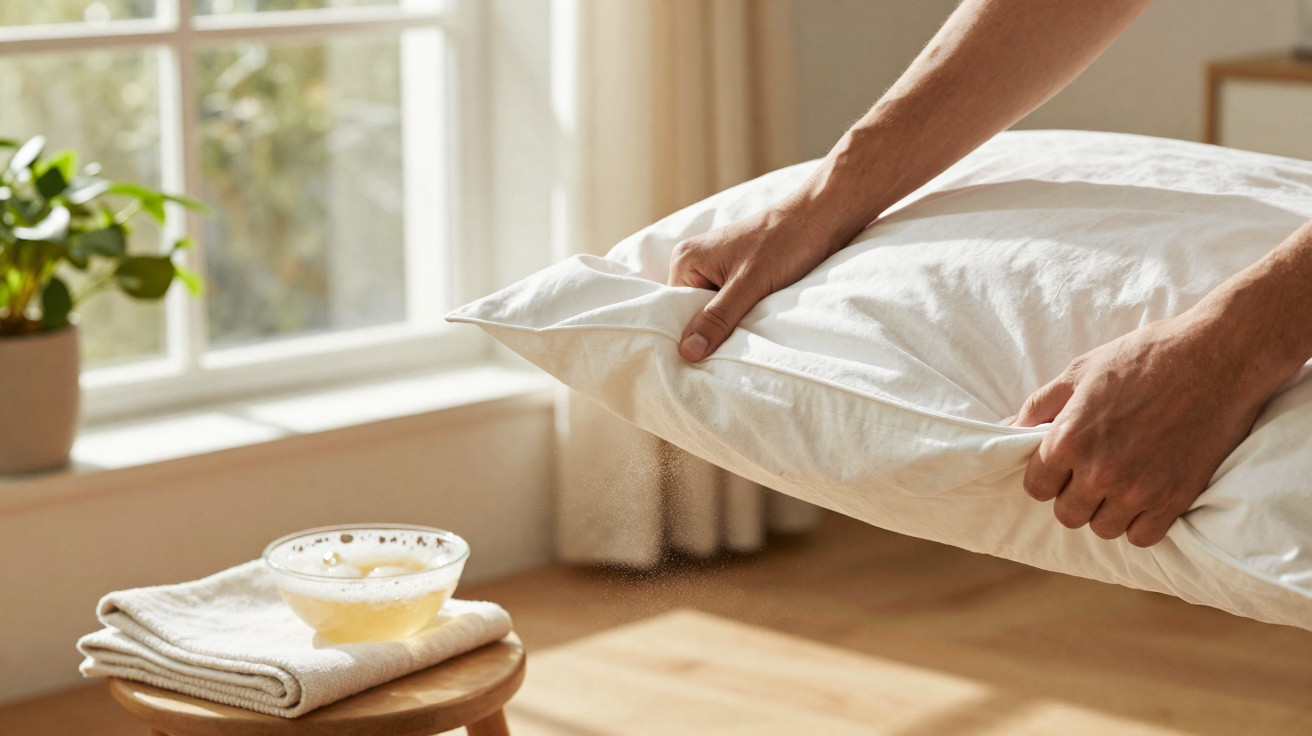
The technique is so easy that it feels almost dishonest. Take an old pillowcase - not the nice guest-bed one, but the one with a faint unexplained stain that never fully disappeared. Open it, then place one blind slat between its two layers, creating a small pillowcase sandwich. Put your hand on the outside and press the fabric against both sides of the slat.
Next, pull it along. Make one steady, firm pass from one end of the slat to the other. Since the pillowcase covers both surfaces simultaneously, the dust cannot drift away or resettle elsewhere. Instead, it is caught within the material, like a miniature vacuum bag that can simply go in the wash. After only a few slats, the pillowcase begins to feel heavier and dirtier in that gratifying, slightly unpleasant way.
The first time I used it, I accidentally started timing myself. Three minutes into a podcast, I had already reached halfway down the window. Usually, that is where I would start slowing down, staring blankly ahead and seriously reconsidering my choices. With the pillowcase method, the pace was calm and almost rhythmic: swipe, next slat, swipe, next slat. No fiddling about and no returning to fix streaky patches.
Why it is twice as fast - and not only in your head
There is a practical explanation for why this seems much quicker, beyond the smug pleasure of being efficient. With a cloth or duster, each slat normally needs attention twice: once across the top, then again underneath. That means twice the motions, twice the time and, usually, twice the irritation. Your hands can also cramp as you twist them awkwardly to reach the underside.
A pillowcase cleans both sides in one motion. Your hand remains in a comfortable position, rather than forcing you into a bargain-basement yoga pose to deal with the lower surface. It is also larger than an ordinary cloth, creating more contact area as it wraps around the slat. More fabric meeting more dust during one pass means fewer repeat attempts and fewer missed spots to revisit.
There is another unnoticed time benefit: you do not have to pursue loose dust afterwards. Standard dusting tools often send debris into the air. You wipe, it floats away, then lands on the windowsill or two slats further down, taunting you. As the pillowcase holds the dust inside, the job remains contained and neater. Once the blinds are finished, you do not need to clean the surrounding area to deal with the fallout.
No streaks, even in unforgiving daylight
The issue of streaks bothered me more than I would care to acknowledge. Blinds are among those surfaces that reveal everything when the light strikes at an unfortunate angle. A slightly wet cloth or unsuitable cleaner leaves faint lines, as if the dust has been rubbed around rather than removed. You end up with sort-of-clean slats that still appear grimy in strong sunshine.
The appeal of the pillowcase technique is that it is dry. There is no spray, polish or “multi-surface miracle mist” involved: only fabric meeting dust. Streaks generally result from moisture drying unevenly or cleaner residue being left behind, and avoiding moisture altogether bypasses the problem. The finish is even and matte, without unsightly lines appearing whenever the sun is feeling ruthless.
For blinds that are especially filthy from kitchen grease or years of neglect, lightly mist the inside of the pillowcase with a mild cleaner - but use very little. The aim is to make the fabric just tacky enough to grip the dirt, not damp enough to smear it. The slats can then come clean without the glossy, streaky fuss that follows spraying product directly onto them.
The quiet pleasure of seeing dust vanish
There is a modest, faintly embarrassing satisfaction in opening the pillowcase afterwards and seeing everything it captured. The grey fluff, tiny gritty particles and all the matter you were breathing in whenever you pulled the blinds open. It is proof of a small household triumph. You achieved something, and the crumpled cotton holds the evidence.
We all know the feeling of returning to a freshly cleaned room and sensing something in us loosen. With blinds, that feeling is stronger because they sit constantly in your eyeline: framing windows and shaping the mood of the room. Clean slats make the whole space seem brighter and crisper. Rather than soaking up the light, the dust-free surfaces reflect it, and the room suddenly feels less worn out.
There is also a physical relief in having a job that involves less faff. You are not switching between tools or repeatedly shaking a cloth over the bin. Once you find the rhythm, the movements become effortless. The pillowcase makes a soft sound as it glides along each slat, a few motes dance in the air, and you feel strangely pleased - as though you have at last discovered a code everyone else has pretended to understand.
Making an old pillowcase your favourite cleaning tool
The best part of this hack is that there is nothing to purchase. You do not need a specialist “blind-cleaning glove” or an oddly designed plastic gadget that will end up at the back of a cupboard. An old pillowcase is enough: the sort sitting at the bottom of the linen basket, waiting for a guest who never comes. Giving it another use is quietly satisfying.
Cotton and cotton-blend pillowcases are particularly effective, especially well-used ones that have become soft yet slightly grippy. New, extremely smooth sateen cases are more likely to slide over dust than pick it up. Fabric that is a little rougher and has survived a hundred washes works almost like a gentle static net. It clings just enough to capture the dust and keep hold of it.
A small ritual that changes the feel of a room
After you have done this a few times, it no longer feels like a major cleaning “task” and becomes something you perform automatically. You spot the blinds looking slightly dull in the light, reach for the pillowcase and give the slats a quick pass. It takes five minutes at most, rather than sacrificing an afternoon to one group of windows and increasing resentment.
There is also a subtle mental change that comes from solving something that once irritated you. It may sound dramatic, but taking the friction out of small chores like this alters how home feels. The space stops being a list of things you’re failing to keep up with and becomes somewhere you can actually relax in. It is a tiny psychological trick powered by a spare piece of fabric.
And yes, when somebody eventually notices and asks, “Your blinds always look so clean, how do you keep on top of them?” you get a small inner glow. You can reveal the method or keep it as your secret superpower. Either way, you will not look at an old pillowcase quite the same way again.
The reality of “perfect homes” and why this hack feels different
Glossy interior photographs conceal a quiet untruth: no one’s blinds look like that constantly. Actual homes collect dust, and real people have other priorities. Most of us are simply attempting to keep the chaos somewhat manageable around work, children, sleep and the occasional effort at a social life. Nobody puts spending an hour on their blinds high on their list of wishes.
That is why the pillowcase trick connects so well. It does not require you to become a different sort of person: someone who schedules “blind maintenance” in a colour-coded planner. It simply turns one frustrating chore into something speedy and oddly gratifying. For a few minutes, you can feel like the capable version of yourself without giving up your entire Saturday.
That is the understated truth behind cleaning hacks that genuinely last: they are not about impressing visitors or pursuing a Pinterest-perfect ideal. They remove enough friction that you finally get the job done. On paper, putting a pillowcase over a blind is hardly revolutionary, but in reality it quietly changes the entire task. The blinds stop being “that job you keep putting off” and become something that is only one quick swipe away from looking as though you have been on top of things all along.
So, the next time sunlight streams through the window and exposes every dusty secret hiding on your blinds, do not groan and walk away. Take the old pillowcase from the back of the drawer. Slide, swipe, repeat. Then enjoy that small private moment as you step back, tilt your head and think: that was easier than I’ve been pretending for years.
Comments
No comments yet. Be the first to comment!
Leave a Comment