
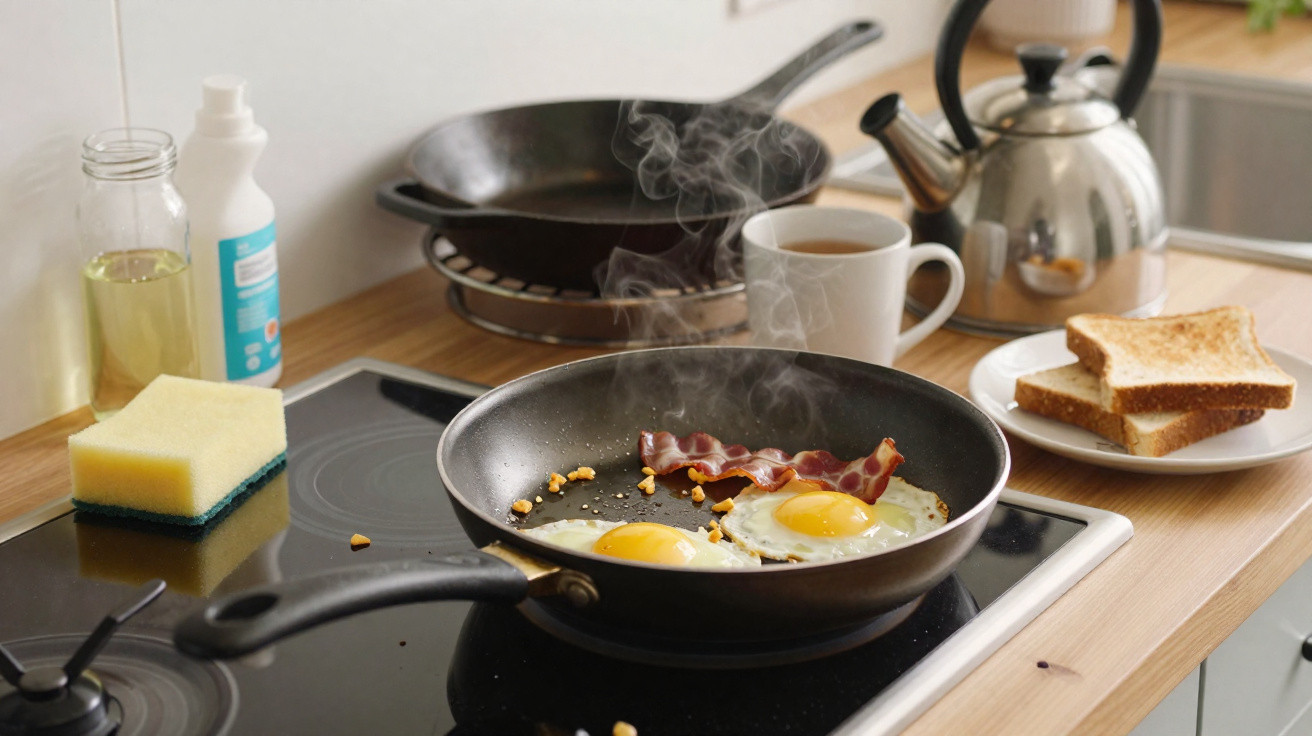
Your breakfast fry-up can reveal why your pan deserves a brief rest before you start scrubbing.
Once the eggs, bacon and tomatoes are done, it is tempting to rinse and scour the pan straight away. Pause first. A little cooling time can safeguard coatings, stop the base from warping and even improve the flavour of your next meal. It comes down to heat, oil and timing.
Why a pause protects your pan
If cold water hits a red-hot pan, its metal contracts unevenly. The base can buckle, while non-stick coatings may develop micro-cracks. Food then begins to cling earlier, prompting tougher scrubbing that causes further wear. What seems like a two-minute time-saver can turn into a costly routine.
Allowing the pan to reach “warm but safe to touch” limits thermal shock. Its surface has time to settle, and fats firm up slightly, helping loosen leftover food. Gentle washing then becomes enough. Your wrist and your wallet both benefit.
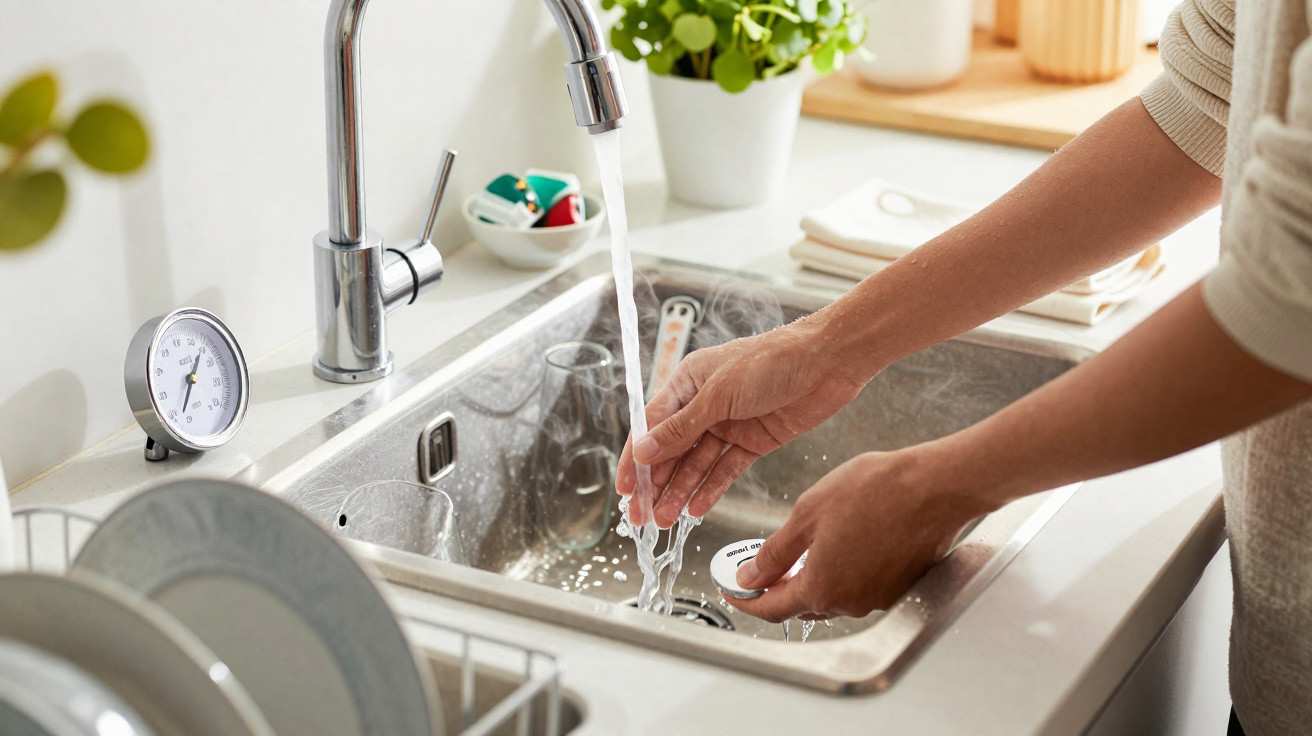
Golden rule: never douse a hot pan under a cold tap. Wait until it’s warm, not hot, then clean with mild heat and a soft sponge.
The 10-minute rule
Professional cooks often follow an easy routine: switch off the hob, pour surplus fat into a heat-safe jar, then leave the pan on a cool ring for 10 minutes. Clean it afterwards, while it remains warm rather than scorching.
That residual warmth lets water and a small drop of detergent release proteins and sugars. There is no need for aggressive scrubbing, the cooking surface retains its texture, and the base remains level.
Different pans, different care
Every pan surface needs its own clean-up method. Match your approach to the material.
| Pan type | Best immediate step | Avoid | Why it helps |
|---|---|---|---|
| Cast iron | Cool 10 min, wipe, add a film of oil, heat 1 min to set | Soaking, harsh soap, sitting wet | Preserves seasoning, stops rust, improves non-stick |
| Carbon steel | Cool 10 min, deglaze with hot water, dry, oil lightly | Dishwasher, citrusy detergents | Builds patina, resists sticking |
| Stainless steel | Cool to warm, deglaze with hot water, mild detergent | Cold shock from tap to pan | Releases fond, keeps base flat |
| Aluminium non-stick | Cool to warm, soft sponge, no abrasives | Metal utensils, aerosol sprays, high heat empty | Protects coating, delays peeling |
| Ceramic-coated | Cool to warm, soak briefly if needed, non-abrasive pad | Thermal shock, scouring powders | Prevents micro-cracks in glaze |
Smarter pan cleaning after breakfast
- Deglaze while warm: Pour a splash of hot water into the pan and swirl it around. Stuck-on pieces come away and can form the base of a quick gravy.
- Use heat sensibly: Warm water softens residue that cold water can set hard. Water that is hot, but not boiling, is effective.
- Pick the proper tool: Use a soft sponge on non-stick, a nylon brush for stainless steel, and coarse salt with a towel for cast iron.
- Dry straight away: Rust and water marks reduce a pan’s lifespan. Heat it for 30 seconds to remove remaining moisture.
- Oil where appropriate: A teaspoon of neutral oil helps maintain the seasoning on cast iron or carbon steel.
A thin, invisible film of oil on iron pans isn’t dirt. It’s protection. Wipe off excess, then leave a whisper of oil behind.
Removing stuck bits and strong smells
Stainless steel
In the warm pan, bring a centimetre of water to a simmer. Use a wooden spatula to lift the residue. For stubborn sugars, add a pinch of bicarb. Rinse, then dry the pan hot.
Cast iron and carbon steel
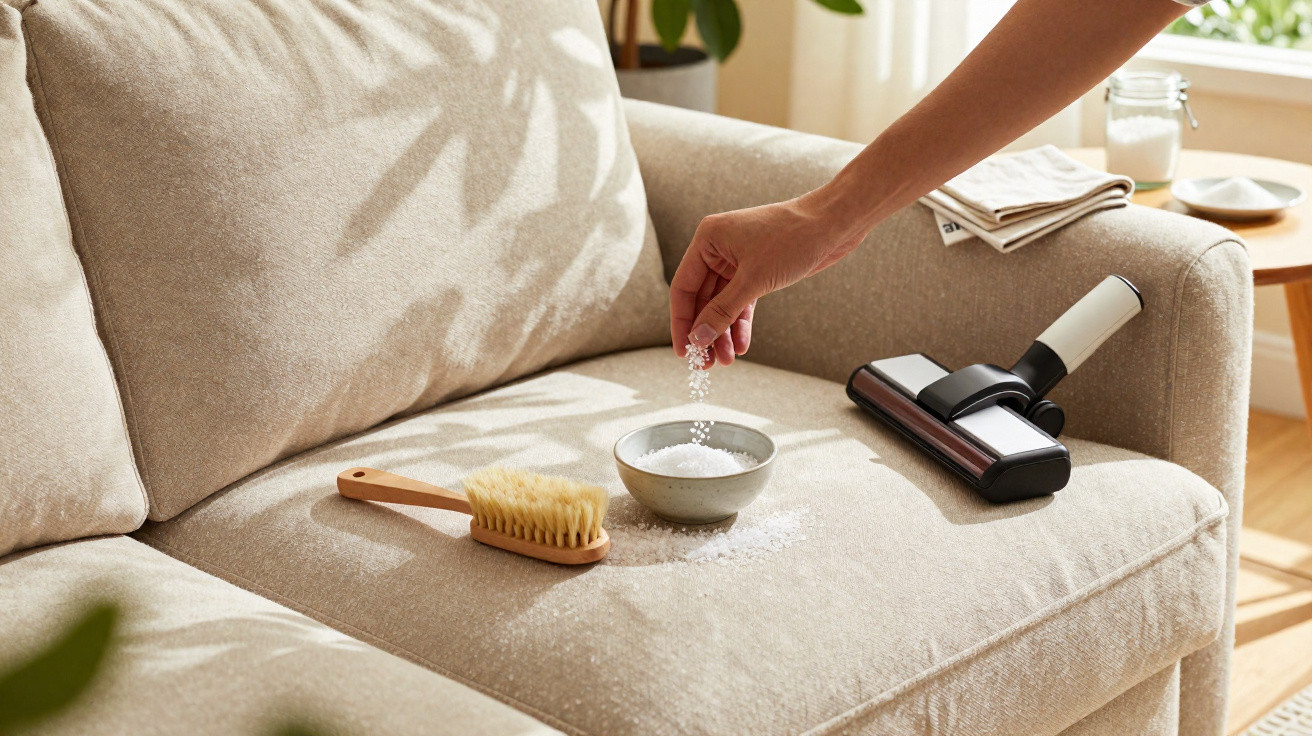
Add coarse salt to the warm pan and rub it around with a folded paper towel. Rinse it quickly, dry it on the hob and apply a light swipe of oil. Heat for a minute to polymerise the film.
Non-stick and ceramic
Leave the warm pan to soak in hot water for five minutes. Clean it with a drop of mild detergent and a soft sponge, then rinse with warm water and leave it to air-dry on its side. Never scour it.
Hygiene and timing without panic
If you have removed the food and poured away the fat, leaving a pan for an hour is rarely a risk. Bacteria require moisture as well as time. Wipe down plates and pans before the school run, then complete the washing-up when you get back. Do not leave raw-meat residue sitting all day. For safety, wash pans used for protein within two hours, or refrigerate them if you need to wait longer.
Move food, drain fat, then wait. The pause protects the pan; the wipe protects you.
The money and energy angle
A warped pan heats unevenly, which wastes energy. Worn coatings can mean replacing cookware sooner than expected. A short cooling break helps avoid both issues. When residue lifts easily, you will also need less detergent and hot water. That reduces bills and waste without much effort.
Mistakes that quietly ruin pans
- Running a cold tap over hot metal. This can bend pan bases and crack coatings.
- Using metal utensils on non-stick. They score the surface, which can then start peeling.
- Heating an empty pan too much. Oil smokes, coatings deteriorate and warping can begin.
- Using aerosol cooking sprays. These leave a gummy layer that feels like sticking.
- Stacking unprotected pans. Edges can chip and surfaces become scuffed, so use pan protectors or a tea towel.
- Leaving salty water in stainless steel pans. Pitting can start and never fully stop.
A quick routine you can keep
After frying, drain away the fat and put the pan to one side. Clear the table and make a brew. Return after 10 minutes with hot water and a soft sponge. Deglaze, wipe, rinse and dry it over a low flame, adding oil if it is iron. The process takes four minutes and can prevent years of wear.
When a pan already looks tired
Non-stick cookware that is flaking should be retired for safety. A stainless-steel base that is slightly convex may still function on gas, but it will perform poorly on induction. Rusty cast iron can be restored: scrub it back to bare metal using steel wool, dry it in a low oven, then apply three thin layers of oil, heating between each coat until the surface becomes darker.
Extra tips worth knowing
For less sticky eggs in stainless steel, preheat the pan, add oil and wait for the oil to shimmer before cracking in the eggs. Food sticks when the metal is not hot enough. To reduce odours, warm a lemon wedge in a damp pan for a minute, then rinse it. For a quick temperature check before washing, touch the handle: if you can hold it for three seconds, the pan body is ready for warm cleaning.
On busy mornings, use a “holding pattern” plan. Wipe the pan, leave it warm on the hob and finish cleaning after the school drop-off. Set a calendar reminder to re-season iron pans once a month. Keep a labelled jar for reserved bacon fat; it seasons while you cook and reduces waste. Small routines such as these extend the life of your cookware and can make breakfast taste better.

Comments
No comments yet. Be the first to comment!
Leave a Comment