
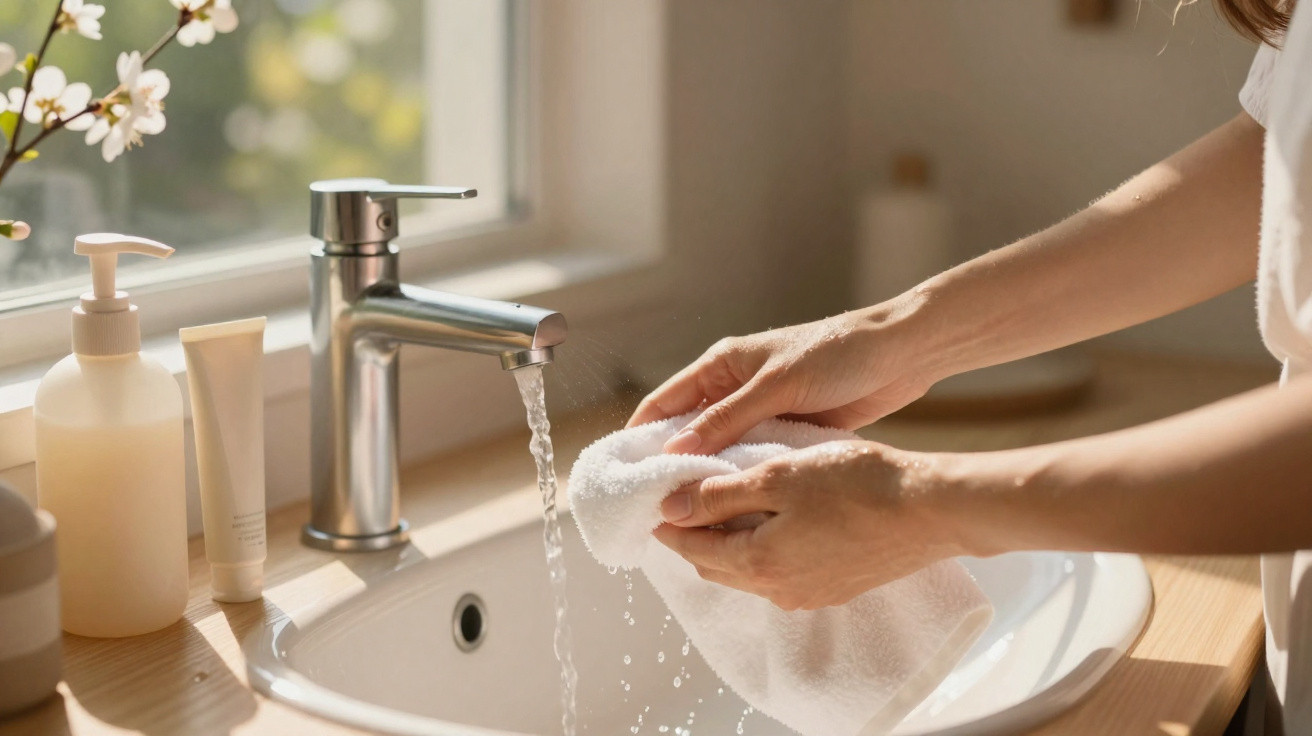
The answer is often not in the tube.
When hands are dry and rough, the automatic response is usually to reach for increasingly rich creams. Yet the results are often disappointing, with the skin feeling tight again shortly afterwards. This is where a different approach begins: rather than buying another product, review the everyday washing and care routine – from the tap to the towel.
The hidden vicious circle of hand creams
Most people assume: dry skin = too little care = more cream. It sounds reasonable, but it can often create a vicious circle. Before long, tubes accumulate in handbags, bathrooms and offices, while hands still feel rough.
This comes down to a misunderstanding: skin is not an empty container that simply needs to be “topped up”. It has its own protective layer, known as the hydrolipid film – a fine blend of water and lipids that acts as a natural coat.
“Anyone who damages their skin with every wash cannot restore its balance long-term with any cream in the world.”
If daily cleansing repeatedly disrupts this barrier, even the richest products offer only temporary relief. Skin becomes accustomed to the constant external supply, feels tight more quickly and seems “dependent” on cream. Rather than continuously repairing the damage, it is worth looking at the start of the chain: how are hands washed, with what, and how are they dried?
The overlooked tap factor: temperature matters
Many people carefully check the ingredients in creams, while barely considering the water temperature used for handwashing. However, those few seconds at the basin shape the future of the skin barrier.
Very hot water may give a particularly thorough feeling of cleanliness, but it treats skin much as washing-up liquid treats a frying pan: it dissolves fats. Those very fats are what hold the cells in the outermost skin layer together.
“The ideal temperature for washing hands is lukewarm – roughly between 30 and 35 degrees.”
Water hotter than this removes lipids from the stratum corneum, the skin’s natural outer layer. As a result, skin loses moisture, becomes rough and tight, and cracks more easily. Cold water, on the other hand, protects these fats somewhat better but emulsifies soap less effectively. This leads people to rub for longer and more forcefully, placing mechanical strain on the skin.
The simple yet effective adjustment is to set the mixer tap to a comfortably lukewarm temperature and keep it there. A small turn can make a substantial difference to how skin feels, especially when hands are washed frequently throughout the day.
Choosing the right soap bar: overfatted rather than dehydrating
The cleansing product itself is just as important as water temperature. Traditional hard soaps and highly foaming wash gels often have an alkaline pH and powerful surfactants. They clean thoroughly, but they also strip away protective sebum.
An increasingly recommended alternative is an overfatted soap bar. These products include extra replenishing oils or butters, which leave behind a light protective film during washing.
- Gentle cleansing: fewer aggressive surfactants and a pH closer to that of skin
- Less moisture loss: studies show up to 50 % less drying than with standard soaps
- Care while washing: oils such as almond, shea or glycerine remain on the skin as a fine layer
When shopping, it pays to read the label. Avoiding aggressive surfactants such as Sodium Lauryl Sulfate is generally the better choice. After rinsing, a good soap bar leaves hands soft and supple, without a “squeaky-clean” feel. Although this supposedly clean squeak may seem convincing, it indicates that fats have already been thoroughly removed.
The forgotten care step: drying hands properly
Few people associate drying with skincare. Yet harsh rubbing with a towel can damage precisely the skin that has just become swollen from water and soap, and is particularly sensitive.
Vigorous towel-drying causes micro-injuries and dislodges protective flakes from the stratum corneum. This leaves the surface more vulnerable to irritants and speeds up moisture loss.
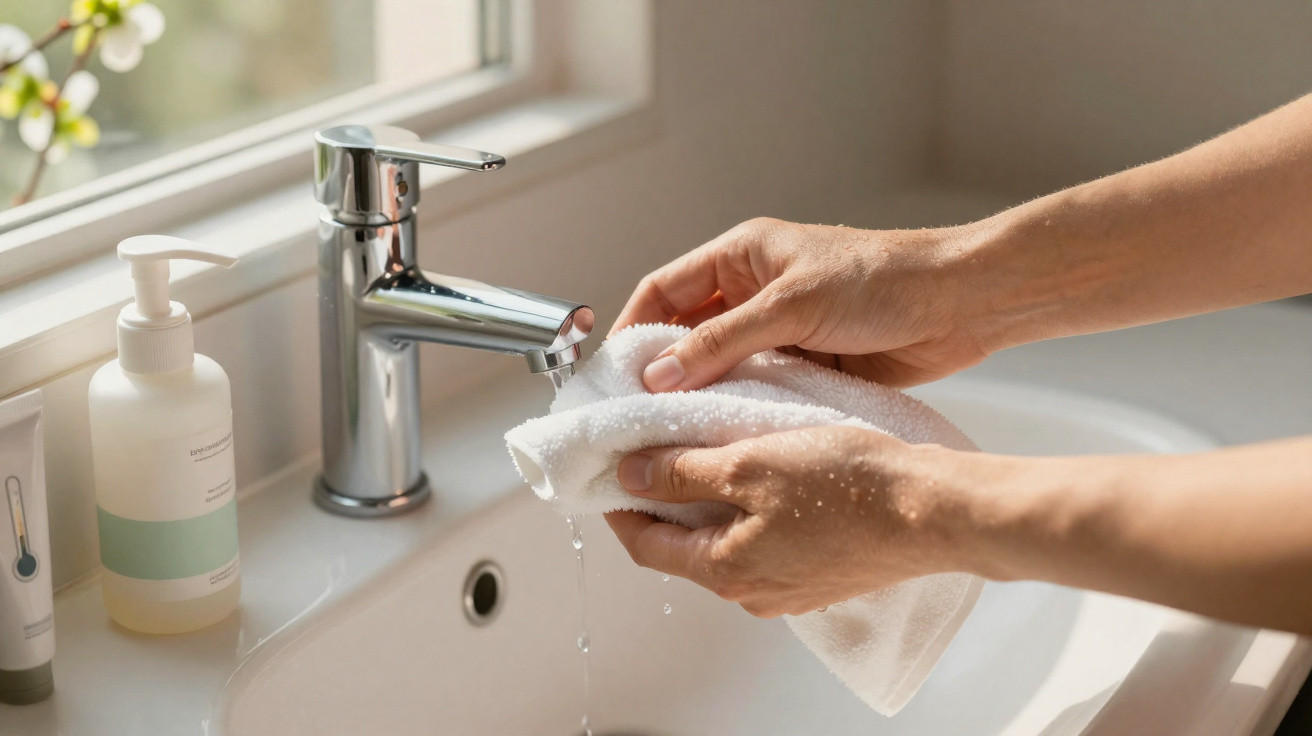
“Gently pressing hands dry instead of rubbing protects the skin – particularly when washing frequently.”
An ideal sequence is:
- Let hands drip dry briefly after washing.
- Take a clean, soft towel.
- Press the skin dry with light movements rather than wiping it.
- Dry carefully between the fingers so that no residual moisture remains there.
Allowing hands to air-dry may be convenient, but it draws additional moisture from the surface: evaporating water always carries away some skin moisture too. This particularly worsens dryness in spring, when wind and fluctuating temperatures increase.
Spring as a stress test for skin
Once winter has passed, many people feel relieved and pay less attention to their hands. Yet spring brings fresh pressures: cold mornings, mild afternoons, more time outdoors, gardening, cycling, and contact with soil and pollen.
These changes repeatedly challenge the skin barrier. As the heating season ends, the outdoor “stress season” begins. Wind, UV radiation and dirt particles affect hands that are often protected by only a thin remaining barrier.
Anyone relying solely on rich creams at this point is treating symptoms rather than causes. A consistent change in routine is considerably more effective: lukewarm water, an overfatted soap bar, gentle drying, and only then carefully considered skincare.
A minimalist care routine: one cream, one time
A hand-friendly washing routine does not mean giving up care products entirely. It simply shifts the focus away from repeatedly applying cream during the day and towards one clear, targeted use.
A proven strategy relies on a single, well-formulated hand cream, ideally containing glycerine. This ingredient binds water in the upper layers of skin and can provide lasting comfort when the skin is intact.
“On healthy skin that has not been overstrained, an evening application is often enough for the whole of the following day.”
This minimalist routine could work as follows:
- During the day: cleanse hands with lukewarm water and an overfatted soap bar
- Every time: press dry gently and do not forget the spaces between the fingers
- In the evening: apply a small amount of glycerine-containing cream before bed
Those who follow these steps consistently for a few weeks often find that they reach spontaneously for hand cream less often during the day. Skin appears more resilient, cracks less readily and needs less immediate “emergency help” from a tube.
What terms such as hydrolipid film and stratum corneum mean
The term hydrolipid film may sound scientific, but it is actually a very everyday protective layer. Sweat provides the watery component, while sebaceous glands add lipids. Together, they form an extremely fine coat that slows the evaporation of skin moisture and keeps foreign substances away.
Directly beneath it lies the stratum corneum. It resembles brickwork: corneocytes are the bricks, and lipids are the mortar. When that mortar is continually dissolved by hot water, aggressive soap or forceful rubbing, the wall starts to crumble. Micro-cracks, redness and cracked knuckles are the visible consequences.
Changing the routine helps rebuild this brickwork more securely in everyday life – not by adding more material from outside, but by causing less damage with every wash.
Practical everyday examples
At the office, even a small adjustment can be enough: rather than exposing hands to very hot water and strongly fragranced liquid soap during every brief toilet break, wash thoroughly with lukewarm water and a mild product. Where possible, keep a personal overfatted soap bar beside the basin.
For DIY work or gardening, extra protection is worthwhile: wear thin cotton gloves beneath work gloves, use lukewarm water for cleaning afterwards, then take a calm moment to dry hands and apply cream in the evening. Many report that this allows them to do without the usual “emergency tubes” in their coat pockets.
The change is also noticeable in families with children. When little hands need washing constantly, hot water is especially irritating to their already sensitive skin. Lukewarm water, mild cleansing bars and soft towels provide double relief here – for children’s skin and for everyone who will later need to apply less cream.



Comments
No comments yet. Be the first to comment!
Leave a Comment