
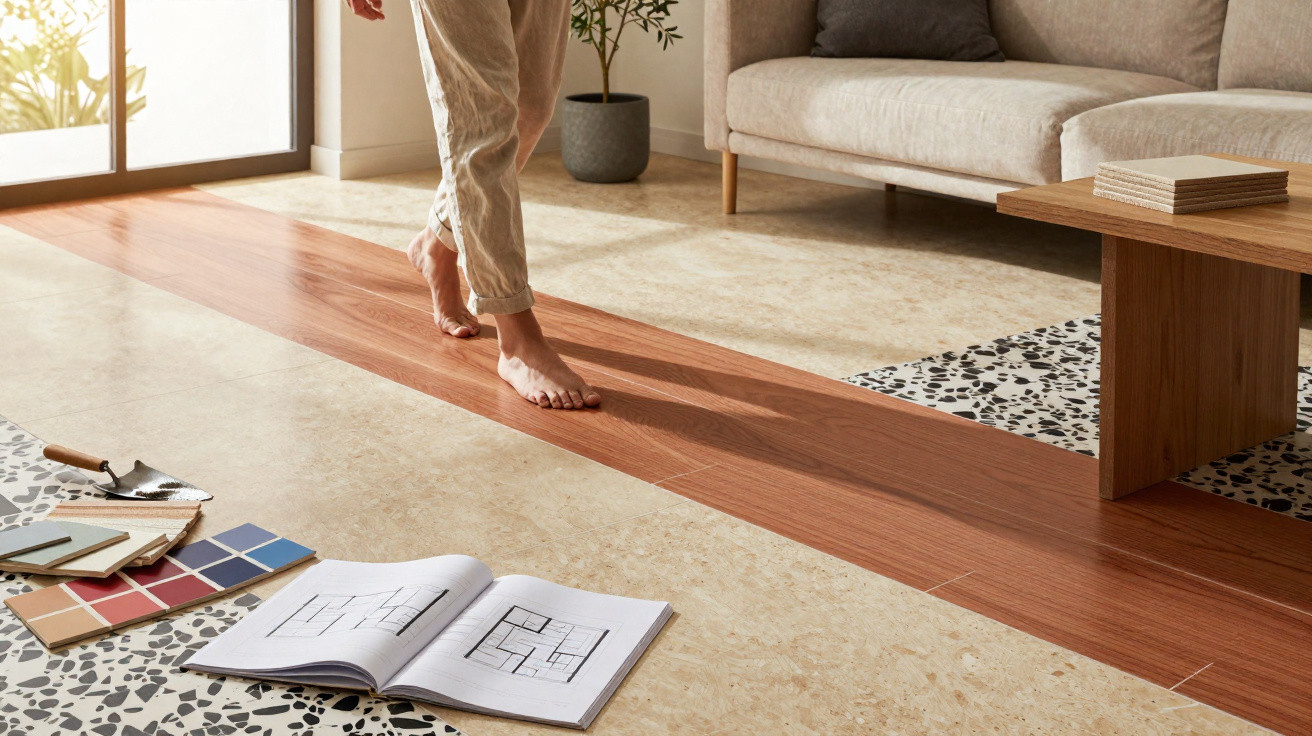
Wood-look tiles were considered a reliable choice for years.
In 2026, however, the trend is changing, making room for bolder floor and wall finishes with more character.
Anyone redesigning a bathroom, kitchen or hallway today is opting for wood-look tiles less and less often. Planners, interior designers and homeowners are increasingly turning to materials that look more visible, honest and tactile. Natural stone looks, handmade ceramics, XXL formats and striking colours are defining the latest collections - and, in turn, the appearance of contemporary flats and houses.
Why wood-look tiles are losing their appeal
For a long time, wood-effect tiles filled a gap: they offered the warmth of parquet alongside the easy-care qualities of ceramic. Many new-build developments therefore featured floors that appeared, at first glance, to be oak or walnut, while remaining wipe-clean and hard-wearing.
It is precisely this sense of “as if” that is now prompting a shift in taste. Many interior stylists want less imitation and more authenticity. Wood-look tiles have also been installed extremely widely over the past ten years, particularly in rental flats, hotels and wellness areas. To many people, the look now feels exhausted.
In 2026, a genuine sense of material takes centre stage - textures that do not pretend to be something else.
Rather than imitated wood grain, the focus is moving towards raw stone surfaces, visibly fired ceramics and confident blocks of colour. Manufacturers are responding with far more varied collections that rely less on illusion and more on character.
Natural stone look: travertine and more make a comeback
One major beneficiary of the move away from wood-effect finishes is tile material styled to resemble natural stone. Travertine in particular, with its warm beige tones and irregular pores, is experiencing a boom.
This look is typically defined by:
- soft, warm shades ranging from cream to sand
- irregular veining and inclusions
- matt or satin-matt finishes
- formats reminiscent of natural stone slabs
In living and dining areas, this style creates a relaxed Mediterranean atmosphere. On terraces or balconies, it feels like an extension of the holiday mood. Interior designers often use travertine-look tiles to pair clean, modern furniture with a soft, warm foundation.
Earth beneath your feet: terracotta returns
Tiles made from fired clay, often known as terracotta or tomette flooring, were long regarded as a relic of 1990s country-style kitchens. In 2026, they are reappearing in revised versions - less rustic, but used with greater intention.
Typical features include:
- smaller formats, often hexagonal or square
- colour variations from brick red and rusty orange to fired ochre
- matt, slightly powdery surfaces
- clearly visible, sometimes irregular edges
These floors bring noticeable warmth to kitchens and an almost handcrafted quality to living rooms. Anyone concerned about an overly “Tuscan kitsch” effect can pair terracotta flooring with very streamlined, contemporary kitchen units, plenty of white and stainless steel.
Terrazzo reimagined: from dated flooring to a design statement
Terrazzo was once associated with school corridors. Today, it is among the most versatile design tools for contemporary interiors. Modern terrazzo tiles visually draw on the principle of coloured stone chips in a cement- or resin-bound base, without requiring the maintenance of the genuine material.
The most sought-after options include:
- fine aggregate in restrained natural tones for use throughout the home
- large, colourful inclusions as an eye-catching feature in a bathroom or kitchen
- lightly polished surfaces for a subtle sheen
Terrazzo strikes the balance: enough pattern to feel interesting, yet calm enough not to become irritating.
Designers often specify it across the whole bathroom: floor, shower and vanity unit all in one continuous finish. The result is a space that feels high-quality without seeming cold.
Handmade ceramics: Zellige tiles with imperfect edges
Handmade, glazed ceramic tiles in the North African style, often referred to as Zellige, bring an entirely different kind of luxury into the home: not smooth and flawless, but lively and gently irregular.
Their defining features are:
- small formats, usually square
- uneven surfaces, with slight waves and edges
- intense glazes, from deep navy blue to emerald green or cream white
- strong reflections of light created by the glossy glaze
These tiles are popular as kitchen splashbacks, in cloakrooms or as an accent wall in a shower. Every tile looks slightly different, creating a lively, almost shimmering effect - a clear counterpoint to the once-popular smooth wood-look finishes.
XXL tile formats: fewer grout lines, greater calm
Alongside the desire for authentic surfaces, the preference for large tile formats is growing. Squares measuring 100 x 100 centimetres, or even 120 x 120 centimetres, are no longer unusual.
| Format | Effect in the room | Typical uses |
|---|---|---|
| 60 x 60 cm | calm, classic | hallway, living room, standard bathrooms |
| 80 x 80 cm | modern, spacious | open-plan living areas, larger kitchens |
| 100 x 100 cm | almost grout-free, very clean | design bathrooms, loft flats |
| 120 x 120 cm and larger | monolithic, almost like a poured floor | large entrance areas, showrooms, luxurious living spaces |
With fewer visible grout lines, rooms appear larger and more tranquil. In smaller bathrooms especially, a continuous large-format floor often looks considerably more elegant than a patchwork of imitation wood planks.
The confidence to use colour: from soft red to deep midnight blue
Another departure from wood look, which is generally limited to brown and beige shades, can be seen in the colour palette. In 2026, many collections use rich yet deliberately nuanced colours.
Trending choices include, for example:
- soft red shades with a faint pink undertone for a hallway or living room
- light, vivid yellows as an accent in a kitchen or children’s bathroom
- deep navy blue for bedroom walls and refined dining areas
- combinations of powdery brown and dusty pink for calm, warm interiors
Colour is moving into spaces that were once designed almost automatically in grey, beige or wood look.
A clear decision is important here: either the floor acts as the colourful stage while the furniture stays neutral, or the reverse applies. Choosing colour in both can quickly create visual chaos.
Texture instead of print: relief and 3D surfaces
Rather than printed wood grain, many manufacturers are now focusing on true tactility. Relief textures, waves, grooves and 3D patterns add depth to walls and even floors.
Popular choices include:
- fluted tiles in bathrooms, often used on just one accent wall
- matt, lightly granular surfaces with an earthy natural feel
- geometric 3D patterns for hallways or stairwells
Such textures create interest even without bold colours. On shower walls in particular, they resemble integrated artwork - and feel noticeably more premium to the touch than smooth wood-look décor.
What homeowners should consider now
Anyone building or renovating in 2026 and wanting to move away from wood-look tiles should keep several points in mind:
- Consider the room size: Natural stone look in small-scale formats can quickly feel busy, while XXL tiles require enough surface area.
- Check the lighting conditions: Dark blue or brown tones work better in well-lit rooms, while matt terracotta suits somewhat darker spaces.
- Assess maintenance requirements realistically: Highly textured surfaces show water marks and soap residue less readily, but need thorough cleaning.
- Choose the grout colour deliberately: Tone-on-tone grout makes surfaces appear calmer, while contrasting grout emphasises the grid.
For natural stone and terrazzo looks in particular, it is worth taking a sample tile home. Many surfaces look different in a showroom than they do under your own lighting.
How the new tile trends can be combined
It becomes particularly interesting when different tendencies are mixed deliberately. One example is a large-format stone-look floor combined with a handmade ceramic kitchen splashback and a rich midnight-blue accent in the dining area. This creates a considered interplay of calm, craftsmanship and colour.
A purposeful contrast can work as well: a relatively cool terrazzo floor paired with a warm, earthy terracotta rug in the entrance area. The key remains to give each room one clear leading role: either texture, colour or format should dominate.
Anyone choosing materials today no longer has to decide between “wood look or laminate”. The range extends from Mediterranean stone charm and earthy ceramics to colourful statement surfaces. For that reason, it is worth taking a second look at collections that may not be displayed on the first shelf in a showroom, but can give your rooms far more personality than yet another wood-effect floor.


Comments
No comments yet. Be the first to comment!
Leave a Comment