
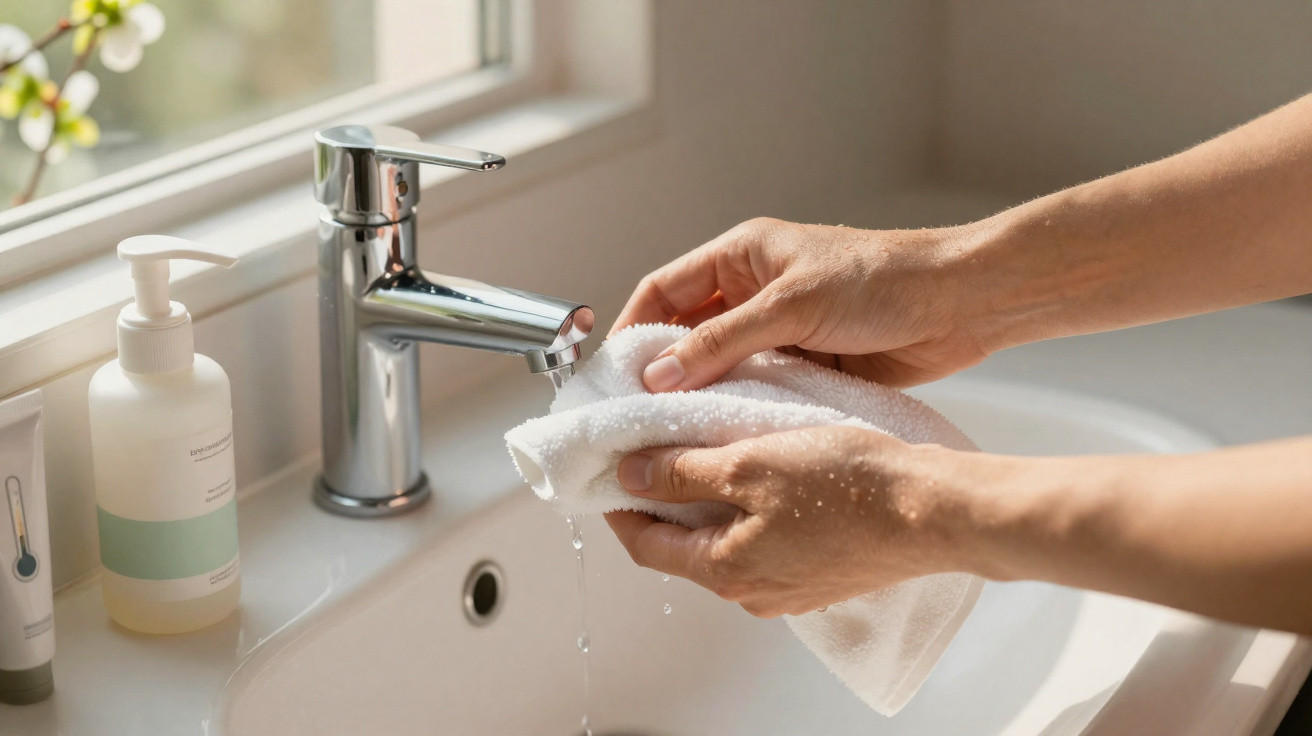
Many people apply cream, lotion and massage their hands without noticing that they are tackling the problem in the wrong place. Dry hands are often caused not by a lack of cream, but by what happens beforehand: water, soap, temperature and the towel. Getting these factors right can mean needing far fewer products while enjoying more comfortable skin.
The skincare misconception: why more hand cream can often make the problem worse
Anyone prone to dry hands instinctively reaches for a tube. One in the car, another beside the bed and one at the office. Hands feel better immediately after applying cream, but the skin feels tight again an hour or two later. So on goes another layer, then another.
This is where the vicious circle starts: rather than changing the cause, it is simply covered up.
“The skin has its own protective barrier – it needs support, not permanent replacement.”
This protective layer is known as the hydrolipidic film: a combination of water and lipids that covers the skin like a fine coat. Harsh washing and unsuitable skincare repeatedly strip away this layer. As a result:
- The skin loses moisture more quickly.
- It becomes more sensitive to cold, wind and friction.
- It “gets used to” a constant artificial supply of oils.
Anyone who only adjusts the hand-cream approach is continually treating symptoms. It makes more sense to begin at the source: the washbasin.
What matters at the tap: the right temperature protects the skin barrier
Whether hands sting after washing or remain pleasantly calm is decided at the tap. In many bathrooms, people automatically run water that is far too hot or ice-cold.
Experts recommend a temperature between 30 and 35 degrees. In other words, lukewarm: warm enough not to feel chilly, but not hot enough to steam.
“Water that is too hot removes not only dirt, but also the skin’s protective oils.”
When this happens several times a day, the outermost layer of skin becomes as porous as an old T-shirt. Moisture evaporates more easily and irritants can penetrate more readily. Redness, cracks and persistent tightness are the logical consequences.
Cold water may sound healthier, but it is not ideal either. While it preserves oils slightly better, it does not dissolve soap as effectively. Many people therefore rub for longer and more vigorously, placing mechanical stress on the skin.
The simplest adjustment is therefore to set the mixer tap to a comfortably lukewarm temperature and keep it there. This inconspicuous change already removes a great deal of stress from the skin.
Soap rather than cream: which cleansing bar is genuinely gentle on hands
Choosing the right soap matters at least as much as water temperature. Traditional bar soaps and highly foaming liquid soaps may clean thoroughly, but they are often too harsh for sensitive hands.
The issue is their high, alkaline pH level and aggressive surfactants, which dissolve everything they encounter – including the skin’s natural sebum.
“Gentle, lipid-replenishing soaps can reduce moisture loss during washing by up to half.”
So-called lipid-replenishing soaps are especially suitable. They are often enriched with caring oils and butters, such as:
- Sweet almond oil
- Shea butter
- Glycerin
- Olive oil or jojoba oil
They cleanse while leaving behind a light film that keeps the skin supple. Signs that a soap suits you include:
- Hands feel soft rather than “squeaky clean” after rinsing.
- There is no feeling of tightness before you have even reached for hand cream.
- Redness or stinging does not occur after washing.
It is worth avoiding particularly aggressive surfactants when checking the ingredients list. Those with sensitive skin or eczema in particular can benefit from this change. In many cases, the need for hand cream falls noticeably after just a few weeks.
The overlooked step: how proper drying prevents cracks
After washing, many people grab a towel and rub until their hands are dry. It is practical, but damaging for already irritated skin.
The horny layer is softer and more vulnerable when wet, so its cells are less able to withstand vigorous friction. The result is tiny injuries, redness and a roughened surface.
“Rather than rubbing, gently patting dry is enough – especially between the fingers.”
A skin-friendly method looks like this:
- Use a clean, soft towel.
- Press hands gently against the towel rather than wiping them.
- Carefully pat dry the spaces between the fingers in particular.
Letting hands dry “in the air” does not help either. As the remaining water evaporates, it draws additional moisture from the skin. This leaves a tight feeling that quickly sends people back to the hand cream.
A critical period in spring: why so many people get cracked hands then
As soon as the first warmer days arrive, many people become less vigilant. Thick winter creams are put away in the cupboard, along with gloves. Paradoxically, dry and cracked hands are especially common in spring.
The combination of cold mornings, mild afternoons and more time spent outdoors challenges the skin. Gardening, cycling, walks in the wind, contact with soil and pollen all place demands on the protective barrier.
“With a skin-friendly washing and drying routine, skin remains more resilient – often without constant cream application.”
A clinical hand-care study found that simple changes to washing and drying improved the skin’s texture and resilience for most participants before any extra skincare products were used. This highlights just how strongly mechanical and thermal stimuli can affect the skin.
A minimalist hand-care routine: cream once a day – and that is enough
Fewer products do not mean less care. On the contrary, those who have the basics under control can manage with substantially less. A straightforward, practical routine looks like this:
| Step | What to do | Effect |
|---|---|---|
| 1. Wash | Lukewarm water, lipid-replenishing soap | Gentle cleansing without excessive oil removal |
| 2. Dry | Pat dry with a towel, do not rub | Fewer micro-injuries and less redness |
| 3. Care | Apply a glycerin cream in the evening | Long-lasting moisture overnight |
Glycerin in particular plays a key role. This ingredient binds water in the upper layers of the skin. When skin is intact and not constantly irritated, one application a day is often enough – ideally in the evening, when the hands can rest.
After a few weeks, many people find they no longer need to keep looking for hand cream. One well-chosen dispenser in the bathroom is sufficient instead of tubes in every bag.
What else protects hands – and what puts them under strain
Alongside water, soap and towels, other influences also affect the condition of the hands. Anyone hoping to avoid cracked skin can make changes in these areas:
- Household gloves: Wearing them for cleaning, washing up or working with cleaning products protects hands from chemicals and prolonged dampness.
- Short, lukewarm showers: Long, very hot showers dry out not only the body but the hands as well.
- Central-heating air: In offices and living rooms, a bowl of water or a humidifier can raise humidity levels slightly.
- Hand sanitiser: Use alcohol-based products only when genuinely necessary where possible, and do not wash hands in hot water afterwards.
Anyone who still experiences severe cracks, bleeding areas or intense itching despite all these changes should have the cause medically assessed. Extremely dry hands can be linked to atopic eczema, allergies or other skin conditions.
Why “less, but smarter” is good for your hands
Experience with a pared-back routine shows that hands primarily need to be treated with respect, not drowned in cosmetics. Many problems do not arise because of insufficient care, but because of thoughtless everyday habits.
Using water, soap and towels consciously, while selecting skincare products with purpose, saves money, time and waste – and means no longer chasing every new “miracle cream”. Hands repay this with fewer cracks, less tightness and a surface that feels like real, resilient skin again rather than an ongoing project.




Comments
No comments yet. Be the first to comment!
Leave a Comment