
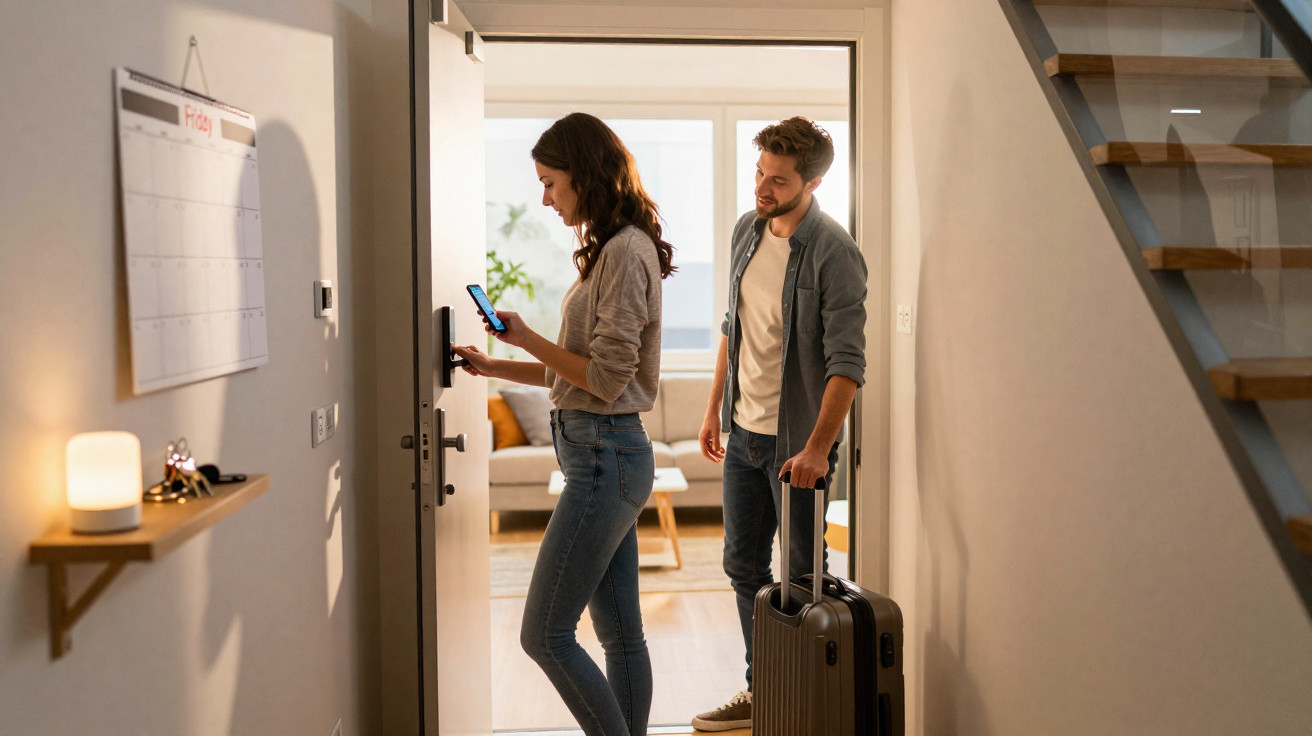
Current figures reveal that a completely different day presents a particularly high burglary risk.
People heading off on holiday or leaving work early on a Friday to begin the weekend rarely have burglars on their minds. Yet European statistics – including figures from France, where around 212,000 burglaries were recorded in 2025 – reveal clear patterns: offenders target particular days and times when homes are most likely to be unoccupied.
Friday is the unexpected highest-risk weekday for burglary
Many people assume that Saturday evening or late weekend nights pose the greatest danger. However, an analysis of thousands of alarm activations presents a different picture.
“Friday is the most common day for burglaries – ahead of both Monday and Saturday.”
In the data analysed, roughly 15 per cent of all registered alarm activations linked to burglary or attempted burglary occurred on Fridays. This puts the day clearly ahead of the rest of the week.
The next positions are as follows:
- Monday: approximately 14.5 per cent of burglary alarms
- Saturday: around 14 per cent
- the remaining days are slightly lower, with no major outlier
Friday is convenient for offenders for a straightforward reason: many people begin their weekend early, pack for a trip in the afternoon or leave straight after work. Their houses and flats may then be empty for several hours, or even the entire weekend.
There is another factor. Anyone already focused on a short break or holiday is less likely to notice small details. Windows may be left on the latch, patio doors pulled shut in haste but left unlocked, and blinds left half lowered – all of which can provide ideal points of entry.
The most dangerous times for burglaries
The figures also point to a distinct timing pattern. Most burglaries do not take place during the day, but within a broad period running from late evening until early morning.
“Around 46 per cent of burglaries take place between 9 pm and 7 am.”
These night-time hours appeal to offenders because it is dark, many neighbours are asleep, streets are quiet and unusual sounds attract less attention. The riskiest periods can be those when residents are not on holiday but are simply out for a short while, such as:
- dinner at a restaurant
- visiting friends or relatives
- late sports classes or club evenings
The statistics also show that the afternoon, between roughly 2 pm and 9 pm, ranks second. During this period, burglars take advantage of brief absences while people are shopping, collecting children or attending medical appointments. Mornings have the lowest burglary rate, although they are not entirely risk-free.
How burglars operate today
Security industry specialists report that methods have adapted. Many offenders do not act entirely on impulse, instead preparing for their crimes in advance.
“Burglars watch routines: blinds, lights, letterboxes, cars outside the property – and social media.”
Typical signs burglars look for
- Blinds that remain closed for several days
- Overflowing letterboxes or leaflets gathering near the entrance
- Unchanging lighting patterns, such as permanent darkness or only one room ever being lit
- Social media posts that reveal holidays or lengthy absences
- A driveway that is regularly empty when a car would normally be there
Many burglaries take only a few minutes. Offenders mainly strike where they expect quick access and little resistance, with no alarm system and no vigilant neighbours to worry about.
How to reduce the risk before holidays and weekend trips
Security authorities recommend simple measures that are applied consistently. Before considering a high-tech system, it is important to get the basics right.
“Making a home appear occupied and avoiding visible signs of absence makes things considerably harder for burglars.”
Practical measures at a glance
- Do not announce plans online: Avoid public posts about planned holidays or extended business trips.
- Involve your neighbours: Trusted neighbours can empty the letterbox, move blinds occasionally or park a car in your parking space.
- Set up timed lighting: Timers for living-room and hallway lamps create changing light patterns.
- Secure entry points: Strong door locks, additional bolts, lockable window handles and clearly visible outdoor lighting act as deterrents.
- Use police prevention services: Many local police stations provide free advice and patrols during extended absences.
Modern alarm systems with app connectivity and monitoring by a control centre add another barrier. They report unusual activity in real time and can activate cameras or notify a security service directly.
Which security technology really helps
Anyone upgrading their home should not rely on a single measure alone. A combination of different safeguards is most effective.
| Measure | Benefit |
|---|---|
| Mechanical security measures (bolts, additional locks) | Delay entry and increase the risk of detection |
| Outdoor lighting with motion sensors | Deters offenders and alerts neighbours |
| Alarm system with sensors on doors and windows | Triggers a noise alarm or notification to a control centre |
| Cameras with recording capability | Increase the likelihood of identification and often deter visibly |
| Smart-home control of lights and blinds | Simulates occupancy, even during longer absences |
Why Friday is especially critical
Friday brings together several factors that collectively create an appealing opportunity for burglars. Many offices close earlier, children no longer have late school hours and the weekend begins. Numerous households leave their homes between the afternoon and evening, often carrying luggage and feeling rushed.
The result is that doors are merely pulled closed instead of double-locked, balcony or patio doors are left on the latch because of the weather, and lights are either left on or switched off entirely – all signals that experienced offenders can interpret very quickly. Being aware of this pattern makes it possible to counter it, for example with a fixed “checklist” before leaving home.
What the figures mean for Germany
Although the stated 212,000 burglaries relate to France, German statistics indicate similar trends: certain weekdays stand out, night-time hours dominate, and holiday periods bring additional risks.
For many households, it is worth taking an honest look at their own routines. How often is the front door left unlocked when someone is “just popping” to the bakery? Who, apart from the family, knows that the flat will be empty for the next two weeks? Are basement windows and rear entrances genuinely secure?
The better residents understand their own weak points, the more effectively they can address them – especially on the day when burglars are statistically most likely to strike: Friday.




Comments
No comments yet. Be the first to comment!
Leave a Comment