
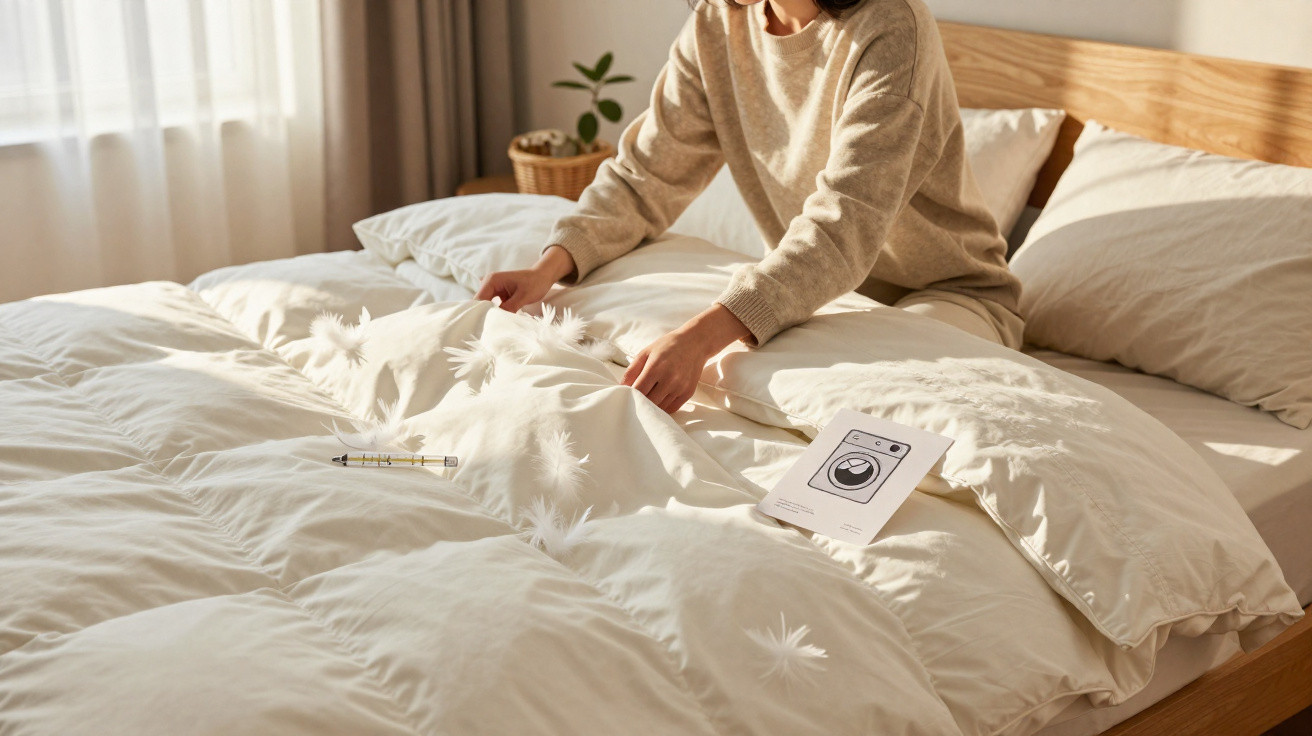
When choosing a duvet, several factors matter: the filling type, warmth level, how heavy it feels on the body, how easy it is to wash and even respiratory allergies. In 2026, three options stand out in shops - down or feather, synthetic fibre and microfibre (a technological blanket) - and knowing how each performs in everyday use can prevent sweaty or chilly nights, rhinitis flare-ups and wasted money.
What is a duvet and how does it directly affect sleep?
A duvet acts as a thermal barrier, retaining the heat produced by your body and stopping your temperature from dropping too far overnight. When the model suits both the local climate and how sensitive you are to cold or warmth, your body temperature is more likely to remain steady, making it easier to fall asleep and reducing night-time waking.
Its weight also has a major effect on comfort. Some people unwind more easily with the enveloping feel of a fuller duvet, while others can only rest with something that feels almost weightless over them. For people with rhinitis, sinusitis or allergies, the filling material and ease of cleaning are essential for limiting the build-up of dust mites, dust and unpleasant odours.
Watch a video from the Organise Without Fuss YouTube channel about selecting the right bedding for every season, considering weight, warmth and ease of washing:
https://www.youtube.com/watch?v=J3mCbyE8nco
How does a down duvet work in cold climates?
A natural down or feather duvet is the classic choice in mountain hotels: it provides considerable warmth while remaining remarkably light. It forms an air pocket between your body and the surrounding environment, trapping warmth and keeping out the cold. This makes it well suited to harsh winters, cold homes and areas where temperatures approach or fall below 10 °C.
Despite its comfort, it needs more careful maintenance, usually involving professional cleaning or a substantial washing machine, thorough drying and regular airing. Allergy sufferers should choose treated, certified down, or synthetic down-like versions, which are generally more allergy-friendly. Overall, it is a larger investment, but one with excellent longevity when stored properly.
When are synthetic fibre and microfibre duvets the better option?
A synthetic fibre duvet (polyester or siliconised wadding) is the versatile option: depending on its weight, it can provide medium to high warmth and works well in temperate climates and places with clearly defined seasons. A microfibre duvet, often called a technological blanket, usually offers light to medium warmth and a very soft feel, making it an excellent choice for warmer climates or air-conditioned rooms.
Before deciding, consider how each option fits your routine, budget and the level of care you can realistically provide:
- Synthetic fibre: straightforward care, usually machine-washable, a more affordable initial price and good durability with frequent use.
- Microfibre: a velvety feel, effective heat distribution, light to medium weight and comparatively quick drying.
- Climate and use: choose a fuller synthetic fibre duvet for cold nights; opt for lighter microfibre in warm areas, during mild seasons and in climate-controlled bedrooms.
Which care practices extend a duvet’s lifespan and comfort?
Routine care has a direct impact on the durability and thermal comfort of every duvet, whether it is filled with down, synthetic fibre or microfibre. Airing it regularly, never storing it while damp and following the washing instructions help preserve the filling’s loft, prevent mould and maintain its soft feel.
In general, down duvets should be used with a duvet cover, washed less often and stored without excessive compression. Synthetic fibre and microfibre models, meanwhile, are best washed on a gentle cycle with a small amount of detergent, dried completely and kept away from very high tumble-dryer temperatures. Matching the right duvet type to your city’s climate, your own sensitivity to cold or heat and basic everyday care will usually result in steadier, more comfortable and more pleasant sleep throughout the year.






Comments
No comments yet. Be the first to comment!
Leave a Comment