
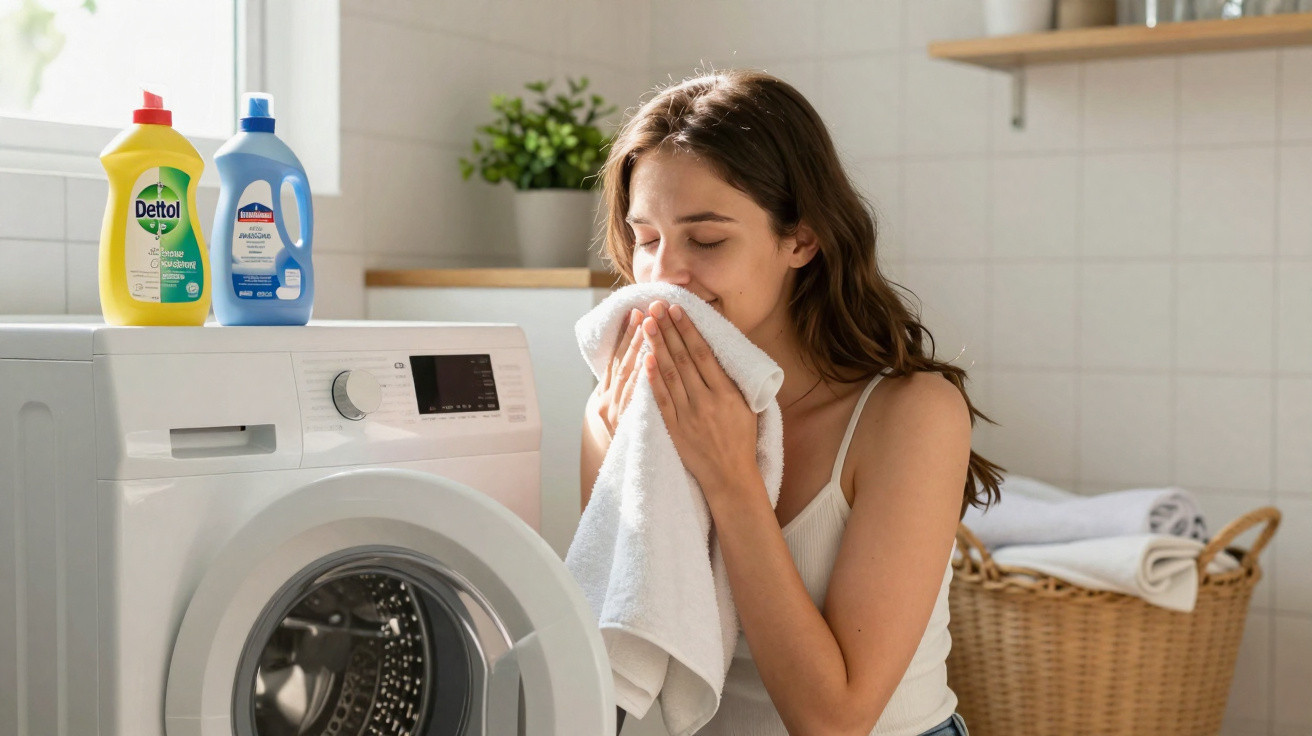
A British front-loading washing machine with a persistent musty smell became the test case for two well-known specialist cleaners: Dettol Washing Machine Cleaner and Dr Beckmann Service-it went head to head. Using the same appliance, the same empty 60°C cycle and no laundry, the question was simple: which product genuinely removes the odour rather than merely cleaning the visible dirt?
Why a “clean” washing machine can suddenly smell
Many machines appear completely innocent from the outside. The drum shines, the door glass sparkles, yet every freshly washed load still carries a faint stale smell. That was precisely the situation with this UK appliance.
The cause is rarely visible at the front; instead, it tends to be hidden in places such as:
- the detergent drawer
- the rubber door seal
- behind the drum and inside the hoses
- folds and crevices where water remains
Moisture, detergent residue and low washing temperatures create ideal conditions for bacteria, mould spores and biofilm. Many people then turn to household remedies such as soda crystals or an occasional empty 90°C cycle. In this test, however, none of these measures worked any longer: the odour returned after every wash.
“Even when the drum looks spotless, thick layers of detergent, biofilm and limescale can be concealed behind it – and that is exactly where the smell develops.”
Dettol vs Dr Beckmann: the products compared
The trial used two products commonly found in UK supermarkets, both of which are also available in similar forms in German-speaking countries:
| Product | Format | Purpose | Price in the test country |
|---|---|---|---|
| Dettol Washing Machine Cleaner | Liquid, fragranced | Surfaces, bacteria, odour, limescale | approx. £2.99 |
| Dr Beckmann Service-it Deep Clean | Powder | Deep deposits, limescale, bacteria, fungi | approx. £2.19 |
Both manufacturers state that their products eliminate up to 99.9 per cent of germs while leaving a fresh scent. Their recommendation is to run what is known as a maintenance wash around every two months, particularly if most washing is done at 30°C or 40°C.
Dettol’s performance in the first cycle
Dettol was used first. To thoroughly treat every easily accessible area, the cleaner was initially applied slightly differently from the instructions on the bottle.
Cleaning by hand with Dettol
One tablespoon of the liquid cleaner was mixed into approximately 200 millilitres of hot water. This solution was used to wipe and scrub:
- the entire detergent drawer
- the door glass
- the grey rubber seal
These areas contained the familiar build-up: dried-on detergent residue, soap deposits and small dark mould marks in the fold of the rubber seal.
The result was clear. The drawer looked considerably brighter, while the seal and glass were free of visible dirt, and the film came away easily. Dettol therefore delivered solid cleaning results on all exposed surfaces.
Dettol maintenance wash
The remaining cleaner was then poured into the drawer and the machine was run empty at 60°C. This stage is intended to flush and disinfect the pipework, drum and concealed sections.
Once the cycle had finished, the inside of the drum looked shinier, suggesting that deposits had been loosened. However, opening the door still released a dull, musty smell. It was less intense, but the underlying issue remained.
“Dettol made the visible surfaces shine, but this demanding test showed that it could not tackle the deeply embedded source of the odour behind the drum.”
Dr Beckmann targets concealed deposits
The starting point for the second run was different: Dettol had already cleaned the detergent drawer, glass and rubber seal. Dr Beckmann now had to demonstrate what it could do inside the appliance, without any extra scrubbing.
Used exactly as instructed
The full sachet of powder was added to the detergent drawer. Although the pack specifies a temperature of at least 40°C, the same empty 60°C cycle was used again to keep the comparison fair. No additional cleaners or fragrances were added.
The main areas under scrutiny were:
- deposits at the rear of the drum
- limescale and biofilm in the hoses
- organic build-up on heating elements
- bacteria and fungi in poorly rinsed sections
Odour results after Dr Beckmann
The decisive moment came at the end of the programme: when the door was opened, there was no musty smell at all. Instead, only a light floral fragrance remained in the air. More importantly, the previous “damp cellar smell” did not return in later washes of towels.
“The test showed that the powder cleaner changed the condition inside the machine so that subsequent washes no longer smelled like a damp cellar.”
Dr Beckmann is designed specifically for this kind of deep clean: it removes limescale and layers of dirt, kills bacteria and fungi, and improves energy efficiency by cleaning the heating elements. In this particular comparison, it was cheaper as well as more effective against the stubborn smell.
What the test means for households in German-speaking countries
Although this demanding trial took place in the United Kingdom, the causes are universal. Modern machines are often used for short cycles and lower temperatures, while many people rely on liquid detergent. Both practices encourage deposits to form.
- Liquid detergents are more likely to leave a greasy residue.
- Short cycles rinse less thoroughly.
- Cold washes barely kill germs.
- Doors and detergent drawers are often kept closed, preventing moisture from escaping.
Anyone who looks only at the drum is therefore likely to underestimate the issue. The smell usually comes from areas that cannot be seen during a normal inspection.
Practical advice: maintaining your washing machine over the long term
Regular basic care
A one-off deep cleaner can make a major difference, but it is not a permanent solution. Consistent routines are worthwhile:
- Run a 60°C or 90°C programme with powder detergent once a month.
- Leave the door and detergent drawer slightly open after every wash.
- Wipe and dry the rubber seal regularly with a cloth.
- Clean the drain filter every few weeks, depending on use.
Many manufacturers now include a maintenance wash in their instruction manuals. Ignoring this advice risks not only unpleasant odours, but also more expensive long-term damage caused by limescale and blocked hoses.
When a specialist cleaner is worthwhile
A specialist product like those in this test is useful in common problem situations:
- an ongoing musty smell despite hot empty cycles
- visible black spots in the rubber seal
- brown, greasy films in the detergent drawer
- households running many quick 30°C washes
- areas with very hard water and heavy limescale
Those who use their machine heavily, such as families doing several loads every day, benefit noticeably from regular deep cleaning every two months.
Risks, misconceptions and technical background
Many users initially respond by adding more fragrance: fabric conditioner, scent boosters or heavily perfumed pods. These may mask the smell briefly, but they do not deal with its cause. In the worst case, they can make deposits worse because even more residue remains in the system.
There is also a technical factor. Over time, heating elements develop limescale layers mixed with grease and detergent, providing a place for bacteria to settle. The machine then needs more energy to heat the water, while the organic residue can produce an odour when warmed. Products that dissolve both limescale and biofilm offer a double benefit here: less smell and lower electricity use over time.
People with very sensitive skin should consider running a short rinse cycle after using a strong cleaner, or make the first wash a load of old towels. This helps flush out any remaining product before children’s clothes or laundry for allergy sufferers goes back into the machine.
Above all, the UK comparison demonstrates one point: for visible dirt around the door and drawer, a liquid cleaner and a little manual work are often enough. But a smell built up over years behind the drum, in hoses and on heating elements requires a product that specifically attacks these hidden layers – and in this test, that was clearly the powder cleaner.





Comments
No comments yet. Be the first to comment!
Leave a Comment