
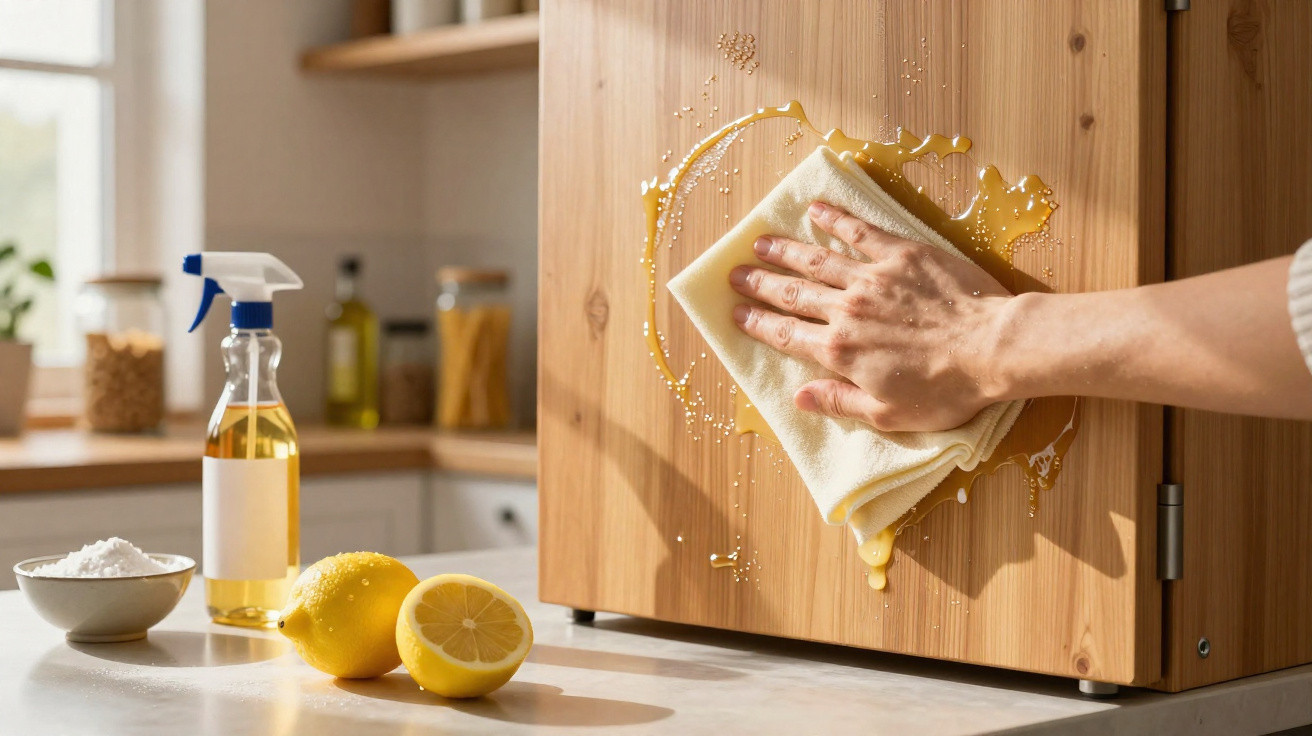
A simple powder from your kitchen cupboard can make all the difference.
Anyone who cooks regularly will know the issue: kitchen cupboard fronts can suddenly feel greasy, look dull and seem to attract dust. Rather than buying expensive specialist cleaners, a straightforward household remedy that many people already have at home is usually enough to cut through the grease effectively.
Why this unpleasant greasy film forms on kitchen cupboards
When frying, deep-frying or cooking, tiny droplets of fat rise with the steam. They settle on surfaces, mix with dust and create a stubborn coating. The areas most commonly affected are:
- wall cupboards directly above the cooker
- handles and edges that are touched frequently
- the tops of wall-mounted cupboards, which are rarely cleaned
- extractor hoods and the surrounding areas
This combination of grease, dust and cooking vapours clings firmly to surfaces. Standard multi-purpose cleaner or warm water alone will often just spread the layer around rather than remove it.
Bicarbonate of soda: the overlooked grease remover for the kitchen
“Bicarbonate of soda can remove even old, stubborn grease marks from kitchen cupboards – without harsh chemicals and at a manageable cost.”
Bicarbonate of soda, also known as baking soda, is a mild alkaline powder. When dissolved in water, it has a gentle degreasing effect and a fine texture. It is this combination that makes it useful for smeared cupboard fronts.
How to clean kitchen cupboards with bicarbonate of soda, step by step
- Prepare: Wipe the cupboard fronts roughly with a dry cloth to remove dust and crumbs.
- Mix the solution: Add around two to three tablespoons of bicarbonate of soda to a bowl of warm water. Stir well until hardly any grains can be seen.
- Apply: Dip a soft sponge or microfibre cloth into the solution, wring it out thoroughly and rub it over the cupboard surfaces.
- Leave to work: Allow the mixture to sit on the greasy coating for one to three minutes so that it can loosen.
- Wipe clean: Use a clean, damp cloth to wipe thoroughly until no film can be felt.
- Dry: Finally, buff the surfaces with a dry cloth to prevent water marks.
The gentle abrasive action of the bicarbonate of soda crystals helps loosen the grease layer, while the alkaline solution binds to the grease itself. This makes the deposit much easier to lift from the surface.
When the grease crust is older: boost bicarbonate of soda with washing-up liquid
If cupboards have not been cleaned for a long time, bicarbonate of soda and water alone may not be enough. A small addition can help:
- add a squirt of grease-cutting washing-up liquid to the bicarbonate of soda solution
- leave it to work for a little longer, around five minutes
- work in circular motions without pressing too hard
Washing-up liquid breaks down the grease, while bicarbonate of soda mechanically starts to loosen the layer. Together, they create a noticeable cleaning effect that can rival many specialist cleaners.
Where to use bicarbonate of soda with caution
Useful as bicarbonate of soda is, it is not suitable for every surface. Checking the material briefly can prevent damage.
| Material | Suitability for bicarbonate of soda |
|---|---|
| Painted wooden fronts | Usually suitable when used with a soft cloth and without vigorous rubbing |
| High-gloss fronts | Test very gently, checking an inconspicuous area first |
| Oiled real wood | Use only a weak solution, wipe off quickly and re-oil afterwards |
| Veneer or foil-fronted cupboards | Suitable as long as bicarbonate of soda is not rubbed on firmly as a dry paste |
| Aluminium or stainless steel | Suitable; rinse well afterwards with clean water |
For particularly sensitive surfaces, always test first on a small hidden area and avoid applying pressure. In most cases, a soft sponge is sufficient.
Vinegar and lemon: when other household remedies work best
As well as bicarbonate of soda, many people turn to vinegar cleaner or lemon. Both tackle grease, although they work differently from a chemical perspective.
Vinegar for grease – use carefully on delicate cupboard fronts
A mix of warm water and a little household vinegar has a degreasing and antibacterial effect. It is particularly suitable for:
- the inside surfaces of cupboards
- metal handles
- tiles and splashbacks around the cooker
On high-gloss fronts or delicate coatings, vinegar acid may cause damage over time. Use it sparingly here, never apply it neat and always wipe afterwards with plenty of clean water.
Lemon juice for a fresh kitchen scent
Lemon can remove lighter grease layers while leaving a pleasant fragrance. A simple mixture of water and a little lemon juice is often enough for:
- light greasy films on cupboard doors
- cleaning the outside of the extractor hood
- surfaces that are only lightly affected
Anyone using lemon should also dry the surfaces afterwards. This prevents water marks or acidic residue marks from being left behind.
How to stop the greasy film returning so quickly
“A few minutes of care each week saves hours of scrubbing stubborn grease marks later.”
A few simple routines will help keep cupboards clean for longer:
- Use the extractor hood: Switch the hood to a higher setting when frying and cooking, then let it run for a few minutes afterwards.
- Wipe regularly: Once a week, wipe over the fronts with a damp microfibre cloth before stubborn layers can form.
- Remove splashes straight away: Wipe away fresh marks around the cooker immediately instead of allowing them to dry.
A protective layer of cooking oil: a clever trick with a simple effect
A less well-known tip is to apply an extremely thin layer of neutral cooking oil to clean cupboard fronts. This can help stop new dirt from sticking firmly.
- Clean the surface with bicarbonate of soda or another method, then allow it to dry completely.
- Put a few drops of oil onto a soft cloth; avoid olive oil and choose a neutral oil instead.
- Rub it onto the surface very sparingly, so that no visible film remains.
- Buff with a clean cloth.
The oil means that new greasy dust does not cling directly to the surface itself, making it easier to wipe away later. This method is most suitable for smooth, hard-wearing cupboard fronts.
What many people overlook when cleaning the kitchen – and why it pays to look more closely
People who clean only the visible doors often miss the places where the most grease collects: the tops of wall cupboards, the trim above the cooker and the underside of the extractor hood. These are exactly the areas where the bicarbonate of soda solution is worthwhile. Placing old newspaper or foil on top of cupboards can make future cleaning much easier: simply replace it regularly and there will be no need for scrubbing.
Combining household remedies also has advantages: use bicarbonate of soda for the main grease layer, then follow with a quick wipe using diluted vinegar water to neutralise odours and lift light residues. Wearing gloves protects hands from drying out, which makes a noticeable difference when the kitchen is cleaned frequently.
With a little routine, a packet of bicarbonate of soda from the supermarket and a few simple steps, sticky, dull cupboard fronts can become clean, smooth surfaces again. The kitchen immediately looks better cared for, without the need for costly specialist products.






Comments
No comments yet. Be the first to comment!
Leave a Comment